
Why go
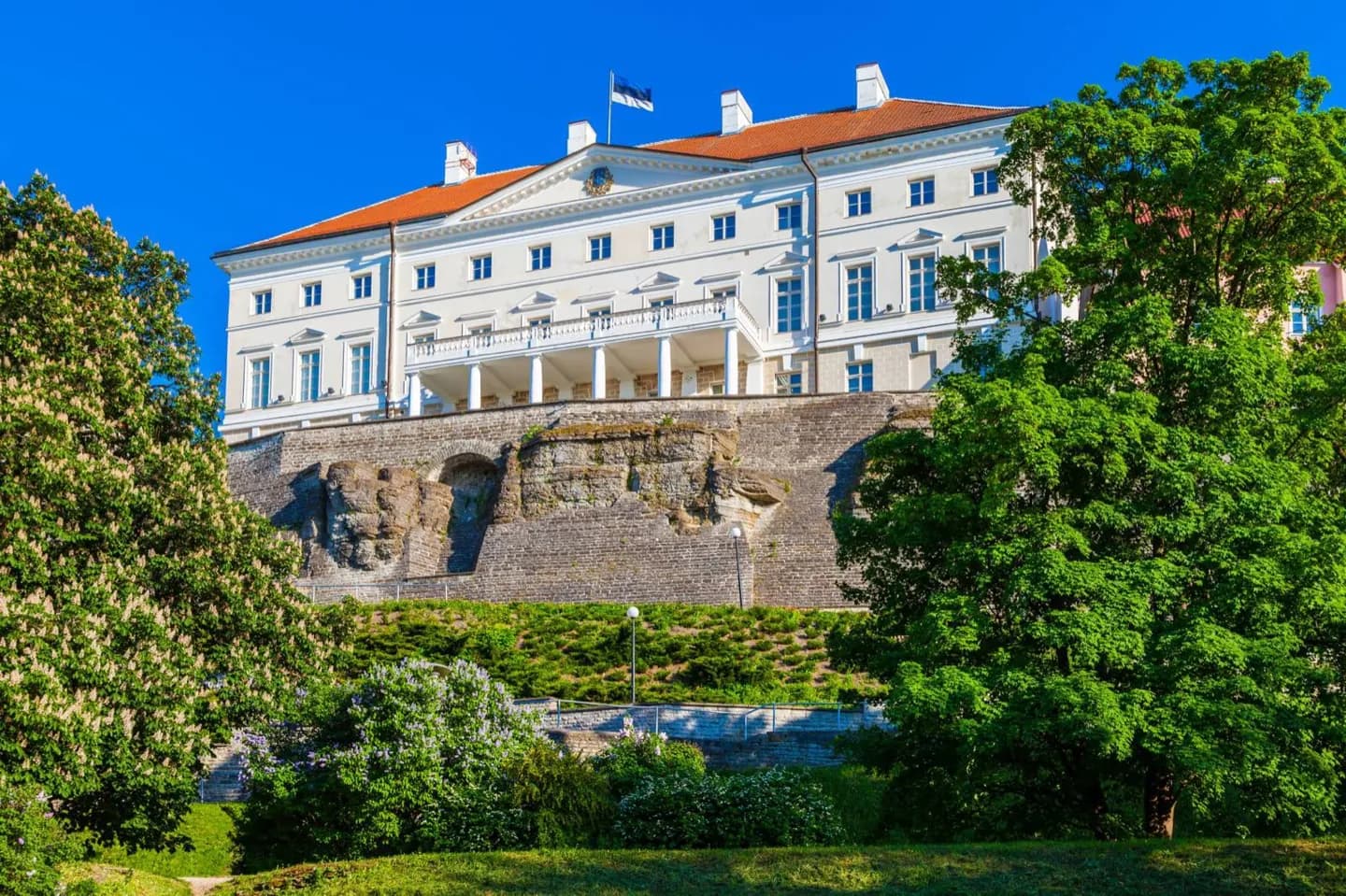
Stenbock House shows how a private residence became a national seat of government. Its grandest face is away from the street, so the view from Snelli Park or Patkuli makes more sense of the architecture than a quick pass by its entrance.
What to look for
- The classical façade and columned balcony face out from the edge of Toompea.
- Patkuli viewpoint and Snelli Park reveal the building’s hillside setting.
The full story
Stenbock House began in the late eighteenth century as a planned courthouse under Russian imperial administration. Construction started in 1787, but a funding shortfall left the province indebted to Count Jakob Pontus Stenbock, who took over the unfinished building and used it as a residence. It eventually served as a courthouse, fulfilling its original civic purpose much later. Since 2000 it has housed the Government of Estonia and the Government Office. The building’s street side is comparatively plain, while the façade facing away from Toompea has columns and a balcony above the slope. This reversal is why a view from Snelli Park or the Patkuli platform tells more of its architectural story than the approach from the hill. Its present government role also explains why an interior visit requires a special arrangement or public event.
Useful to know
- View the building from Snelli Park or Patkuli instead of expecting an ordinary walk-in interior visit.
- If visiting Toompea Castle, add the nearby viewpoint to see this different seat of government.
Your next visit
Estimated · Declared scenario and planning estimates; no live opening, weather, queue or booking service.
Outdoor visit · 30–45 min
World planning estimate; admission, opening, visit duration and access need checking.