
Why go
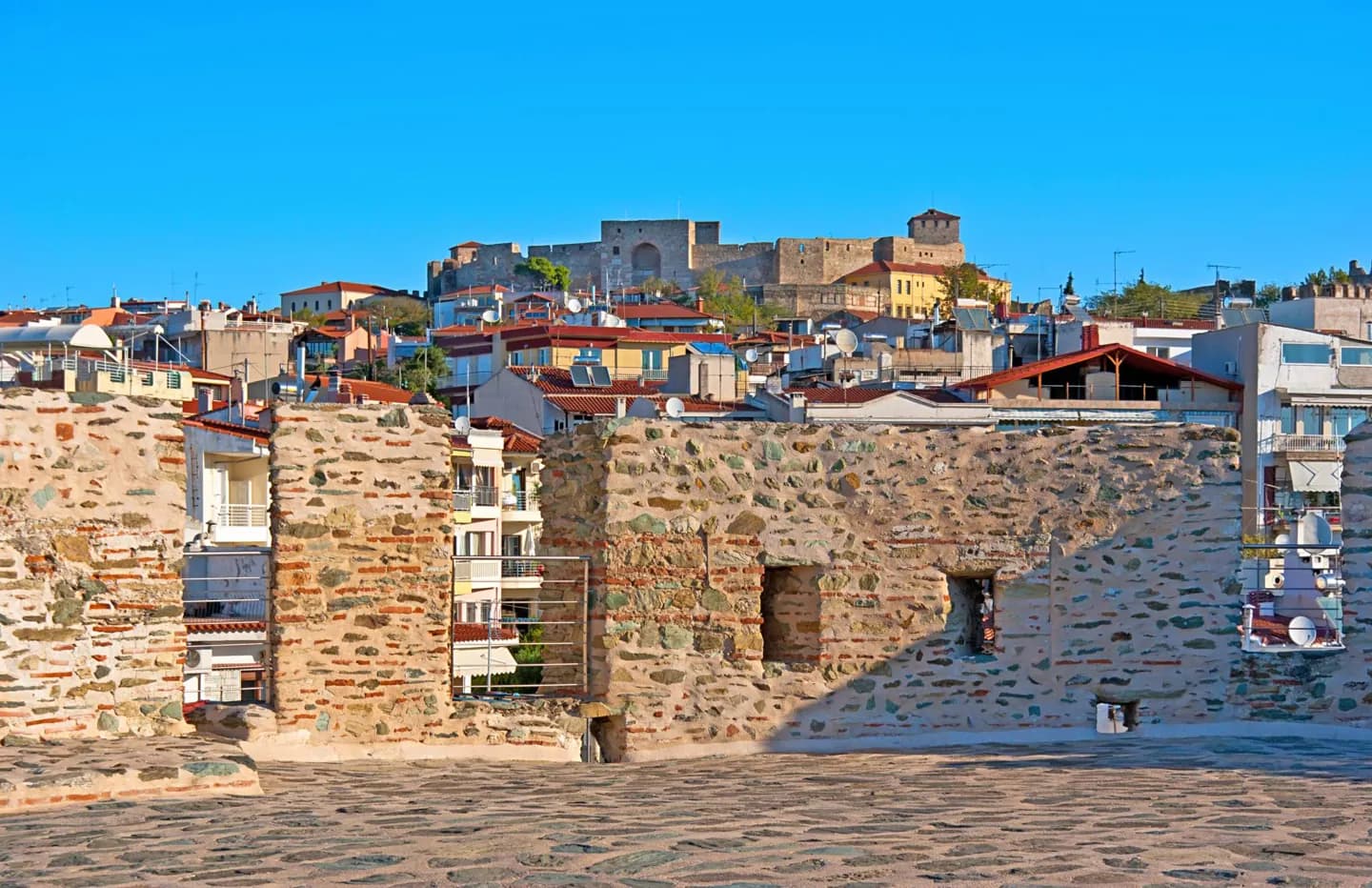
The defensive walls and towers show Thessaloniki from its highest historic edge. Former prison spaces add a later, sobering chapter, so the visit offers more than a panorama or a quick photograph from the ramparts. The transition from citadel to penitentiary is visible in one complex.
What to look for
- The fortress has ten towers despite its name, meaning seven towers.
- Ramparts overlook the city and Thermaic Gulf.
- Prison spaces recall its twentieth-century use.
The full story
Heptapyrgion, also called Yedikule, was the fortified corner of the city’s acropolis. Its walls and towers were built and altered across Byzantine and Ottoman periods, forming a strongpoint above Thessaloniki. The name means seven towers, though the complex has ten. In the late nineteenth century the fortress became a prison and remained one until 1989. Those layers change the experience on site: stonework first reads as military defence, then the enclosed spaces reveal a much more recent history of confinement. Its position at the northeastern corner of the upper fortifications explains why the site mattered militarily. From there, the city falls away toward the water. The later prison use reverses the view of the walls: instead of protecting a city, they contained people within them. Both readings matter on a visit.
Useful to know
- Pair the fortress with a downhill walk through Ano Poli.
- Check the official visitor timetable before travelling uphill.
Your next visit
Estimated · Declared scenario and planning estimates; no live opening, weather, queue or booking service.
Outdoor visit · 30–45 min
World planning estimate; admission, opening, visit duration and access need checking.