
Why go
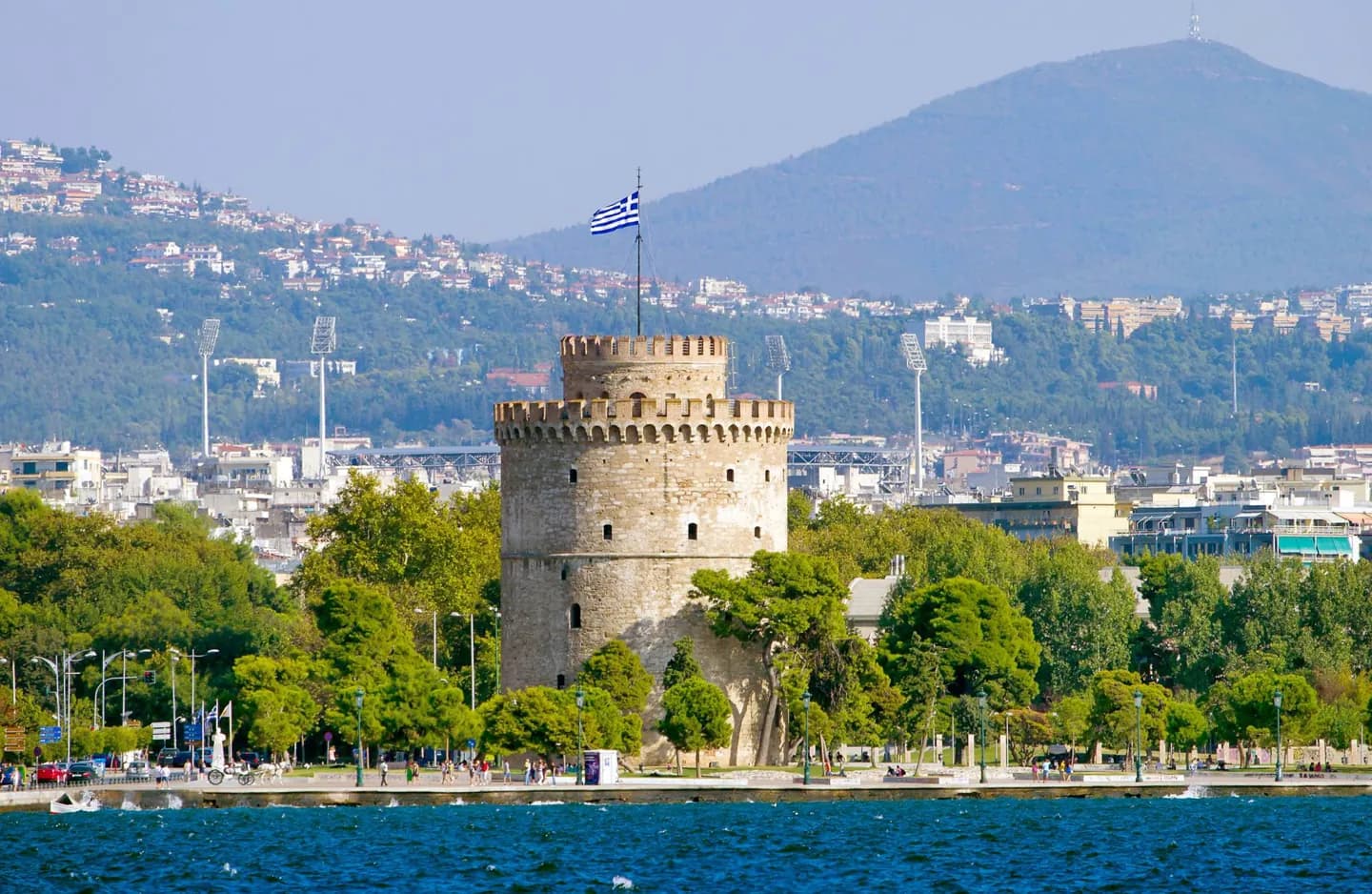
Its cylindrical form marks the edge of the old fortifications, while the exhibition follows Thessaloniki through successive eras. Finish on the balcony to connect the waterfront, dense centre and upper walls in one view. The rooftop perspective makes the fortification’s original waterfront position clearer.
What to look for
- The cylindrical Ottoman tower stands beside the waterfront promenade.
- Exhibition floors trace the city’s layered history.
- The roof balcony looks across the gulf and city skyline.
The full story
The Ottoman tower guarded the eastern end of Thessaloniki’s former sea walls. It later served as a prison, giving a harsher history to a structure that is now a civic symbol. After the city passed to Greek control in 1912, its exterior was whitewashed and the name White Tower took hold. The shoreline and walls have changed around it, but its position still makes the old relationship between fortification and harbour legible. Inside, the city-history displays add the longer story; from the roof, the same geography becomes visible at a glance. The tower once belonged to a larger defensive system rather than standing as an isolated monument. Its present open setting can obscure that role. Looking back toward the streets from the balcony helps reconstruct the lost line of the seaward walls and the change from defended harbour to public promenade.
Useful to know
- Allow time to climb through the exhibition before reaching the balcony.
- Check the operator’s current access notice before planning an interior visit; building work can affect floors.
Your next visit
Estimated · Declared scenario and planning estimates; no live opening, weather, queue or booking service.
Outdoor visit · 30–45 min
World planning estimate; admission, opening, visit duration and access need checking.