
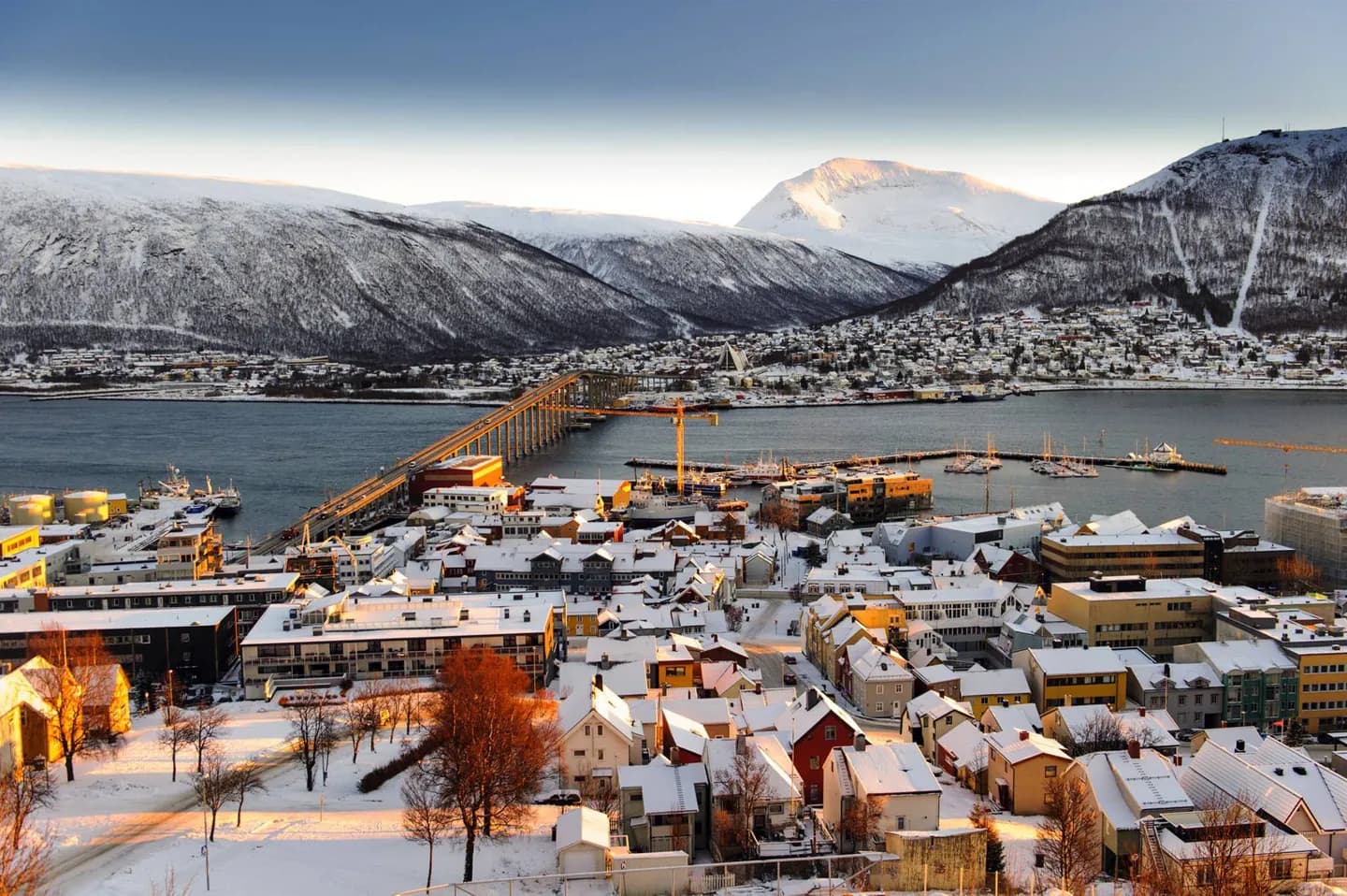
Why go
The nickname “Paris of the North” makes more sense beside the Polar Museum and the centre’s old wooden buildings than as a claim about modern glamour. Tromsø’s trading links spread far beyond northern Norway, while a teacher-training college and museum added an educational role. The nickname’s exact origin remains uncertain.
The full story
The Skansen redoubt belongs to an earlier phase of Danish–Norwegian claims on the northern coast. Tromsø was still a small settlement when King Christian VII granted it a city charter in 1794, around the end of Bergen’s long monopoly on the cod trade. Maritime commerce then expanded. Arctic hunting began around 1820, and by the middle of the 19th century Tromsø had overtaken Hammerfest as a major base. Ships connected the town to places as far apart as Arkhangelsk and Bordeaux. A shipyard opened in 1848, the same year a teacher-training college moved here from Trondenes. Its mission included educating Sámi scholars. Tromsø Museum followed in 1872 and Mack Brewery in 1877. These developments explain why the old harbour was more than a fishing landing: it supported a town with growing institutions and international trade. The “Paris of the North” nickname dates from this period, but its origin is not established. One explanation is that visitors from farther south found the town more outward-looking than they expected.