
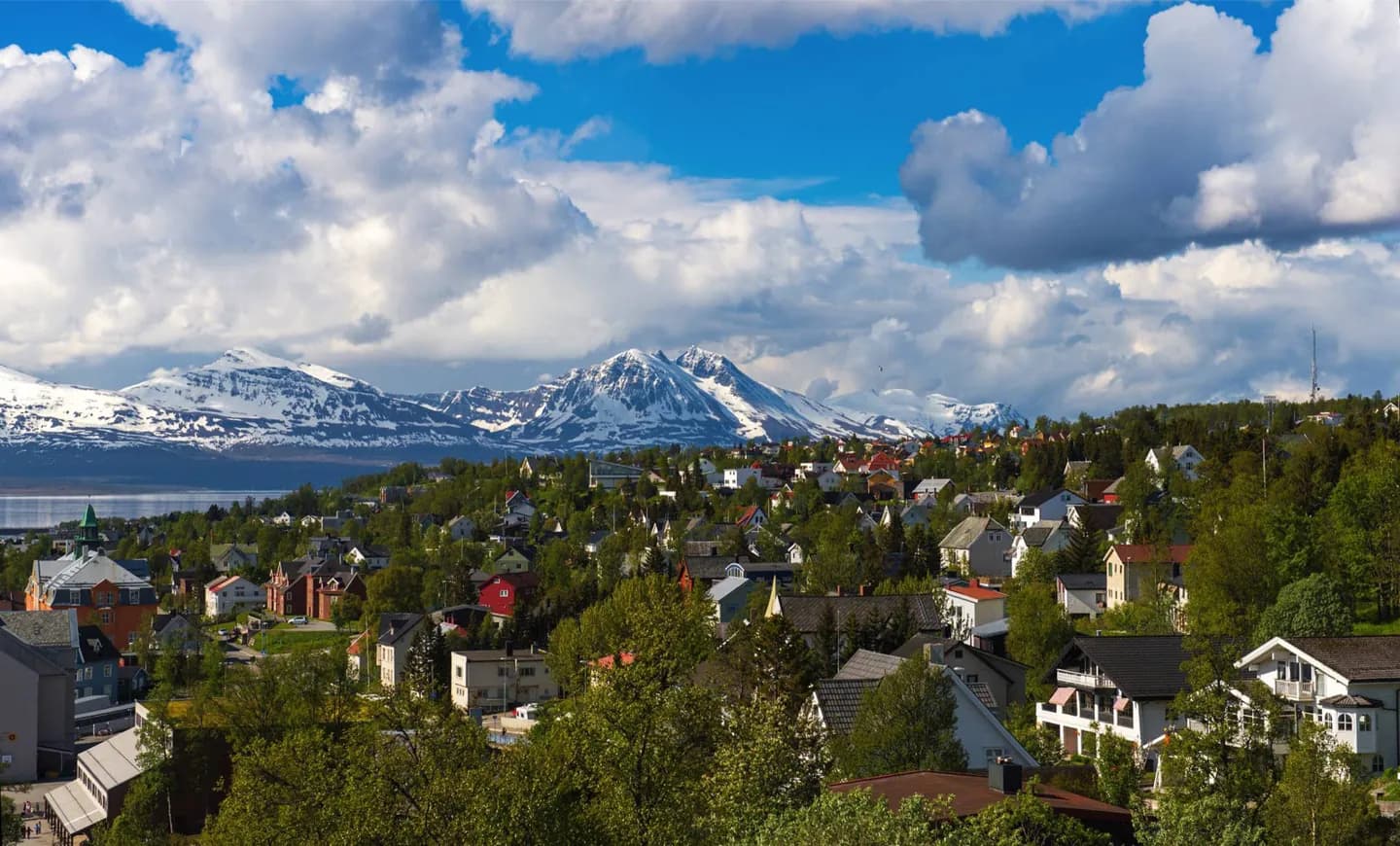
Why go
Choose your season for the light you want, then plan the day around it. Summer supports late outdoor views but offers no dark sky for aurora watching. Winter brings a short blue twilight and a possible aurora after dark, while late winter combines returning sun with snow-bright days.
The full story
At Tromsø’s latitude, summer daylight and winter darkness are defining features rather than minor changes in opening and closing times. Around late spring and midsummer, the sun can remain above the horizon through the night. Local mountains can shorten the period in which it is actually visible from a particular spot, and long twilight means nights stay bright beyond the strict midnight-sun dates. The reverse happens in winter. During polar night the sun remains below the horizon, but a few hours of twilight still bring light, sometimes with a blue cast. Mountains can also hide the low sun before or after the formal polar-night period. The return of sunlight is marked locally, and late winter feels different from the deepest dark: daylight grows quickly while snow can intensify glare. The aurora requires a dark, sufficiently clear sky; it cannot be seen in the bright summer nights. These seasonal contrasts make timing a central part of planning Tromsø, especially for viewpoints, photography and outdoor activities.
Useful to know
- For aurora plans, allow for both darkness and clear sky; cloud can hide a display.
- For a winter outdoor day, use the limited twilight for views and place indoor stops outside that window.