
Why go
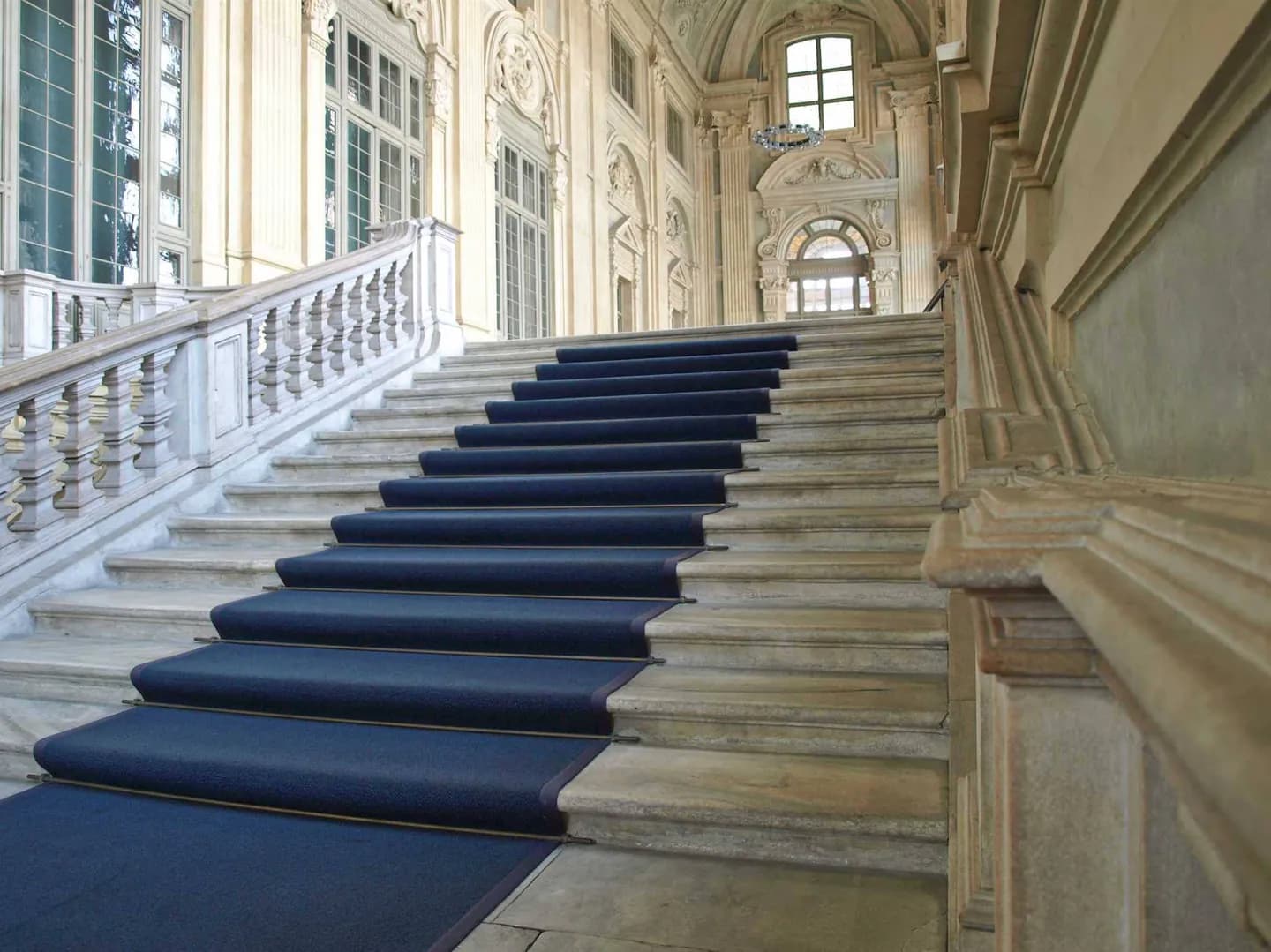
Few Turin sites show so many periods at once. Walk around the building to compare its older defensive side with Juvarra's ceremonial front, then enter for the staircase and collections if those layers interest you. The museum also offers decorative arts, a medieval garden and a panoramic tower.
What to look for
- Roman gate remains and medieval towers survive within the palace.
- Juvarra's Baroque front and staircase face Piazza Castello.
- Museum rooms hold Gothic and Renaissance art and decorative arts.
The full story
Palazzo Madama began with a Roman gate on the edge of ancient Augusta Taurinorum. Its surviving towers were folded into later defences, and the Acaja branch of the Savoy family expanded the structure into a medieval castle. The stronghold remained visible even after the building became a court residence. In the seventeenth century, Savoy duchesses used and reshaped it, giving rise to the name Palazzo Madama. Filippo Juvarra's grand Baroque front and staircase later presented an entirely different face to Piazza Castello. The building therefore asks for a circuit outside before a museum visit: its rear still makes sense as a fortified structure, while its square-facing side speaks the language of court display. Inside, the Civic Museum of Ancient Art extends that layered account through artworks and decorative objects. The palace is a physical timeline of the city, with each period adding to rather than erasing what came before.
Useful to know
- Walk around the exterior before entering; the contrasting sides explain the building's history.
- Allow museum time separately from a quick Piazza Castello stop.
- Choose the tower or medieval garden if you want a different view of the complex after the galleries.
Your next visit
Estimated · Declared scenario and planning estimates; no live opening, weather, queue or booking service.
Indoor visit · 30–45 min
World planning estimate; admission, opening, visit duration and access need checking.