
Why go
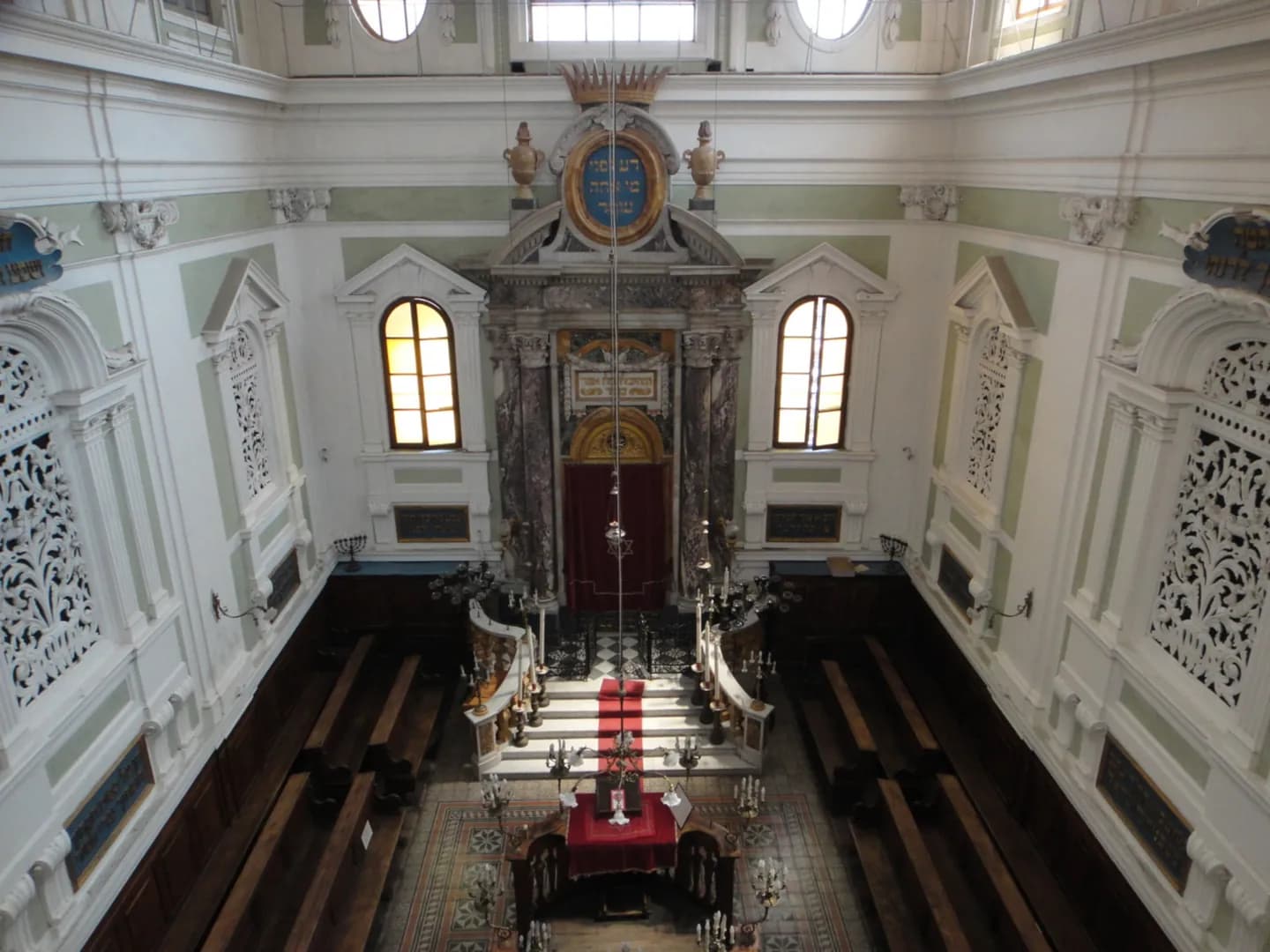
The visit reveals how the restrictions of the former ghetto shaped the building: little on the street announces the richly decorated sanctuary inside. Torah scrolls, silverwork and ritual textiles give the architecture a human and religious context across centuries of Jewish life in Siena.
What to look for
- A plain street frontage conceals the sanctuary.
- The interior includes a decorated ceiling and central bimah.
- The museum displays Torah scrolls, silverware and ritual vestments.
The full story
Siena had a Jewish community by the fourteenth century. In 1571, Medici rule confined Jewish residents to a designated neighborhood near today’s Piazza del Campo. The synagogue built there had to fit that urban condition: from the street it resembles its neighbors, while worship took place in a richly furnished room above ground level. The present sanctuary dates from 1786. Inside, a central bimah, marble Torah Ark and tiered galleries give the room a structure that the facade does not announce. The museum’s scrolls, silverwork and vestments carry the story from architecture into religious practice. In 1860, the requirement to live in the ghetto ended, but the building still records the earlier limits placed on the community. Notice the deliberate difference between outside and inside as you visit; it is central to understanding this place, not just a surprising design feature.
Useful to know
- Check the operator’s visiting calendar; the synagogue closes on Saturdays and Jewish holidays.
- Allow time for both the sanctuary and the museum objects.
Your next visit
Estimated · Declared scenario and planning estimates; no live opening, weather, queue or booking service.
Outdoor visit · 30–45 min
World planning estimate; admission, opening, visit duration and access need checking.