
Why go
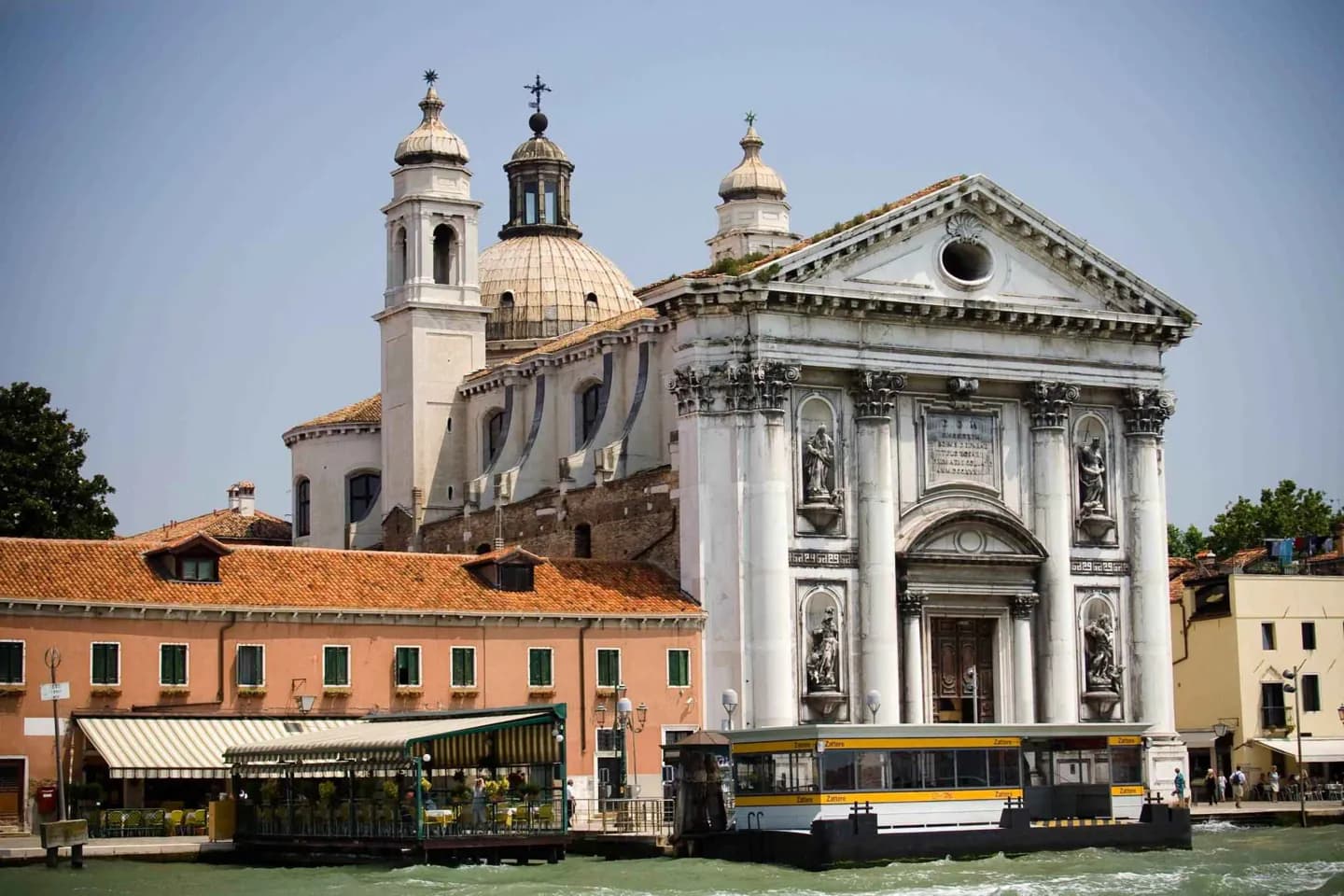
These arrivals make Venice's geography especially clear. Stazione Marittima lies near the western end of the islands, while mainland tram connections reach Piazzale Roma. Neither is a direct continuation into the sestiere maze, so the useful decision is the transfer onward to Santa Lucia, a vaporetto landing, or a water taxi.
What to look for
- Stazione Marittima is at the western end of Venice's main islands.
- Piazzale Roma is the terminus for road and tram access from the mainland.
- The People Mover links key western arrival points.
The full story
Venice's alternative arrivals all reveal the same boundary between mainland infrastructure and the island city. Ships use the Stazione Marittima area at the western end of the main islands, while trams and buses from the mainland reach Piazzale Roma. The People Mover connects parts of this arrival zone, but it does not solve the final journey through Venice. Once you leave the road-and-terminal edge, the historic center works through canals, bridges, and narrow calli. A hotel near Santa Lucia may be a straightforward walk; one in San Marco, Castello, Giudecca, or the lagoon islands will usually call for water transport. The practical lesson is to separate arrival from transfer. Confirm the terminal, locate the appropriate water stop, and allow time for the city to slow down the last stretch. Venice rewards that adjustment more than any attempt to make its geography behave like an ordinary transport hub.
Useful to know
- Check the current arrival terminal and onward connection before setting off with luggage.
- Use the People Mover only for the western transfer; plan a separate walk or water leg for the historic center.
- For island accommodation, identify the closest public water-transport landing in advance.