
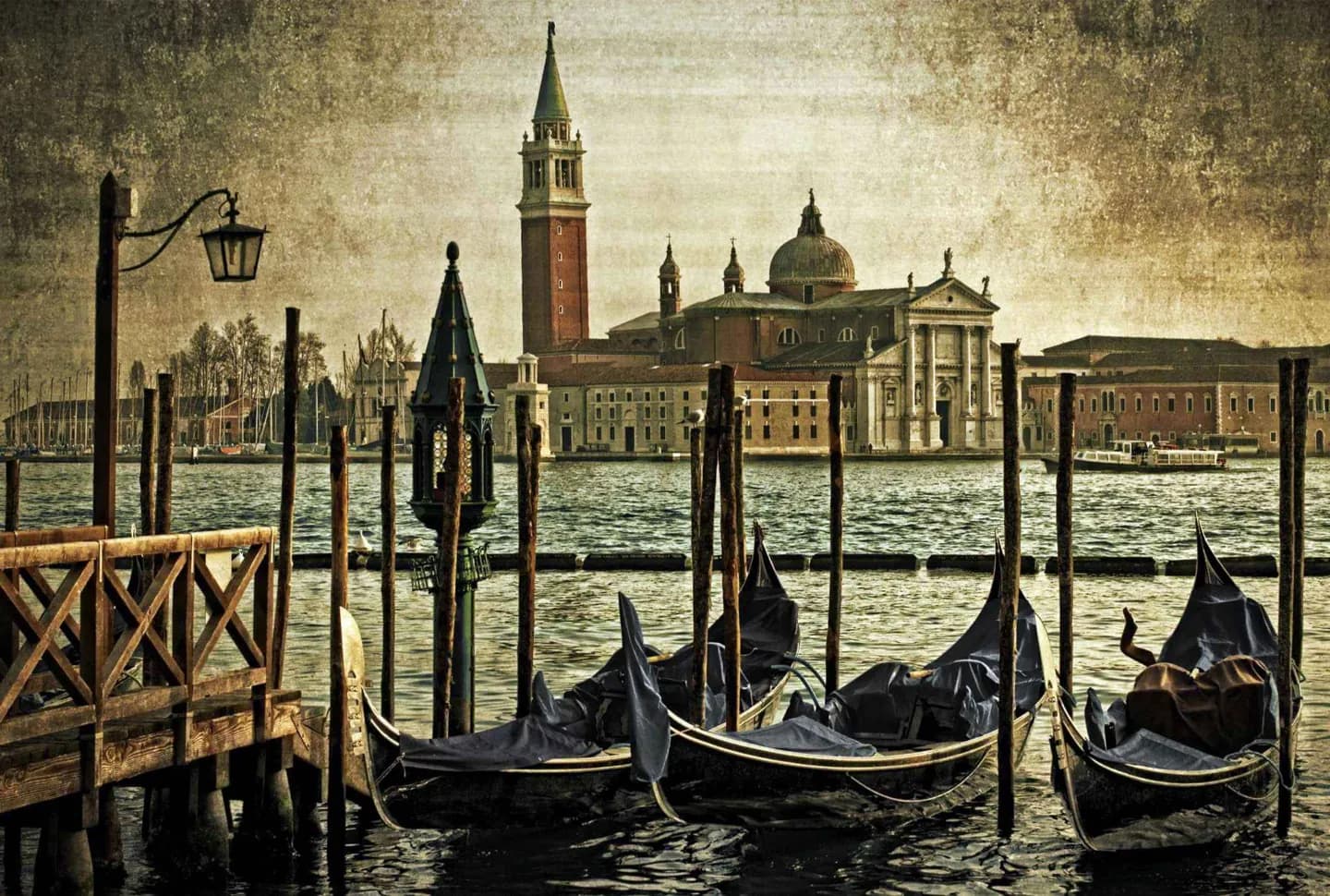
Why go
Gondolas show the city at a water level that walking cannot provide: low bridges, canal doors, and palazzo walls pass close by. They are now used mainly for visitors and ceremonies, while public water buses serve ordinary transport. Decide whether the quieter canal perspective matters enough to make it a deliberate part of the day.
What to look for
- Gondolas are traditional Venetian boats associated with canals and ceremonies.
- Their low profile gives close views of bridges, water doors, and palazzo façades.
- Traghetti are separate gondola ferries for short Grand Canal crossings.
The full story
The gondola is Venice's most recognizable boat, but its modern role is different from that of the vaporetto. It is mainly a private experience or a ceremonial craft, while public water buses carry the practical flow of passengers through the city. Its value lies in scale. A gondola moves slowly enough to bring canal thresholds, low bridges, and the water entrances of palazzi close to view, especially on narrower waterways away from the Grand Canal. The boat itself is an engineered response to Venice: its shape and low profile suit the city of canals, and the gondolier's position makes one-sided propulsion possible. A ride therefore works best when chosen for a particular perspective, not as a substitute for an efficient transfer. For a brief everyday-style crossing, the related traghetto ferry has a different purpose altogether.
Useful to know
- Agree the route and duration with the operator before boarding, then confirm current terms directly.
- Choose a smaller-canal route for close architecture; use a vaporetto for broad Grand Canal orientation.
- Keep a traghetto in mind for a short crossing, but do not confuse it with a private gondola excursion.