
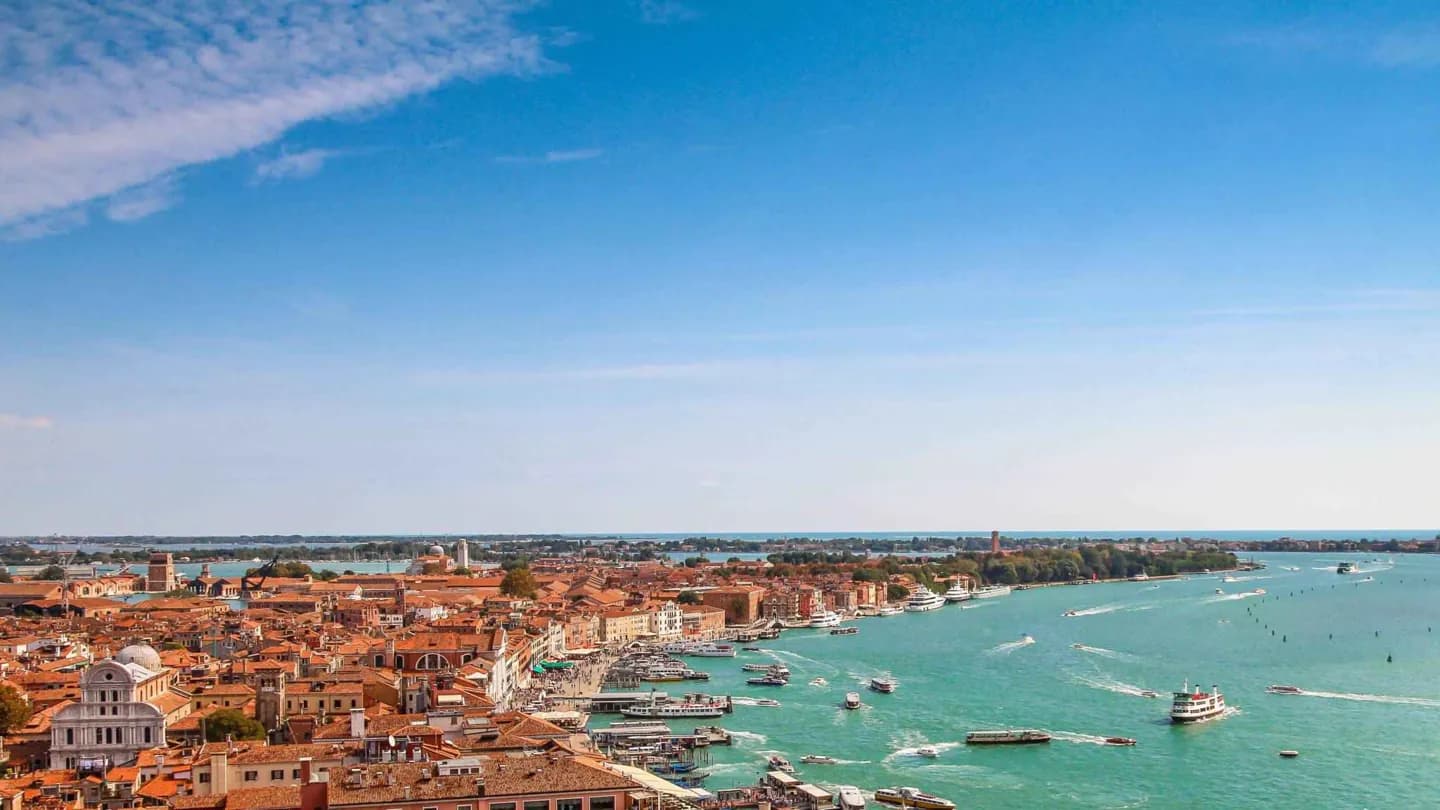
Why go
The city rewards selection more than accumulation. Piazza San Marco, St Mark’s Basilica and the Doge’s Palace form a clear core, but their meaning becomes sharper when balanced with the Rialto, Dorsoduro, Castello or a lagoon island. Choose places that answer different questions about Venice rather than repeating the same view.
What to look for
- St Mark’s Basilica and Doge’s Palace form Venice’s main ceremonial and civic pair.
- Rialto, Dorsoduro and Castello offer different perspectives on trade, art and urban life.
- Murano, Burano and Torcello need separate travel time across the lagoon.
The full story
Venice can make every church, palace and canal seem equally urgent, but its strongest sights have different jobs. Piazza San Marco is the ceremonial centre, where St Mark’s Basilica and the Doge’s Palace place worship and government beside one another. The Rialto explains the city’s commercial spine, while Dorsoduro offers art and broader canal views. Castello leads toward the former Arsenal and quieter eastern streets. Murano, Burano and Torcello require a boat journey and should be treated as separate lagoon destinations, not as quick add-ons. A good plan uses one major interior, one urban walk and one water-facing or island experience. That combination reveals Venice as a city of distinct districts connected by water, bridges and public spaces in daily life.
Useful to know
- Build a day around one major interior, then add a nearby walk and waterfront view.
- Treat lagoon islands as separate outings rather than extensions of a central walking route.
- Keep one lower-priority sight optional when a major visit takes longer than expected.