
Why go
The square’s unusual length and focus on the Basilica make more sense once you know it was deliberately reshaped. Its history explains why a civic centre could contain a church, government palace, arcaded offices and a direct opening to the lagoon in one carefully controlled sequence.
What to look for
- The Rio Baratario once interrupted the space now occupied by the piazza.
- Clearing buildings and an orchard made the square’s long open form possible.
- Later palace and arcade work completed the ceremonial setting.
The full story
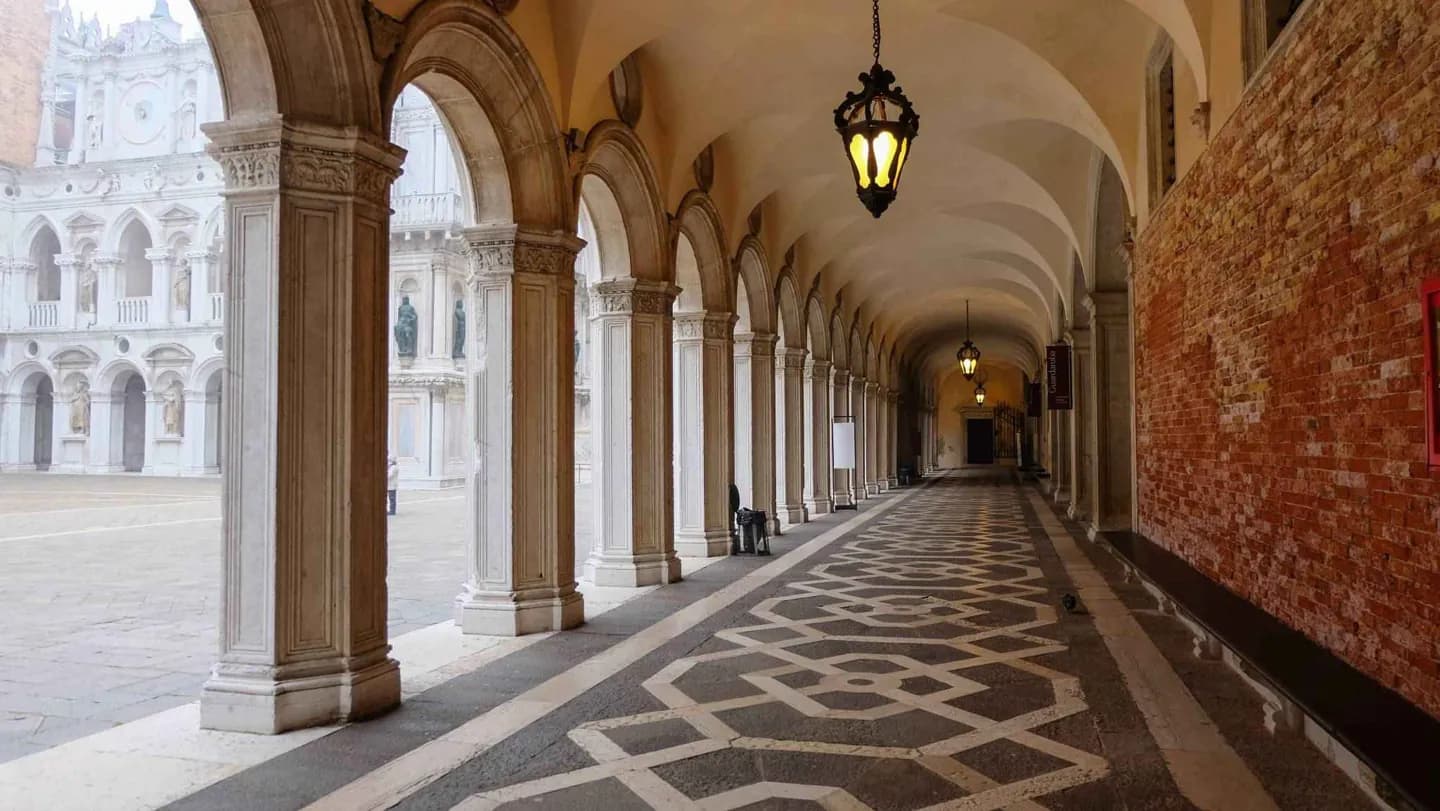
The present square emerged through a major reshaping under Doge Sebastiano Ziani. A stream once divided the area, while buildings and an orchard occupied ground that later became open space. Filling the Rio Baratario and clearing obstructions created the longer piazza that could face St Mark’s. Work on the Doge’s Palace also began to redefine the eastern side of Venice’s political centre. Later additions refined the setting rather than replacing its purpose: the Porta della Carta linked palace and basilica, and Sansovino’s library helped frame the Piazzetta. The result was a public stage for religion, government and ceremony. What looks inevitable today was therefore assembled through planned clearance, rebuilding and careful control of sightlines, rather than growing from an untouched medieval street plan.
Useful to know
- Look for the square’s long axis ending at the Basilica as you walk west to east.
- Pair this history with the Piazzetta to see how the civic centre was opened toward the lagoon.