
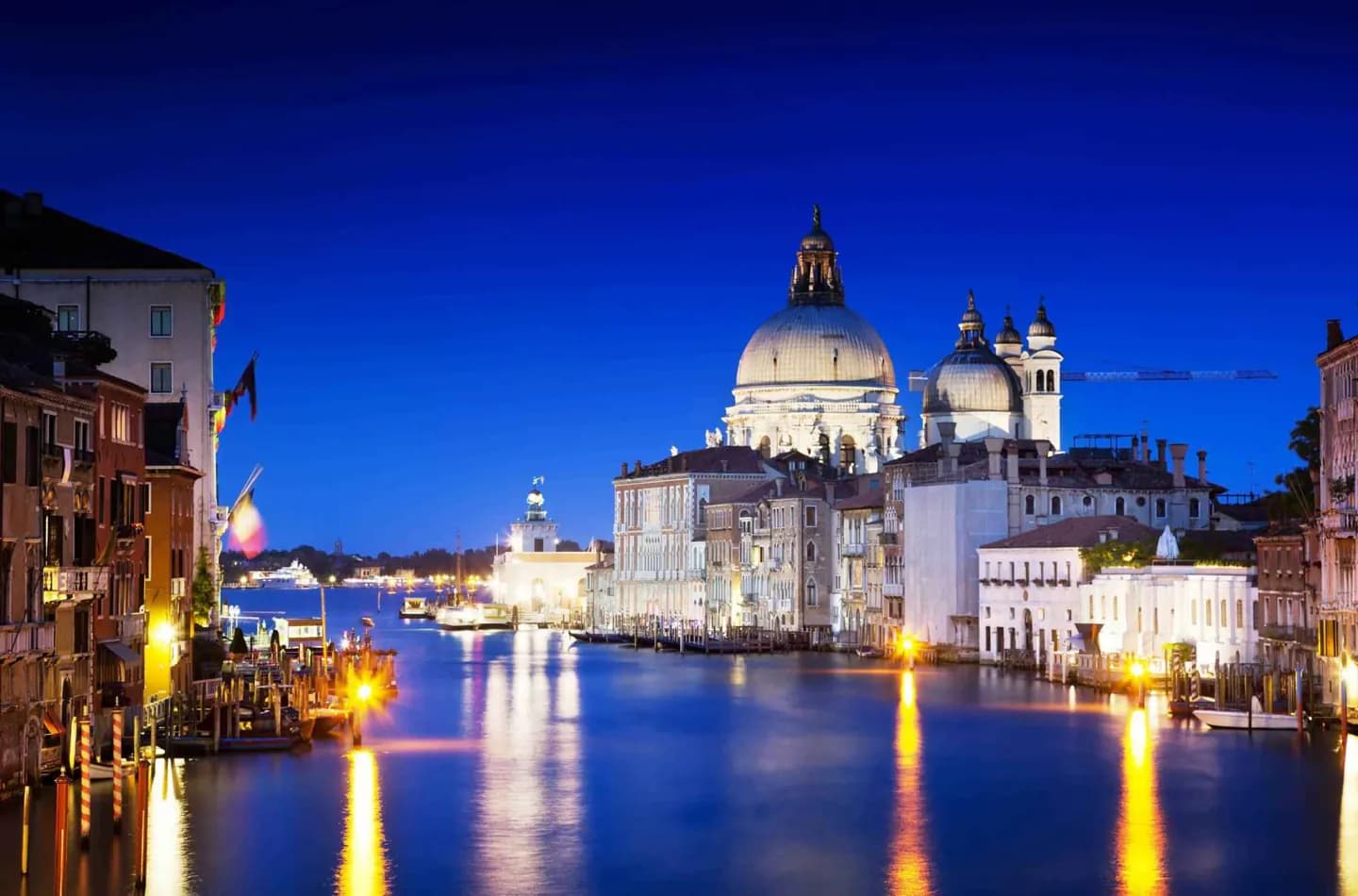
Why go
It is the fastest way to grasp how Venice works. The canal joins the rail side near Santa Lucia to St Mark's Basin, while its bends reveal changing districts and building styles. It suits a first orientation, but it also repays a slower return when you can focus on one stretch rather than treating it only as transit.
The full story
The Grand Canal runs through the center of Venice rather than around it. Beginning near Santa Lucia and ending at St Mark's Basin, it makes a broad reverse-S that carries boats through the city's principal districts. Its dimensions are large enough for a busy waterway but intimate enough that palaces, churches, and landing steps stay close to view. That combination explains why a trip along it feels unlike a river cruise through a modern city. Water buses provide the everyday connection, while water taxis and gondolas use the same corridor at a different scale. The canal is also a useful first lesson in Venetian orientation: each bend changes the view, and the buildings facing water often reveal more than their narrower landward sides. Look for the way entrances, windows, and loggias are organized toward the canal. The water was the city's main approach, and the architecture still behaves accordingly.