
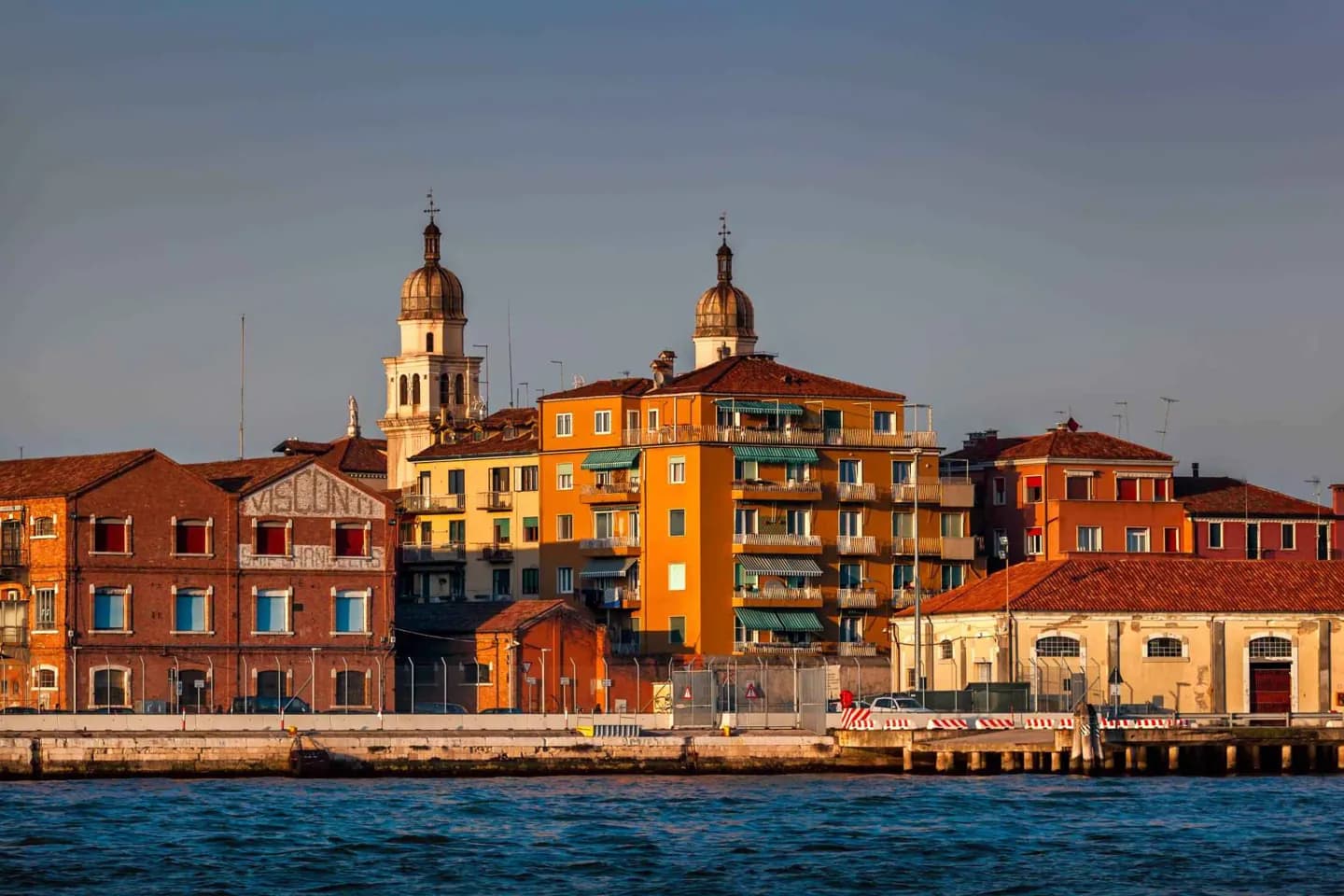
Why go
A little historical context makes the city more legible. Rialto explains commerce, St Mark's explains state ceremony, and the Arsenal explains naval strength. Venice's rise and later loss of independence also clarify why its palaces, churches, and canals feel both intensely local and connected to a much wider world.
What to look for
- Rialto developed as the protected center of the early city and its trade.
- St Mark's area concentrated the republic's government, ritual, and public display.
- The Arsenal shows how shipbuilding underpinned Venice's maritime reach.
The full story
Venice began as a settlement in the lagoon, where communities from the mainland sought security amid the islands and marshes. Its position between the Adriatic and the eastern Mediterranean encouraged a life organized around boats, ports, and exchange. By the Middle Ages, the republic had developed a government headed by a doge and a commercial network reaching toward Byzantium and beyond. Wealth from trade helped finance the palaces along the Grand Canal and the elaborate public spaces around St Mark's. Naval strength was equally important, and the Arsenal became the engine of ship production. The republic later lost ground as Atlantic sea routes changed European trade, then lost independence at the end of the eighteenth century. For visitors, the useful thread is continuity: Venice's art and architecture are not isolated decoration but the visible record of a city that used water as defense, highway, and source of power.