
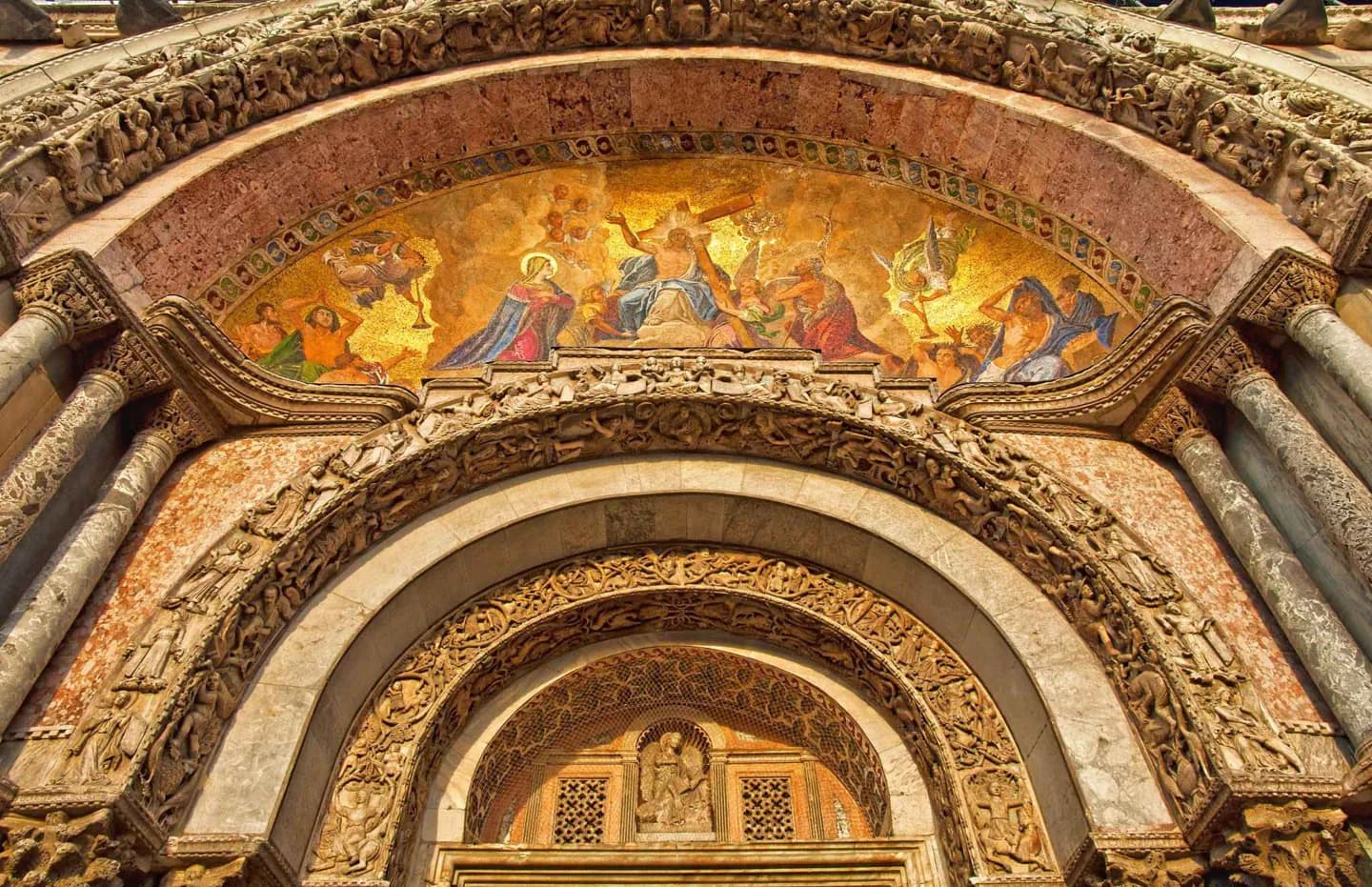
Why go
The interior’s value lies in looking upward and then inward toward the altar. Mosaics give the upper church its shimmering atmosphere, while the presbytery, screen and altar concentrate the Basilica’s religious and ceremonial focus in the eastern arm. This sequence helps visitors see the church as a connected visual programme rather than a series of isolated treasures.
What to look for
- Gold-ground mosaics cover the upper walls and ceilings, changing the church’s sense of light.
- The eastern sanctuary rises above the rest of the interior around the high altar.
- The Pala d’Oro connects the Basilica’s decoration with Byzantine craftsmanship.
The full story
The Basilica’s interior is organized around a vast mosaic programme rather than a single view. In the main apse, Christ Pantocrator presides above Venice’s patron saints; across the domes and transepts, scenes from the life of Christ unfold in gold-ground tesserae. The eastern arm rises toward a presbytery and high altar associated with St Mark’s relics. Marble columns, a Gothic screen and later bronze sculpture shape the approach, while the Pala d’Oro adds Byzantine craftsmanship to the sanctuary. The result is an interior that layers architecture, narrative and precious materials into one ceremonial setting. Its visual density repays a measured visit, because the key images are distributed across ceiling, walls and sanctuary, each contributing to the intended whole, and none functioning in isolation.
Useful to know
- Look upward first, then follow the building’s axis toward the raised sanctuary.
- Check current visitor guidance for access to any interior sub-areas.