
Why go
It is the place to understand how the republic turned government into spectacle. The courtyard, ceremonial staircases, council rooms, and water entrance connect the doge's household to foreign ambassadors and state business. Allow time to look beyond the famous façade: the sequence of rooms shows how private life, ceremony, and administration overlapped.
What to look for
- The lagoon-facing wing preserves the palace's oldest Gothic exterior.
- The Porta della Carta was a ceremonial gateway marked by Gothic pinnacles and state symbolism.
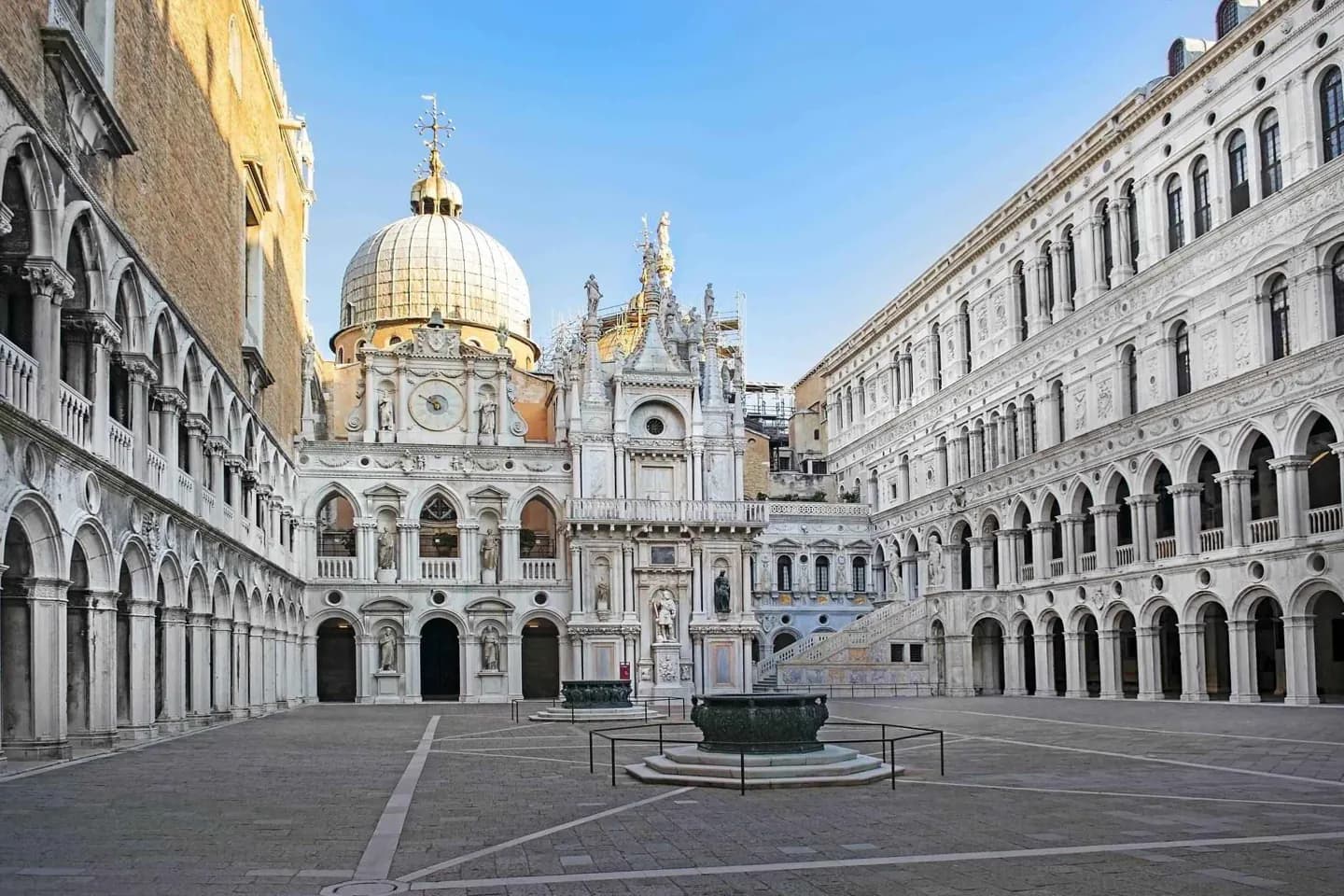
- The courtyard joins the palace to St Mark's Basilica, once the doge's chapel.
The full story
The Doge's Palace was not simply a residence. It was the working center of the Venetian Republic, placed beside St Mark's Basilica and facing the lagoon from which officials, merchants, and foreign visitors arrived. The doge's apartments occupied a zone between the Rio della Canonica, the Golden Staircase, and the basilica's apse. After a fire in 1483, this part of the complex was rebuilt, but the rooms continued to combine private use with public duty. Ambassadors waited in formal antechambers before meeting the Full Council, while painted ceilings and allegories presented the republic as orderly, just, and prosperous. Outside, the arcades, loggia, and Porta della Carta made the same argument in stone. Move slowly through the courtyard and state rooms: the architecture was designed to make government visible, not hidden.