
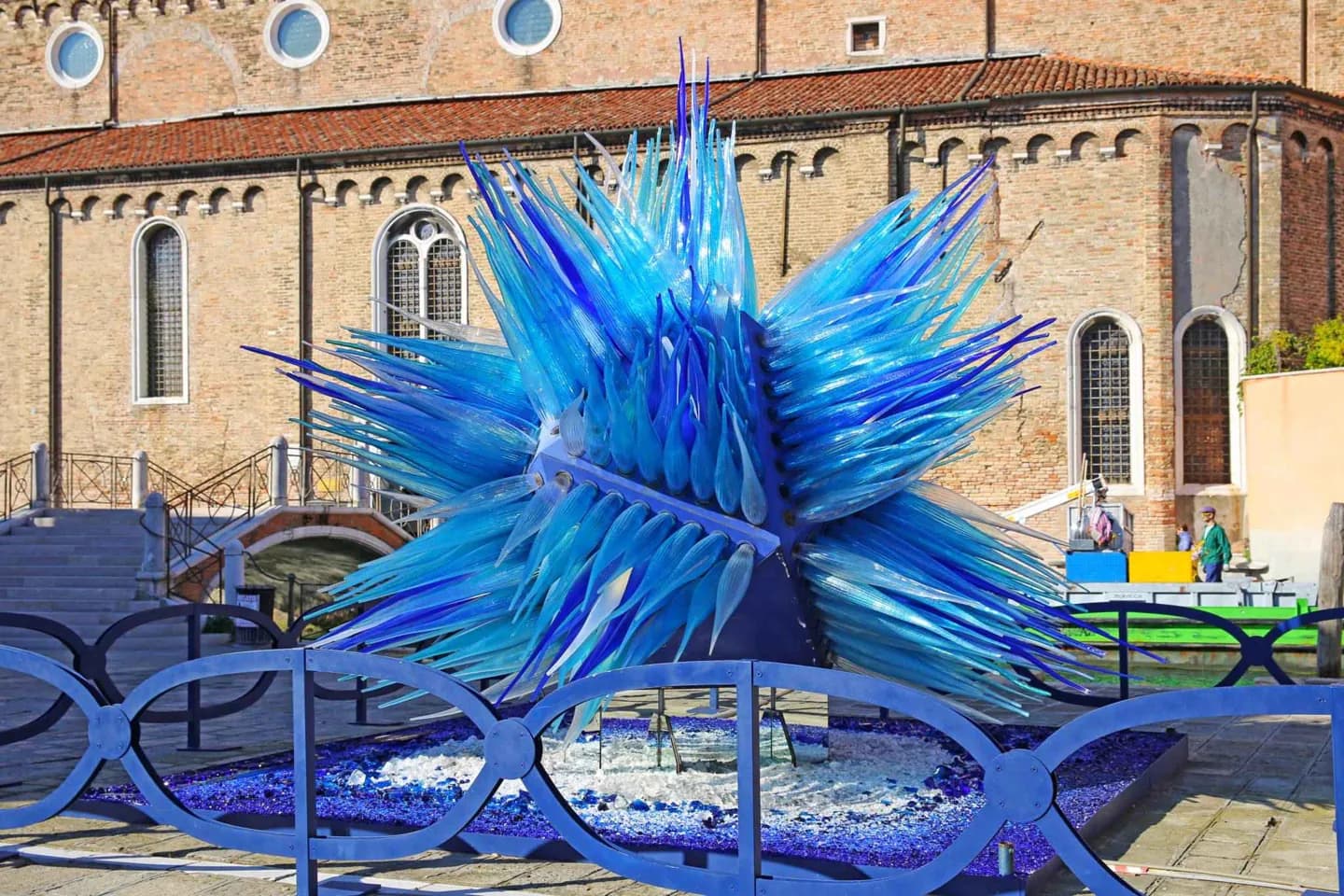
Why go
Murano glass is worth understanding in its place of making. The island’s furnaces and Glass Museum explain how working hot glass, fluxes and colouring agents shape a fragile material into vessels, beads and sculpture. A visit adds context that a city-centre display cannot provide.
What to look for
- Murano is Venice’s historic centre of specialized glassmaking.
- Glassmakers use fluxes and other additives to control melting, clarity and colour.
- The Glass Museum in Palazzo Giustinian traces the craft across many periods.
The full story
Venetian glassmaking is closely associated with Murano, where the craft developed into a specialized island industry. The work depends on carefully controlled heat and a mixture of silica with ingredients that change melting, clarity and colour. Sodium-rich fluxes, for example, can keep glass workable for longer, giving the maker more time to shape it. Other additions help remove bubbles or produce colour and opacity. That technical knowledge sits behind the delicacy often associated with Venetian glass. Murano’s Museo Vetrario, in Palazzo Giustinian, traces glassmaking through objects from antiquity to the present. Visit with the process in mind: the finished piece is the result of materials, timing and practiced handwork, not merely ornament. The island’s history is therefore visible in process as well as finished objects.
Useful to know
- Give Murano separate travel time rather than adding it to a tightly packed central Venice walk.
- Look for evidence of technique and material, not only decorative style, when viewing glass.