
Why go
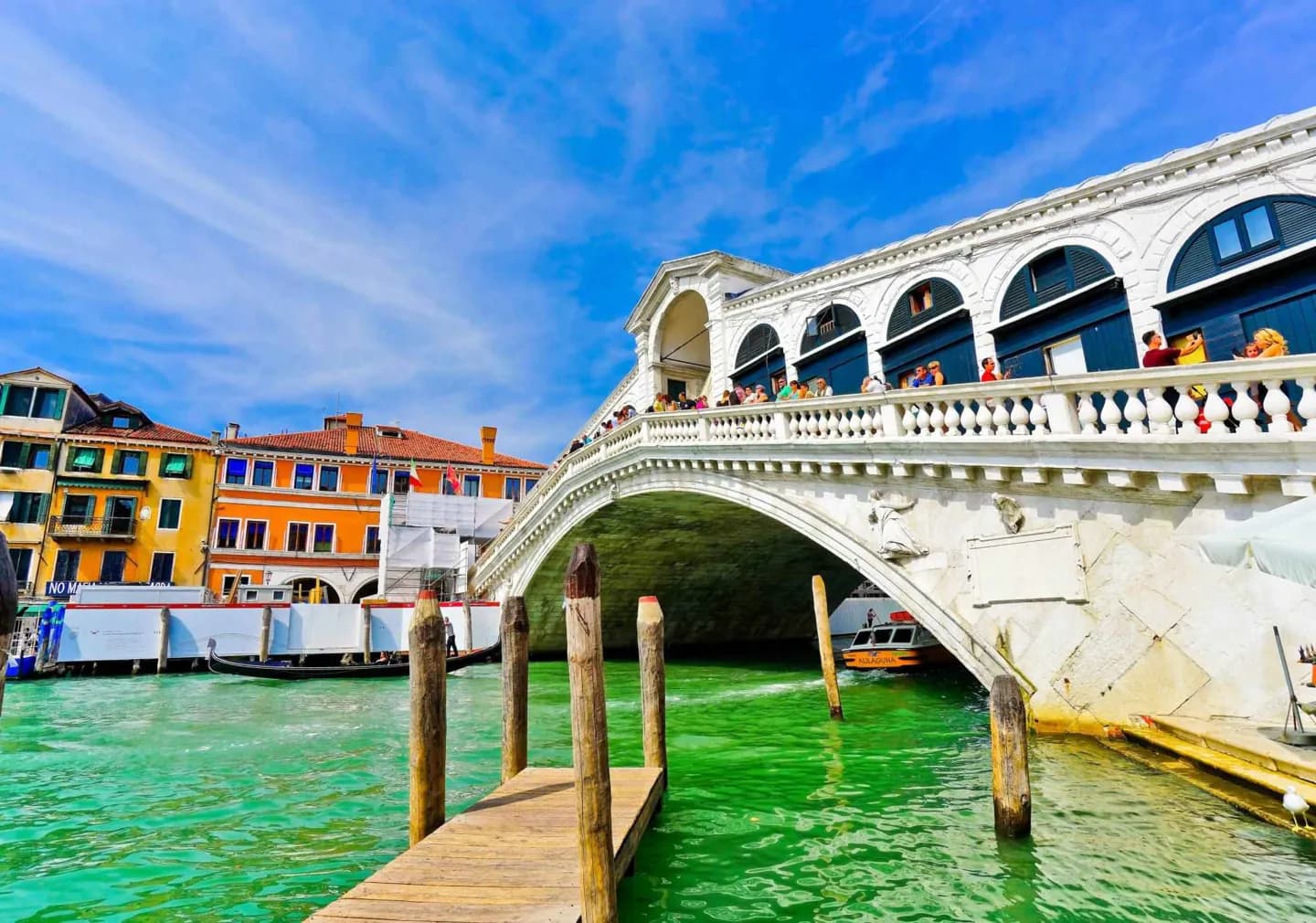
No street offers the same continuous view of Venetian domestic architecture. Ca' d'Oro, Ca' Foscari, Ca' Rezzonico, Palazzo Dario, and Santa Maria della Salute show different periods along one water route. A boat view is essential because many façades were designed to be approached from the canal.
What to look for
- Ca' d'Oro and Ca' Foscari show the canal's Gothic palace tradition.
- Santa Maria della Salute provides a major church landmark near the basin.
- Many palaces meet the canal directly, with no pavement separating façade and water.
The full story
More than a hundred historic buildings line the Grand Canal, creating a sequence of façades that records Venice's long competition for status. Noble families built palaces here because the canal was the city's most visible route; a grand water entrance and an elaborate façade announced wealth to anyone arriving by boat. The result is not one uniform style. Gothic examples such as Ca' d'Oro and Ca' Foscari sit beside Renaissance and later palaces, while Santa Maria della Salute anchors the canal's eastern end with its large dome. Some buildings now hold museums or collections, but their basic logic remains clear from the water. Their upper loggias, piano nobile windows, and canal doors were designed for a city in which arrivals happened by boat. Walking nearby is useful for detail, but a water crossing or canal journey best explains the scale and composition of the façades.