
Why go
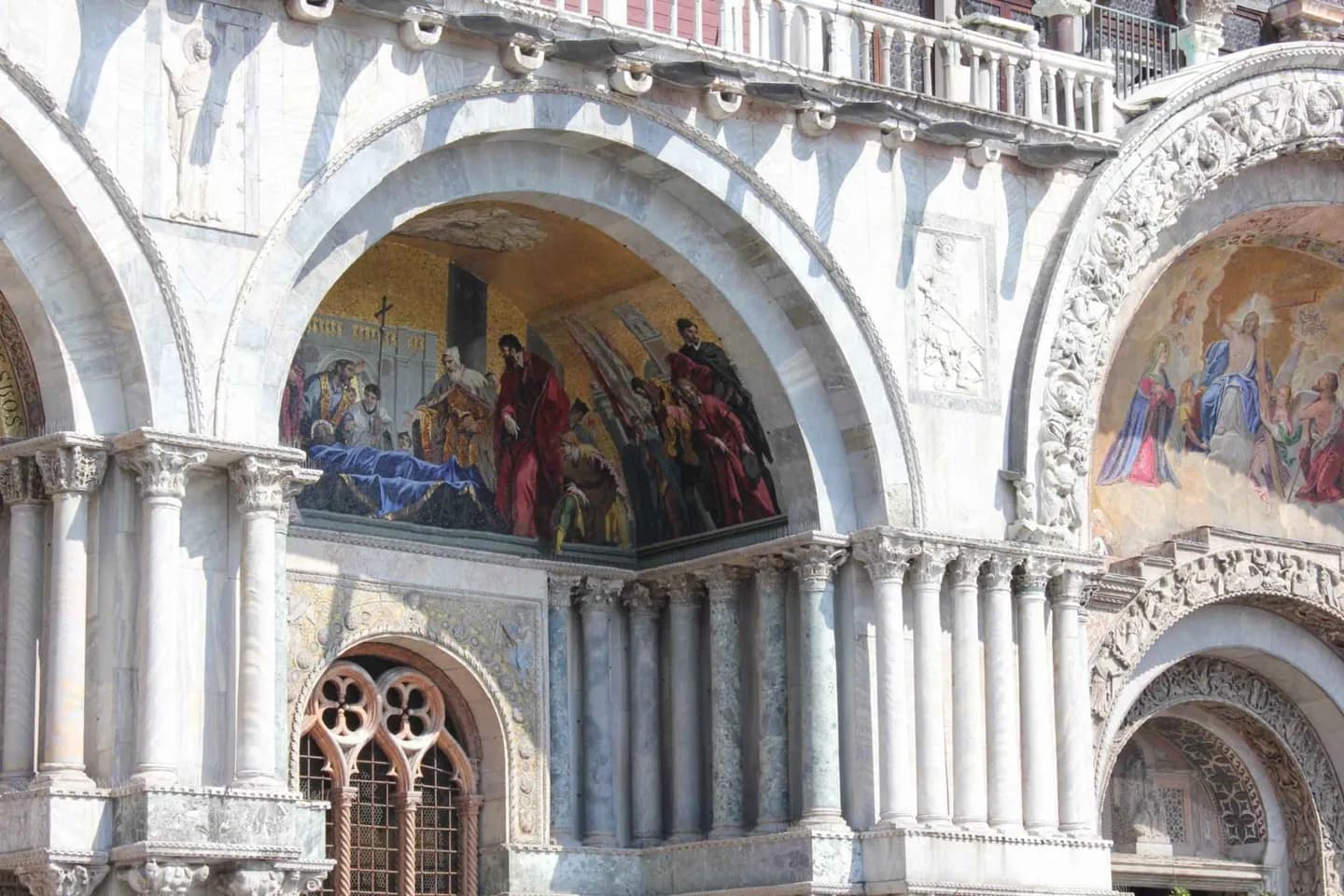
The history explains why this church feels unlike a conventional Italian cathedral. Its location, relics and ceremonial role tied it closely to the republic, while the present building’s Byzantine character reflects Venice’s eastern connections and its ambition to make faith visible in public life.
What to look for
- The Basilica began beside the Doge’s Palace as a church linked to St Mark’s relics.
- Its role expanded from ducal chapel to the ceremonial church of the republic.
- Byzantine influence helps explain its domes, plan and decorative language.
The full story
An early church of St Mark stood beside the Doge’s Palace after relics associated with the Evangelist were brought to Venice from Alexandria. The first buildings were damaged and rebuilt, and the present basilica began to take shape in the eleventh century. Over the following centuries it became more than the Doge’s chapel: it hosted major public ceremonies and served as a state church of the republic. Its design and decoration drew strongly on Byzantine models, while later work altered the façade, porch and domes. Only after the republic ended did it become subject to the Patriarch of Venice as the city’s cathedral church. The building therefore preserves both a religious history and the public image of Venice’s former political order.
Useful to know
- Read the exterior and interior together; the history is visible in both form and decoration.
- Pair the Basilica with the Doge’s Palace to understand its former ceremonial role.