
Why go
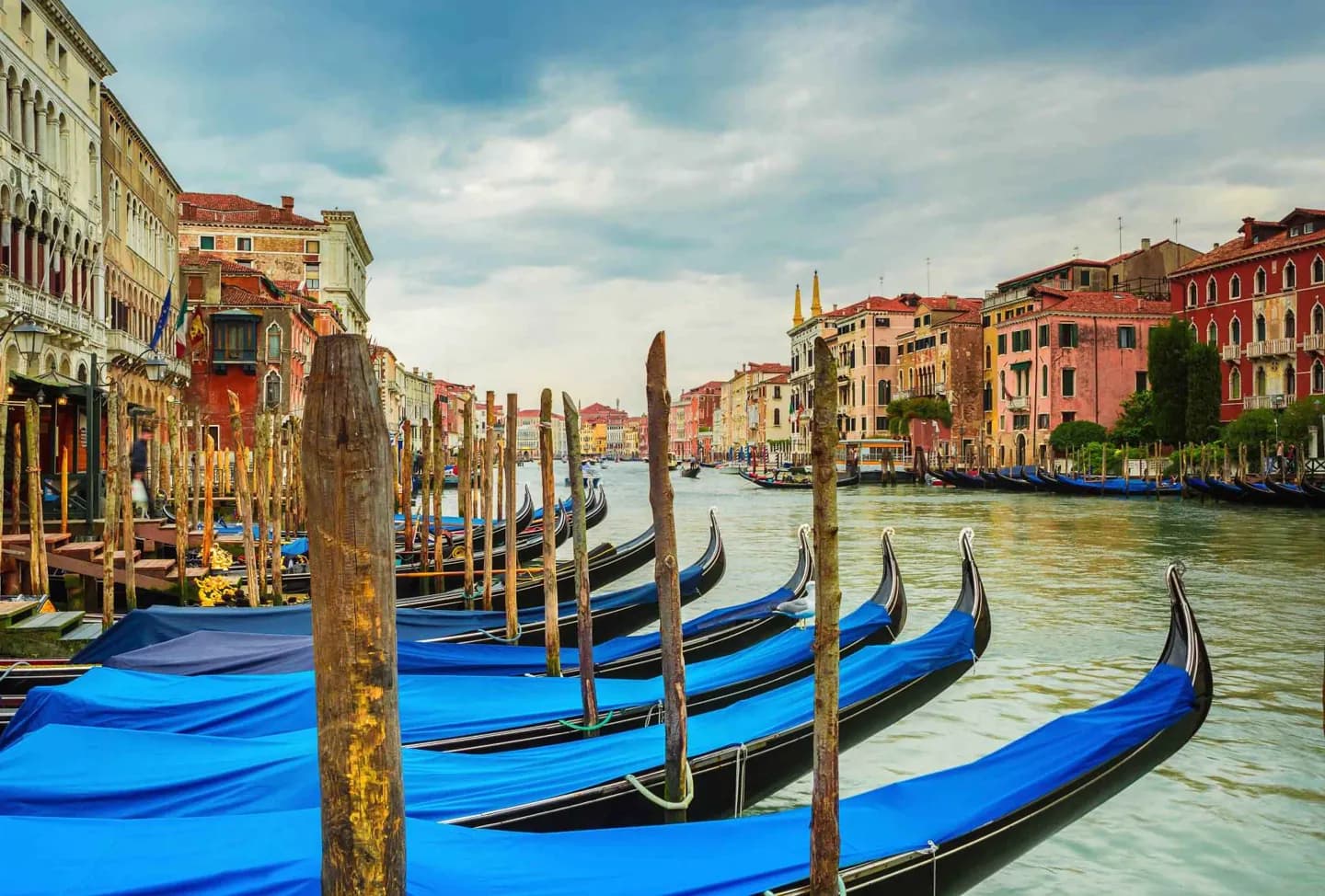
A gondola makes more sense when seen as a working Venetian design rather than a decorative prop. Its asymmetric form, iron prow and low profile respond to canals and rowing technique. That history also explains why gondolas, traghetti and other boats have different roles in Venice.
What to look for
- The modern gondola’s curved profile developed through nineteenth-century boatbuilding.
- The ferro is the distinctive metal fitting at the front of a gondola.
- Traghetti preserve a practical passenger-crossing role on parts of the Grand Canal.
The full story
The historical gondola was not identical to the familiar modern version. Paintings show earlier boats with a lower prow, a higher ferro and often more than one rower. The curved, banana-like form associated with today’s gondola emerged in the nineteenth century through continuing work by boat builders, and the design continued to evolve into the twentieth century. Its prow carries the ferro, the distinctive metal piece whose shape became standardized over time. Gondolas once served a broader transport role in a city where water routes were ordinary streets; today they remain associated with ceremony, tourism and short crossings in different forms. Their survival depends on craft knowledge as much as on visual tradition, making a boatyard or a quiet canal a better place to understand them than a postcard view alone.
Useful to know
- Look at a gondola’s asymmetry and prow before treating it as a simple scenic object.
- Use a traghetto when you need a short Grand Canal crossing rather than a ceremonial ride.