
Why go
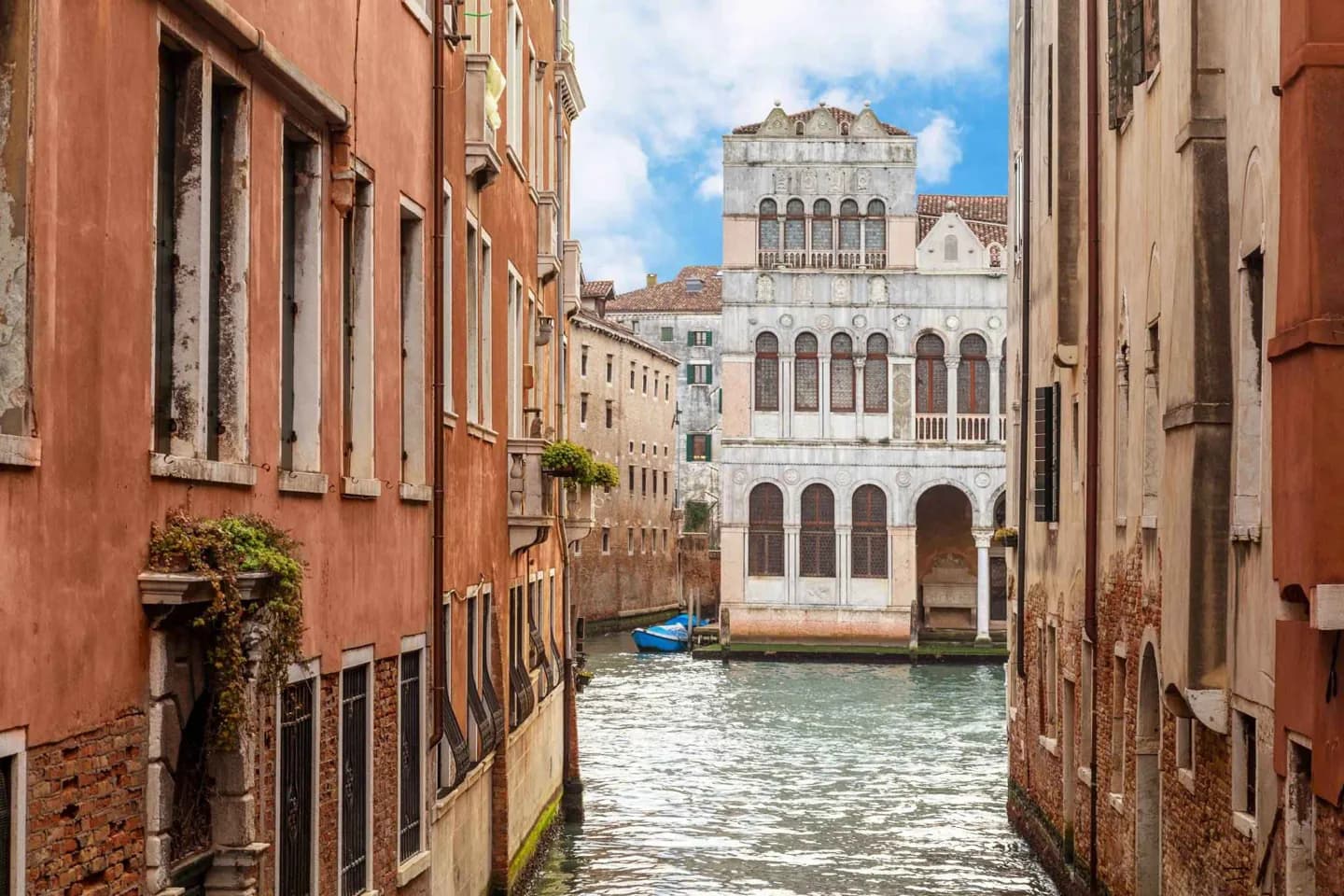
This history makes the canal's palaces more than a scenic backdrop. Early fondaco houses combined storage and residence, Rialto concentrated finance and trade, and the first bridges showed how difficult crossing remained. Look for broad water doors and central loggias: they were shaped by loading, receiving, and displaying goods.
What to look for
- Fondaco houses combined merchant residence with storage and a canal-side unloading space.
- Rialto developed public buildings for commercial and financial administration.
- Ca' Farsetti and Ca' Loredan preserve early Venetian-Byzantine features.
The full story
The Grand Canal probably follows an older lagoon watercourse, but it became Venice's central commercial route as settlement and trade expanded. By the early medieval period, the doge had moved to Rialto, and the deep canal offered a protected place for ships and goods. Along its banks, fondaco houses combined warehouse, portico, residence, and loggia in one practical building type. Goods could be unloaded at the canal edge, stored below, and managed from rooms above. Rialto grew into a center for public institutions handling trade and finance, while warehouses for staples occupied other stretches. The canal's architecture also absorbed influences from Byzantine connections, seen in loggias, arches, and colored marble. Later rebuilding often reused older foundations and materials, so styles overlap rather than replacing one another cleanly. A boat trip reveals this layered history best: behind the decorative façades lies a working canal-port built for loading, lodging, credit, and exchange.