
Why go
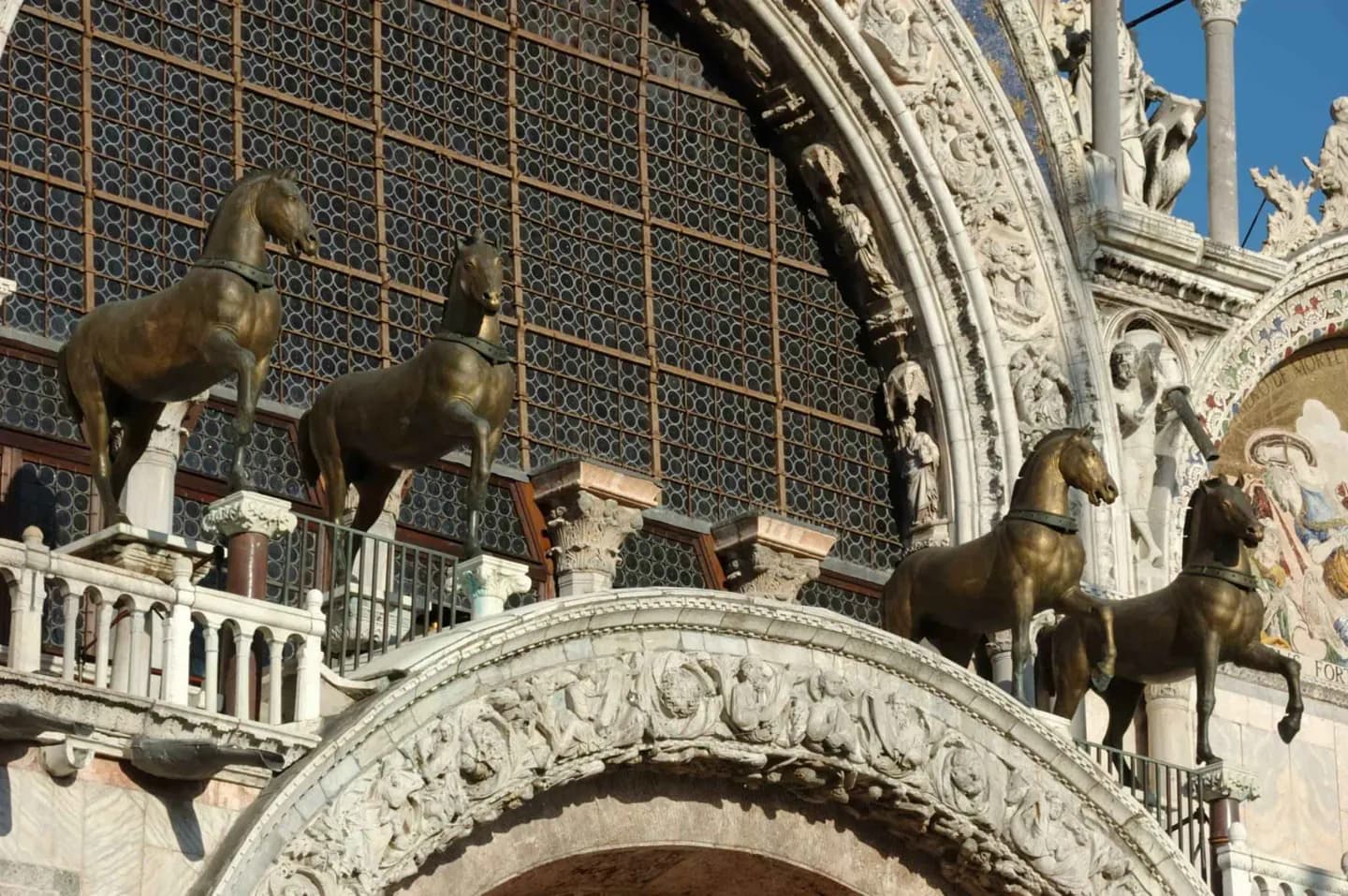
The city's grand architecture makes more sense when seen as the product of trade and state power. The Grand Canal shows merchant wealth, St Mark's shows civic authority, and the Arsenal points to the ships behind both. This lens also explains Venice's unusually strong ties with the eastern Mediterranean.
What to look for
- Grand Canal palaces were built by families competing to display commercial and political standing.
- The Arsenal was a major shipbuilding center for a republic dependent on sea routes.
- St Mark's district concentrated the institutions that governed Venetian expansion.
The full story
From the ninth century, Venice developed from a lagoon settlement into a city-state whose fortunes depended on sea routes. It traded closely with Byzantium and the wider eastern Mediterranean, then used naval power to protect commerce and extend influence along the Adriatic and across islands and coastal territories. The republic also acquired mainland land, partly to secure routes and food supplies. This was not simply an age of luxury: ships, warehouses, law, diplomacy, and a tightly organized government supported Venetian prosperity. The Great Council and the doge governed a state in which leading families competed for status, leaving palaces and churches that remain highly visible today. The contrast between the narrow mercantile lanes around Rialto and the formal spaces around St Mark's is especially revealing. One was built around exchange; the other turned the republic's wealth and authority into public spectacle.