
Why go
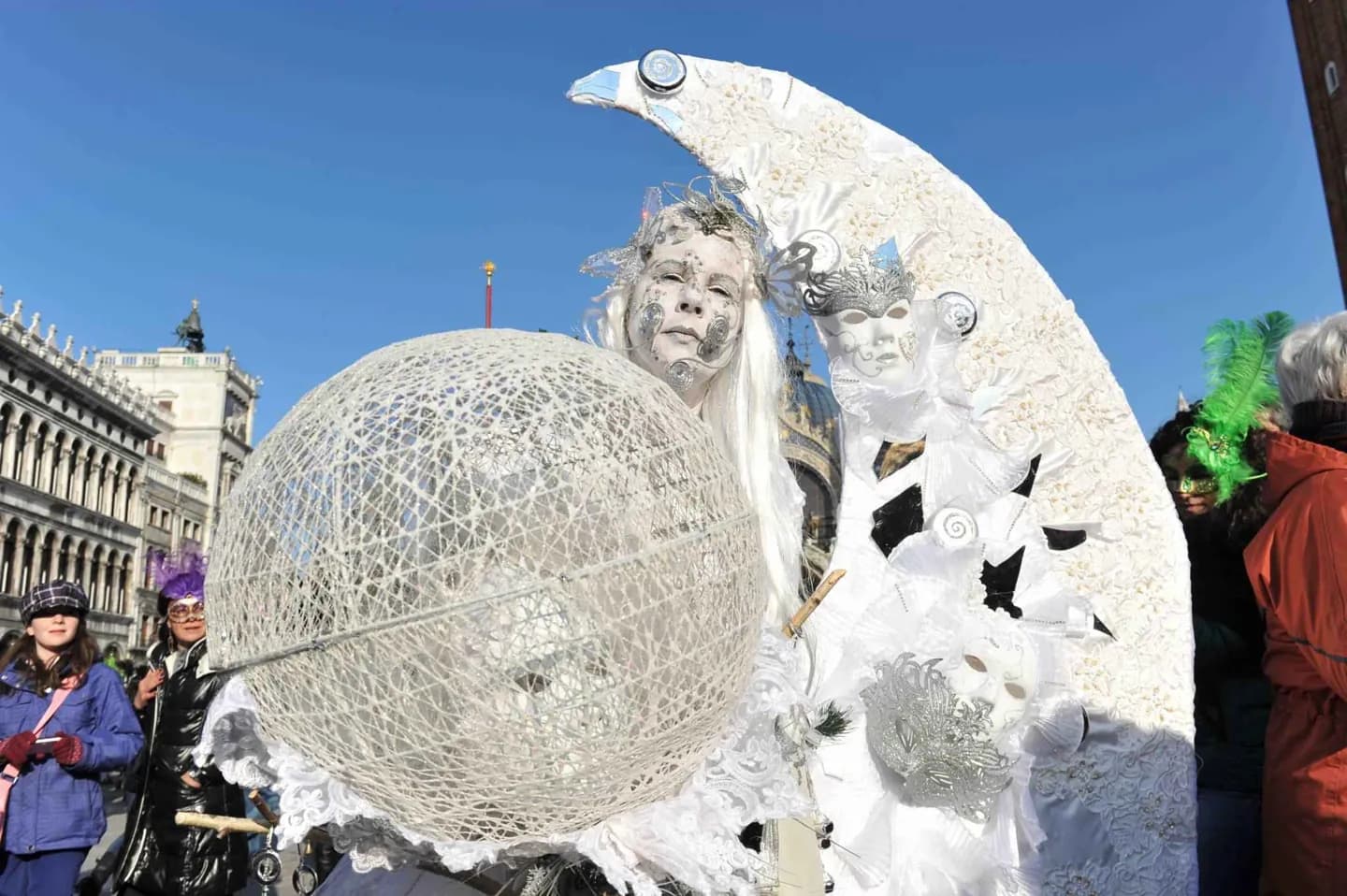
This overview helps visitors link what they see in Venice. St Mark’s Basilica, the gondola, Murano glass, Carnival and the Biennale each belong to different histories, yet all reflect a city shaped by trade, public display and the lagoon. Use them as distinct entry points, then notice their connections across the historic centre.
What to look for
- St Mark’s Basilica connects Venice’s civic identity with Byzantine visual culture.
- Aldus Manutius made Venice an early and influential centre of printing.
- Murano, Carnival and the Biennale show how craft and spectacle remain place-specific.
The full story
Venice built a culture that was both local and outward-looking. Its position in the lagoon made boats, shipbuilding and waterways central to everyday life, while trade brought materials, images and ideas from beyond the Adriatic. St Mark’s Basilica expresses that contact through Byzantine-influenced architecture and mosaics. Printing developed early in the city under Aldus Manutius, and Venetian composers used church interiors to experiment with spatial sound. Carnival and the Biennale show a later tradition of public performance and display. Murano’s glass furnaces preserve another side of the story: a skilled craft tied to a particular island. Looking across these traditions makes Venice feel like a working cultural system, not a collection of isolated landmarks. Each tradition changes what becomes visible on a walk through the city.
Useful to know
- Use one art, music or craft focus to give a day in Venice a clear thread.
- Treat lagoon islands as separate destinations, with their own travel time and character.