
Why go
Carnival gives Venice a different social image from its museum and church interiors. Masks such as the bauta and volto show how anonymity, costume and performance became part of the city’s public culture. The festival is best understood through its history as well as its visual spectacle.
What to look for
- The bauta was designed to preserve anonymity while allowing speech and eating.
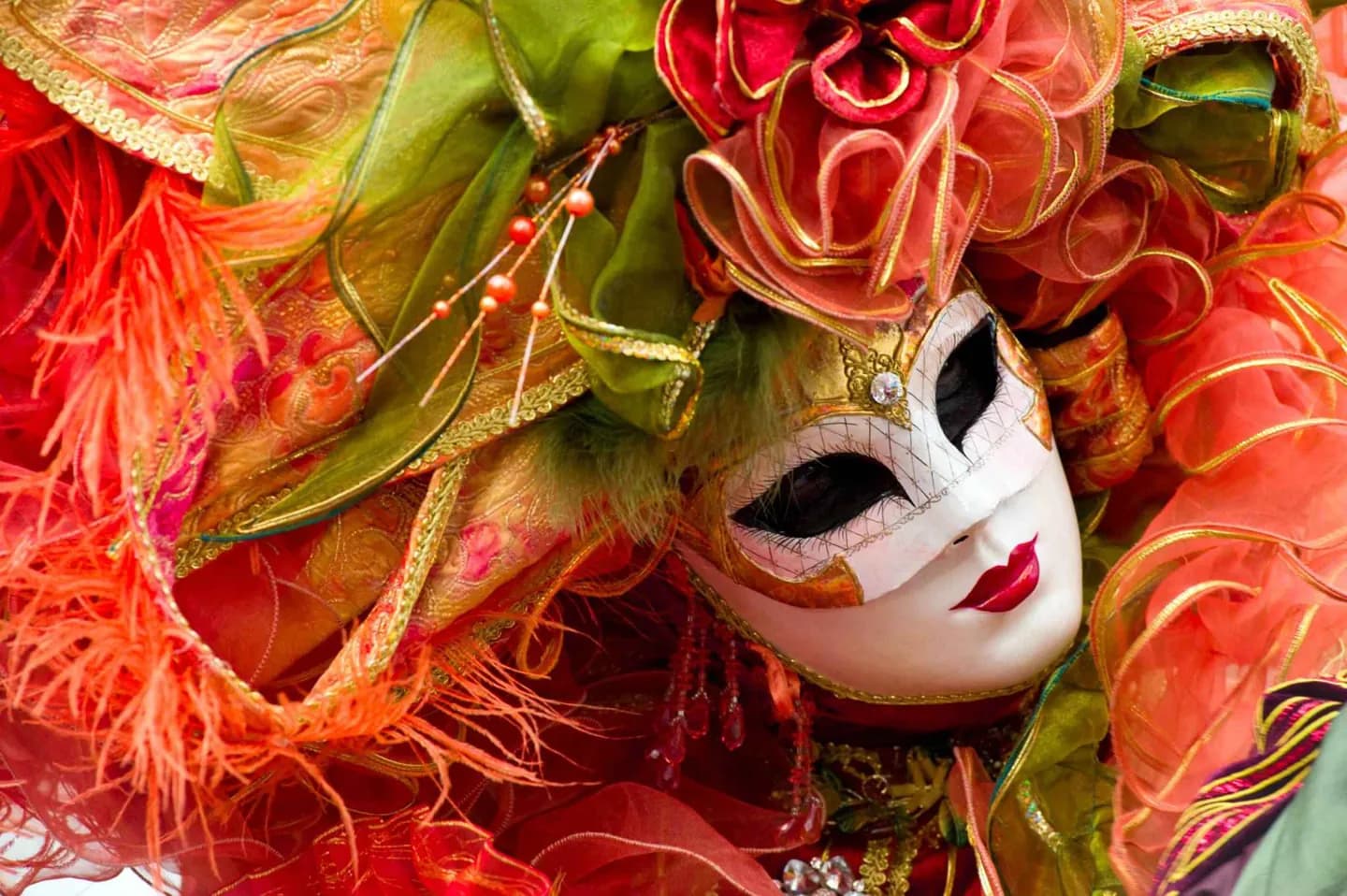
- The volto or larva is the iconic full-face Venetian mask.
- Carnival transforms public spaces across Venice rather than using one permanent site.
The full story
Venice Carnival developed from pre-Lent celebrations and became inseparable from the city’s culture of public performance. Its masks offered a controlled form of anonymity, changing how people could move and appear in social spaces. The bauta covered the face while leaving room to speak, eat and drink, and was commonly paired with a cloak and tricorn. The volto, also called larva, is the familiar full-face white mask, often shown with a cloak and tricorn. These forms matter because they were not simply decorative: they shaped posture, voice and recognition. Modern Carnival draws on that legacy across Venice, using squares, streets and waterfronts as settings. Read the masks as objects with social purpose, not merely souvenirs detached from the city. Their shapes preserve social distinctions behind the festival’s visual glamour.
Useful to know
- Check the official programme for current events and locations during Carnival.
- Look at mask construction and form before choosing a souvenir based only on decoration.