
Why go
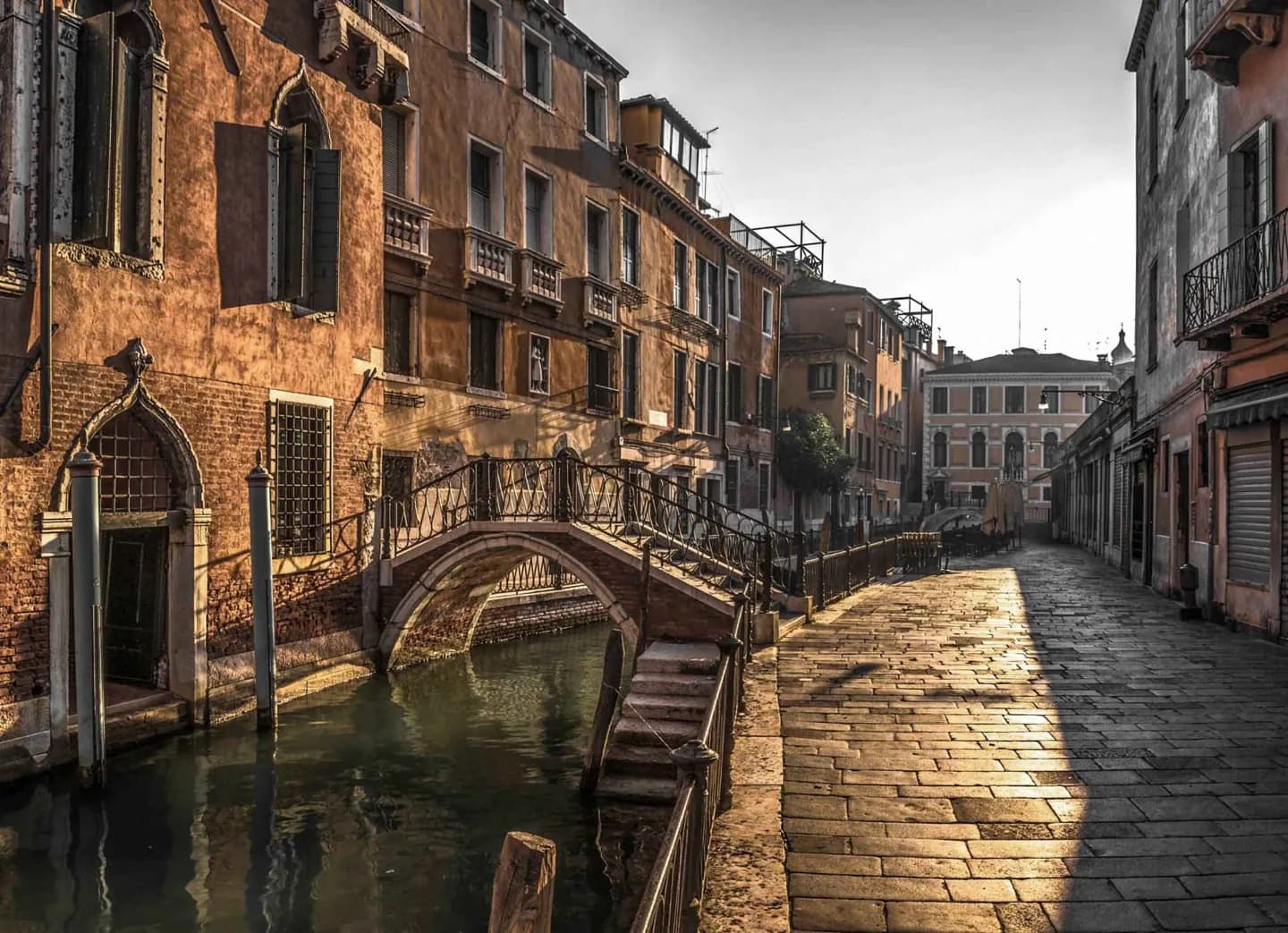
This perspective helps visitors see Venice beyond monuments. A well, a private garden wall, or the open edge at the Giardini recalls the city's dependence on scarce land and managed water. It also explains why the health of the lagoon is inseparable from the experience of canals, islands, and high water.
What to look for
- Pozzi, the distinctive wellheads in campos, recall a city once dependent on stored rainwater.
- The Giardini and Biennale area offer a rare broad green setting within the historic city.
- Walled gardens are often hidden behind dense building fronts and canal-side walls.
The full story
In Venice, environmental questions begin with the lagoon rather than with large city parks. The historic center has limited open ground, although the Giardini, the Biennale area, and gardens behind walls provide important breaks in the dense fabric. Water had to be carefully managed: before modern supply systems, rainwater was collected in cisterns beneath campos and drawn through wellheads known as pozzi. The lagoon also required constant intervention. Venetian authorities redirected rivers to limit sediment build-up, a decision that protected the channels needed for navigation but changed the wider environment. Today, flooding, subsidence, sea-level change, dredged channels, and the condition of marshes remain connected issues. Visitors do not need technical knowledge to see the result. The city's wells, canal edges, garden walls, and open lagoon views all show how little separation exists here between urban life and water management.
Useful to know
- Use the Giardini or the Zattere waterfront when you want space beyond the narrow central lanes.
- Treat water conditions as part of route planning, especially in low areas during unsettled weather.