
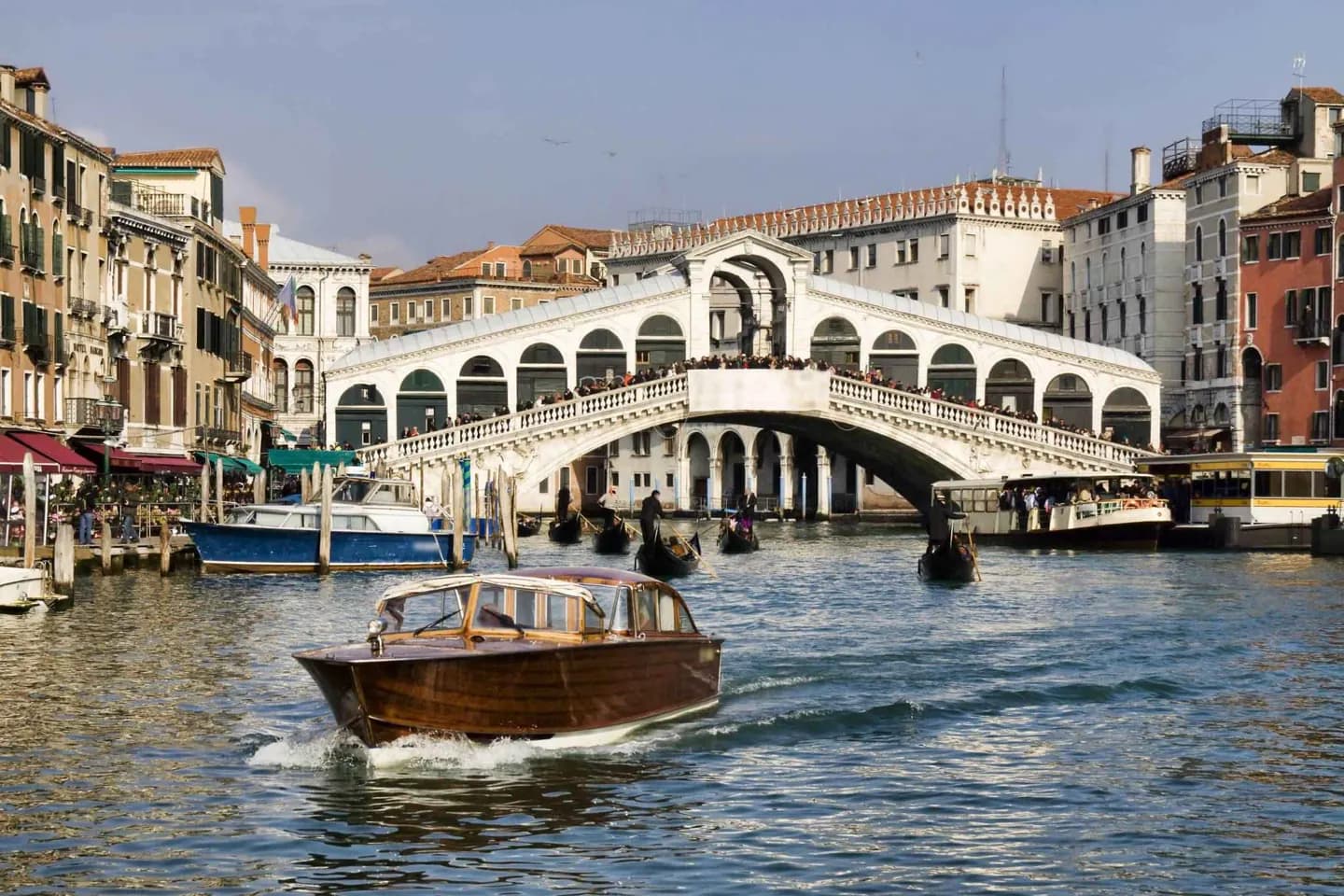
Why go
Its practical advantage is access. A taxi can connect Santa Lucia, Piazzale Roma, Rialto, Lido, and airport-side landings with a closer approach to a destination than a public boat and long walk. It is a transfer choice, not a sightseeing substitute, and current terms should always be confirmed directly.
What to look for
- Water-taxi ranks are associated with major arrival and central areas such as Santa Lucia and Rialto.
- Private boats can reduce the number of bridge crossings with luggage.
- They can be useful for accommodations reached most easily from a canal landing.
The full story
Water taxis are the direct-transfer option in a city where vehicles cannot travel beyond the western edge and a short map distance can hide several bridges. They operate from major points such as Santa Lucia, Piazzale Roma, Rialto, Lido, and airport-side landings, then use canals to bring passengers nearer to a chosen destination. That can be especially helpful with substantial luggage or accommodation on Giudecca, Lido, or an island. Their role differs from a vaporetto's: public boats work along fixed routes and stops, while a taxi is arranged for a particular trip. It also differs from a gondola, whose value is the slow canal experience. Before choosing one, identify the closest accessible landing to your destination and confirm the current terms directly. The decision should be based on the transfer you need, not on a generic idea of arriving in style.
Useful to know
- Confirm the destination landing, luggage arrangement, and current terms before departure.
- Use a water taxi when the door-to-landing advantage matters more than public transport's broader coverage.
- For a simple Grand Canal orientation ride, use a vaporetto instead of treating a taxi as a tour.