
Why go
This chapter gives Venice's later buildings and institutions a useful tension: the city continued to make art, goods, and civic ritual even as its old trading model lost force. It helps visitors avoid reading every palazzo as evidence of permanent power and instead see a city adapting to a changing world.
What to look for
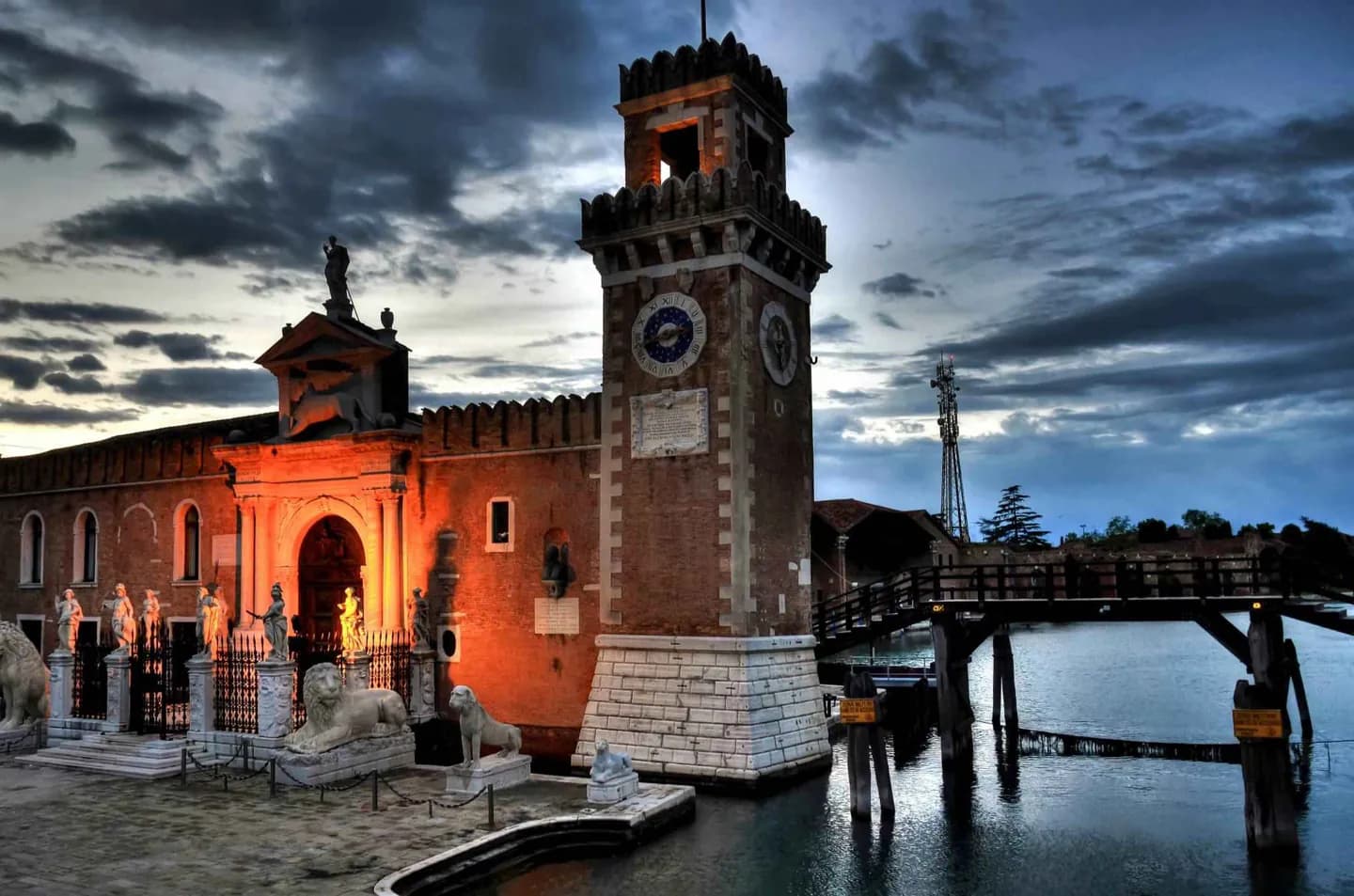
- The Arsenal recalls an era when oared galleys served Mediterranean commerce and defense.
- Grand Canal palaces preserve the wealth accumulated before Atlantic routes reshaped trade.
- Churches and civic buildings also reflect recovery after repeated plague losses.
The full story
Venice's decline was gradual rather than sudden. Ottoman expansion put pressure on its eastern Mediterranean possessions, while new ocean routes to Asia shifted commercial power toward Atlantic ports. Venice's galleys were effective in the Mediterranean but poorly suited to the new long-distance patterns of exploration and trade. Repeated plague outbreaks added a human cost, reducing the population and disrupting urban life. Yet the republic did not simply fade into irrelevance. It remained a manufacturing and agricultural exporter, and Venice continued to commission art and build with confidence. That is why the city contains so much splendor from periods when its political influence was under strain. Along the Grand Canal and around St Mark's, a visitor sees a republic preserving its ceremonial language even as the economic geography of Europe was moving elsewhere.