
Why go
The foundations explain a striking contradiction: substantial palaces and churches rise from soft lagoon terrain. Knowing how they were built changes the way a visitor reads canal edges, worn stone, and ground-level entrances. It also connects Venice's architecture to the practical challenge of high water.
What to look for
- Low canal-side thresholds show how closely buildings meet changing water levels.
The full story
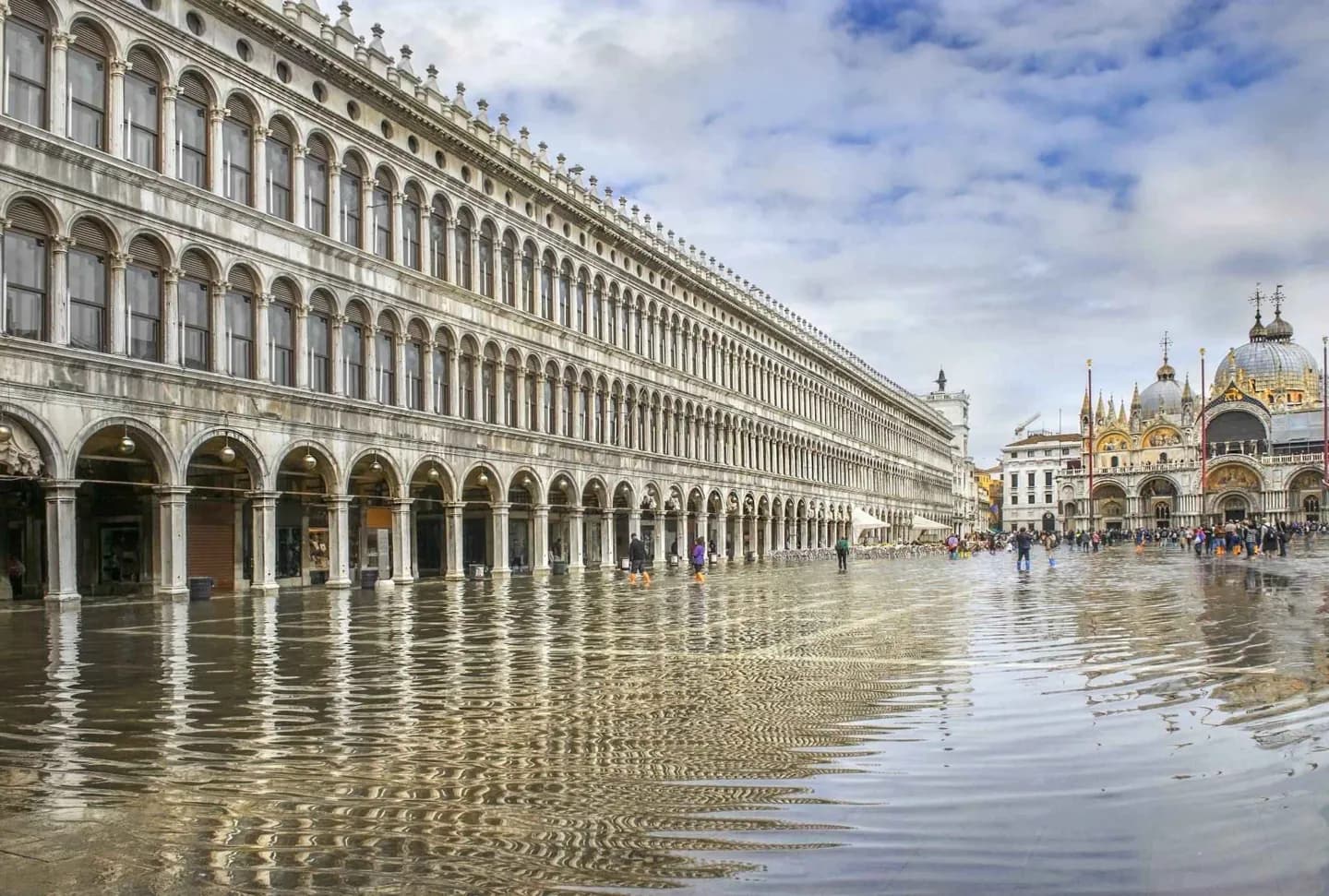
Venice's buildings are not floating. Their foundations rest on closely spaced wooden piles driven through soft sand and mud to a firmer layer of compressed clay. Above them, builders placed platforms and Istrian limestone before raising lighter brick or stone walls. Timber survives well when submerged in low-oxygen conditions, which helps explain why piles have endured for centuries. This construction method made it possible to create dense urban blocks on a fragile-looking setting, but it did not remove the city's exposure to water. Gradual subsidence and tides from the Adriatic can bring acqua alta, when water reaches squares and streets. The foundations therefore connect engineering and daily experience: a palazzo's heavy façade, a canal threshold, and a raised walkway during high water are all parts of the same long negotiation with the lagoon.
Useful to know
- If high water is forecast, check the official tide information before choosing routes through low-lying areas.
- Allow extra time near St Mark's Square and canal edges when water conditions are unsettled.