
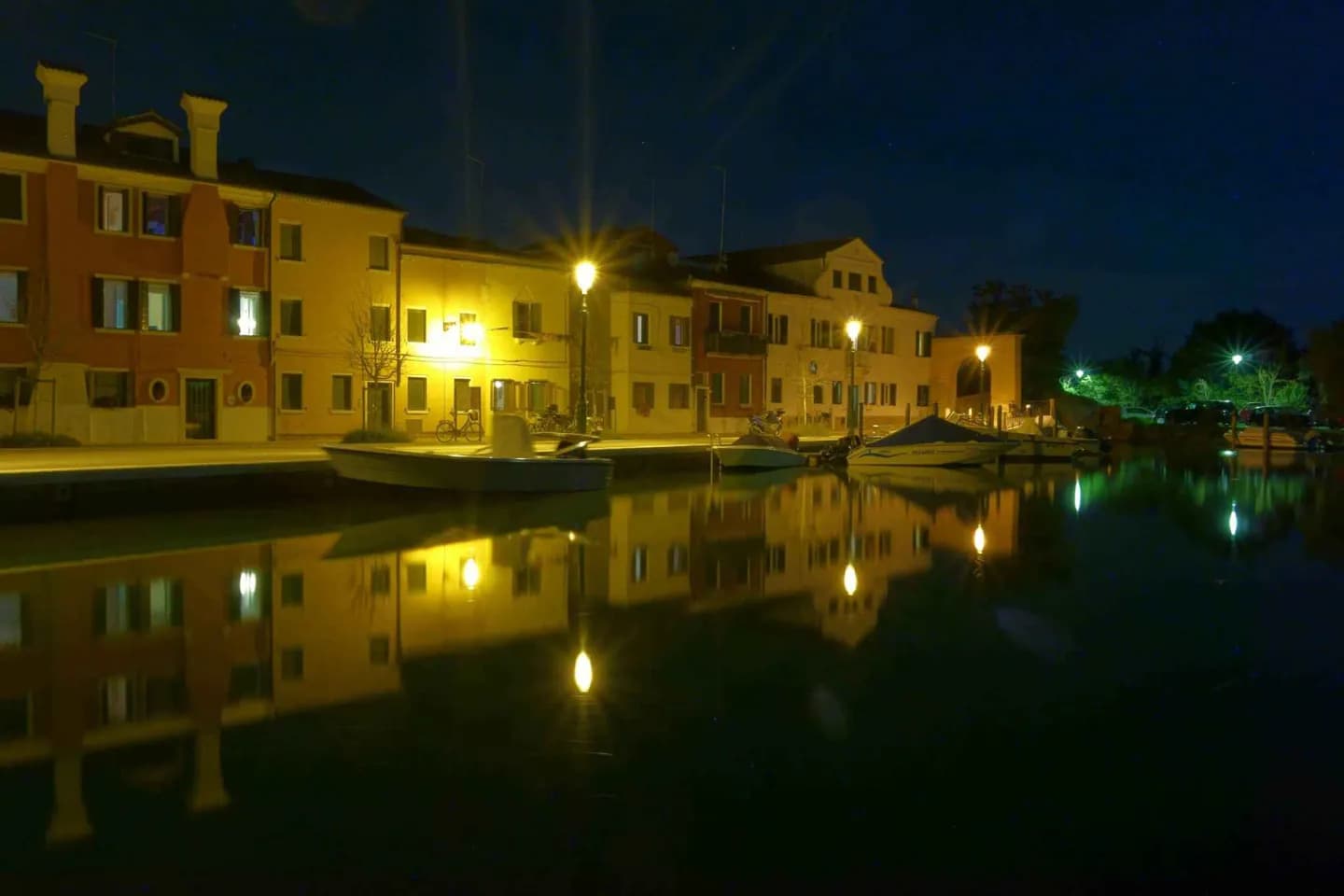
Why go
The settlement draws attention to the Lido's history before modern resort development. Piazza Maggiore, Santa Maria Assunta and the Gothic Palazzo del Podestà give the walk clear architectural anchors. Its connections with early ducal history require distinguishing the present village from an older nearby settlement lost to the water.
What to look for
- Santa Maria Assunta stands in Piazza Maggiore.
- The fifteenth-century Palazzo del Podestà uses a Gothic architectural language.
- Ponte Borgo forms one of the settlement’s small crossings.
The full story
Malamocco's name carries a complicated relationship with Venice's earliest political geography. An early ducal seat was associated with this part of the lagoon before government moved to Rialto. The present settlement should be distinguished from Metamaucum, an older town on a nearby island that was lost as water levels rose. The surviving village has its own later architectural history. Santa Maria Assunta developed from a church originally dedicated to Our Lady of the Sea, a name fitting the barrier-island setting. Alterations over several centuries added to its Veneto-Byzantine beginnings. The Gothic Palazzo del Podestà recalls local administration under the Republic. A podestà governed the district, connecting the small settlement to Venice's wider political structure. Church, civic palace and bridges provide tangible anchors for that history. They make Malamocco a different Lido choice from the resort hotels and bathing shore: its principal interest is the shape and institutions of a historic settlement.
Useful to know
- Check onward transport from the Lido arrival area before setting out for Malamocco.
- Make the settlement the focus of the outing instead of assuming it adjoins the northern resort centre.
Your next visit
Estimated · Declared scenario and planning estimates; no live opening, weather, queue or booking service.
Outdoor visit · 30–60 min
World planning estimate; admission, opening, visit duration and access need checking.