
Why go
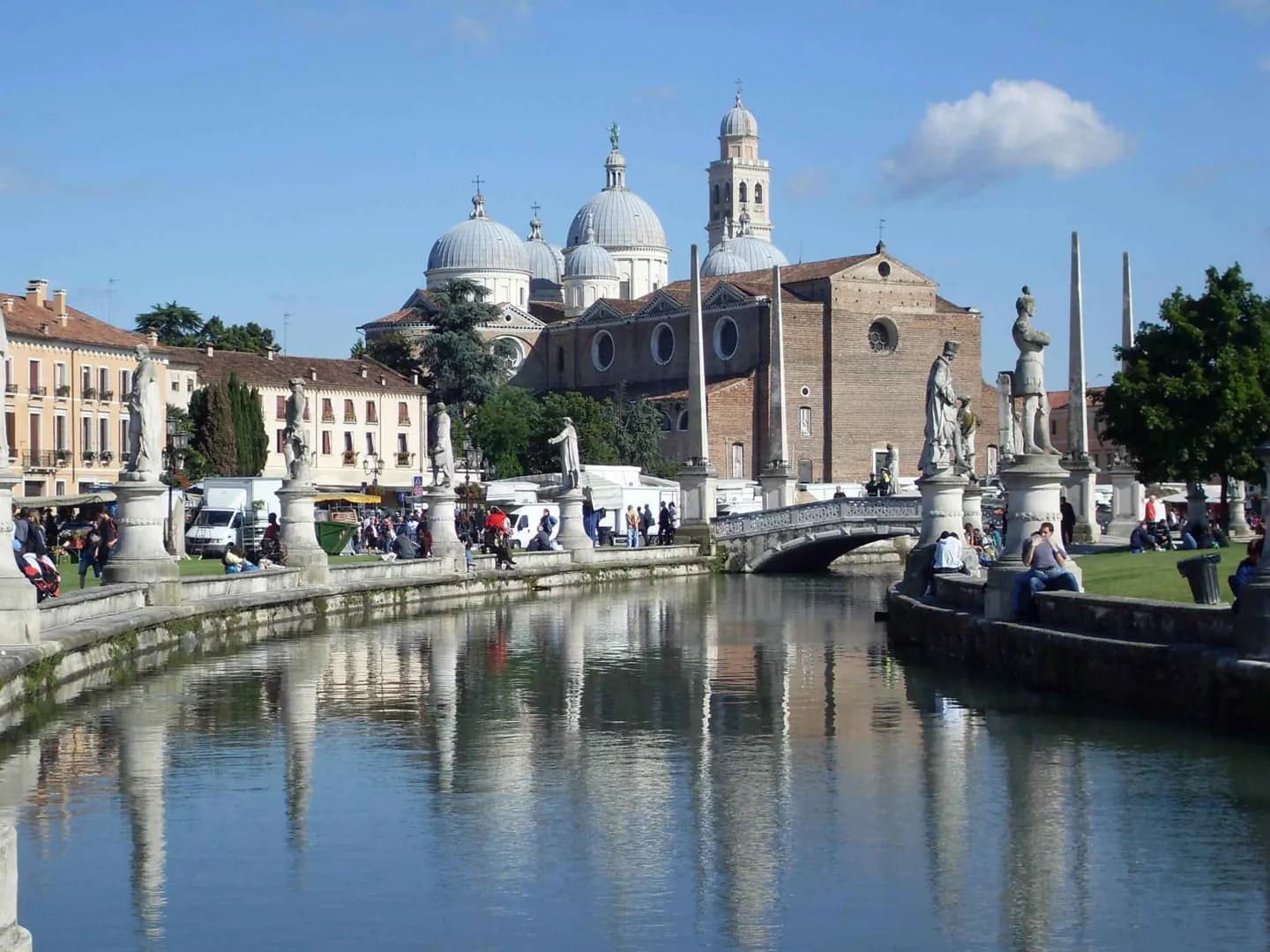
The University of Padua, where Galileo lectured, gives the city a strong intellectual identity. Arcades open into broad piazzas, while branches of the Bacchiglione reveal another relationship between urban life and water. This makes Padua an excursion for streets, civic space and scholarship, with the Euganean Hills forming a separate landscape beyond the city.
What to look for
- Arcaded streets open into large communal piazzas.
- Bridges cross branches of the Bacchiglione.
- The University of Padua dates to the thirteenth century.
The full story
Padua’s university was founded in 1222, and Galileo later taught there. That history gives the city a scholarly association extending beyond a single monument. Its arcaded streets and communal squares provide the urban setting in which that institutional life developed. Water also shaped the city. Branches of the Bacchiglione crossed the built area and once surrounded the walls like a moat. The Brenta’s changing course belongs to a longer history of rivers altering the Venetian Plain. Bridges and waterways therefore offer a different comparison with Venice: the city is a mainland settlement organized around rivers rather than an island network. Padua’s origin story reaches still farther back. Classical tradition attributed its foundation to the Trojan Antenor, and a medieval discovery was interpreted as his tomb. That identification belongs to civic legend, rather than secure archaeology. The distinction reveals how an old city used an ancient story to explain its own identity.
Useful to know
- Reserve a separate day for the mainland city and check the return journey before leaving Venice.
- Keep a central Padua walk distinct from an outing to the Euganean Hills.
Your next visit
Estimated · Declared scenario and planning estimates; no live opening, weather, queue or booking service.
Outdoor visit · 240–480 min
World planning estimate; admission, opening, visit duration and access need checking.