
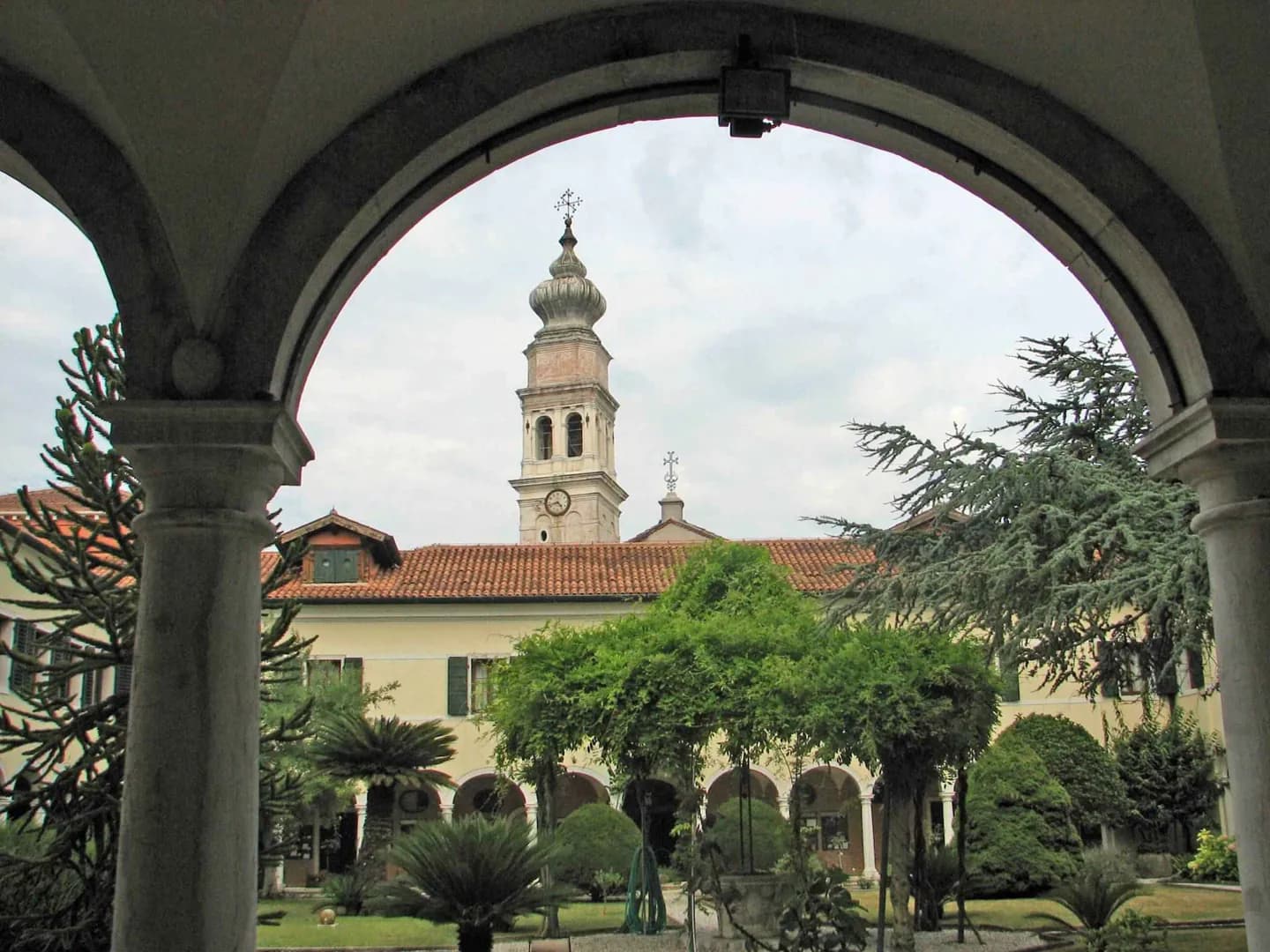
Why go
The island offers a different kind of lagoon outing from Murano's craft walk or Burano's painted streets. Its defining institution is a monastic centre of Armenian scholarship and printing. Books and manuscripts connect a small Venetian island with the preservation of language and culture far beyond the lagoon.
What to look for
- The monastery holds a substantial Armenian manuscript collection.
- A bronze statue commemorates Mkhitar, founder of the order.
The full story
San Lazzaro's name comes from its earlier use as a leper colony, dedicated to the patron saint of people with leprosy. After the hospital moved away, the island declined until Armenian Catholic monks found a new purpose for it. Mkhitar and his community came to Venice after displacement from the eastern Mediterranean, and the Venetian Senate granted them the island. The Mechitarist community made it a centre of Armenian learning. Its collections of manuscripts, books and journals supported study, while printing helped sustain Armenian cultural life across the diaspora. This was not simply an isolated religious retreat: its influence depended on the circulation of texts and knowledge. The physical island also changed through reclamation, rebuilding and restoration. A later fire damaged the library and church, followed by conservation work. Its present cultural role rests on the survival and renewal of both the monastic buildings and the scholarly collections within them.
Useful to know
- Arrange the monastery visit before planning the water journey to the island.
- Check transport for both directions around the visit you have arranged.
Your next visit
Estimated · Declared scenario and planning estimates; no live opening, weather, queue or booking service.
Outdoor visit · 60–90 min
World planning estimate; admission, opening, visit duration and access need checking.