
Why go
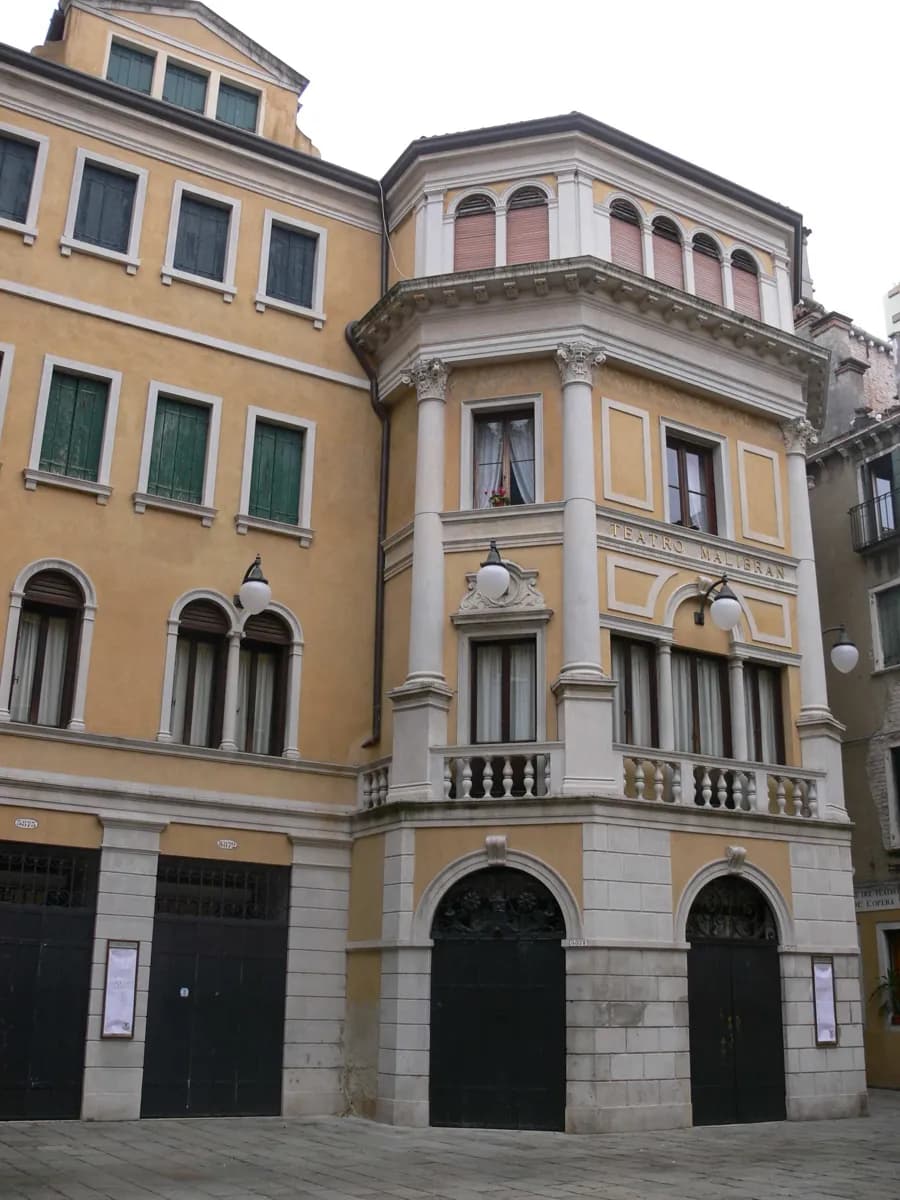
This theatre connects Venice to Handel's early success, Goldoni's comedies and the nineteenth-century opera repertory. Its history gives a performance here a distinctive context: the Malibran began as the Grimani family's ambitious San Giovanni Grisostomo theatre and survived repeated changes of name and purpose.
What to look for
- The theatre opens onto Campiello del Teatro in Cannaregio.
- The Malibran name commemorates soprano Maria Malibran.
The full story
The theatre opened in 1678 as San Giovanni Grisostomo, named after the nearby church. Built for the Grimani family, it became an important stage for ambitious opera productions. Handel's Agrippina premiered here in 1709, linking this Cannaregio building to a work that helped establish the young composer's reputation. Its fortunes shifted as Venetian theatrical tastes and rival venues changed. Goldoni introduced spoken plays during the eighteenth century, and the Grimani family's later San Benedetto theatre drew activity elsewhere. Restoration and new ownership brought further identities, including a brief name meaning Theatre of Day and Night. The lasting name came from Maria Malibran's appearance in Bellini's La sonnambula in 1835. The soprano reportedly declined her fee so that it could be used to improve the deteriorating theatre. Opera, operetta and cinema subsequently shared its history. The name remembers a practical gesture toward a struggling stage, as well as a celebrated voice.
Useful to know
- Locate Campiello del Teatro near Rialto before setting out; La Fenice is a separate venue.
- Combine the theatre exterior with a walk through the Rialto surroundings.
Your next visit
Estimated · Declared scenario and planning estimates; no live opening, weather, queue or booking service.
Indoor visit · 90–120 min
World planning estimate; admission, opening, visit duration and access need checking.