
Why go
The building records the importance of Torcello as a bishop's seat. Its long nave, side aisles and apse arrangement provide a clear architectural framework for mosaics, including the Last Judgement on the entrance wall. The church is especially valuable when its art is read alongside the island's surviving civic buildings.
What to look for
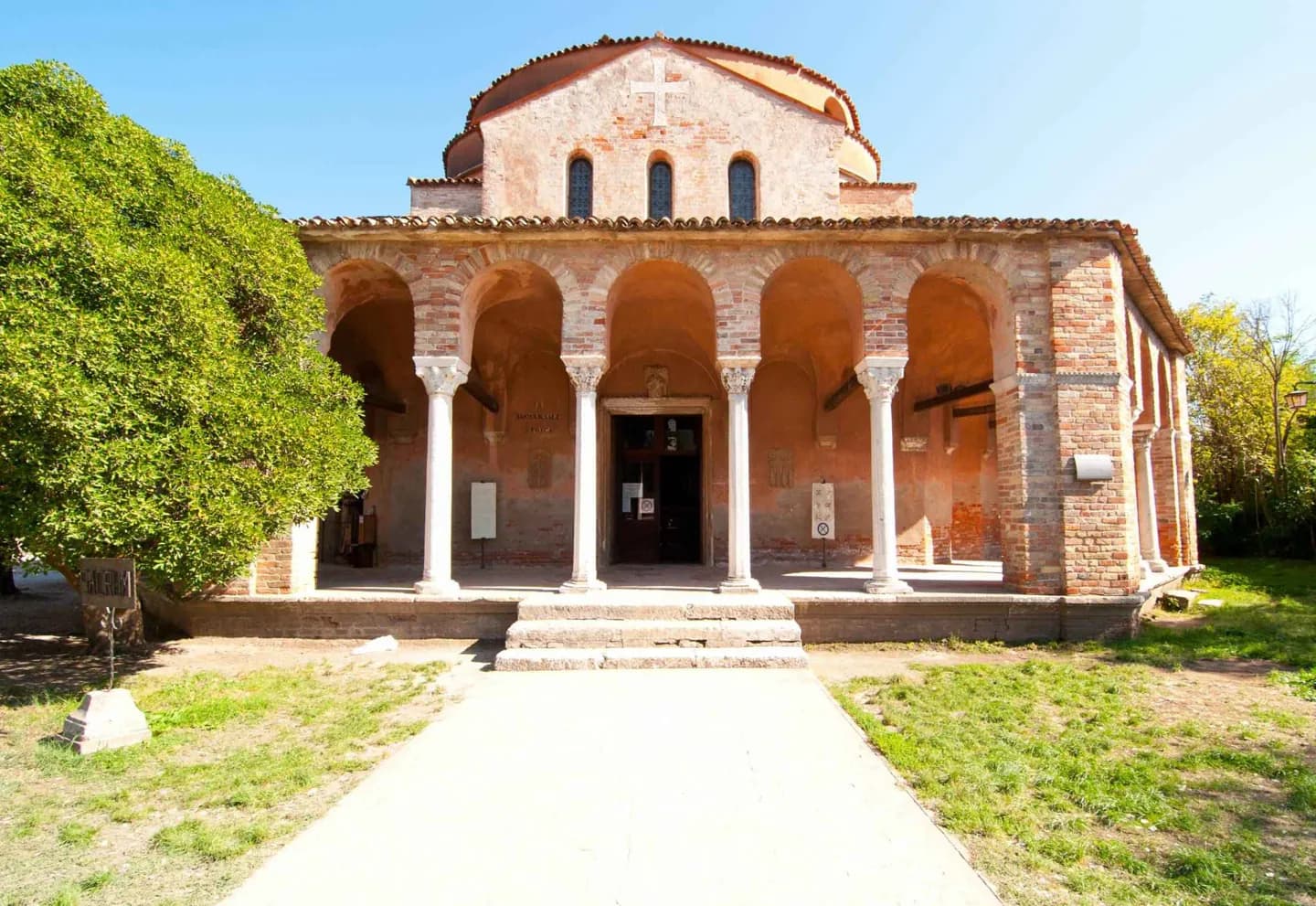
- A frontal portico precedes the cathedral entrance.
- The interior has a nave and two side aisles.
- The Last Judgement mosaic occupies the wall inside the entrance.
The full story
An ancient inscription records the cathedral's early foundation under the exarch of Ravenna. Very little of the first building survives unchanged, but subsequent renovations kept much of its basilica arrangement. The church's apparent simplicity therefore contains a long history of rebuilding. Major alterations added side apses and reshaped the central apse, including the seating associated with the bishop and clergy. A later campaign raised the nave and created the arcades separating it from the aisles. These changes gave the building much of the form visible today. The cathedral also held the burial of St Heliodorus, connecting Torcello's church with the bishop of Altino and the movement of a religious community into the lagoon. Its mosaics belong to the same wider Byzantine cultural world. Reading the architecture, episcopal furnishings and images together gives a fuller sense of the institution that once made Torcello a major religious centre.
Useful to know
- Check cathedral visit information before making an interior mosaic visit the reason for the water journey.
- Compare the cathedral exterior with neighbouring Santa Fosca's different plan.
Your next visit
Estimated · Declared scenario and planning estimates; no live opening, weather, queue or booking service.
Outdoor visit · 15–25 min
World planning estimate; admission, opening, visit duration and access need checking.