
Why go
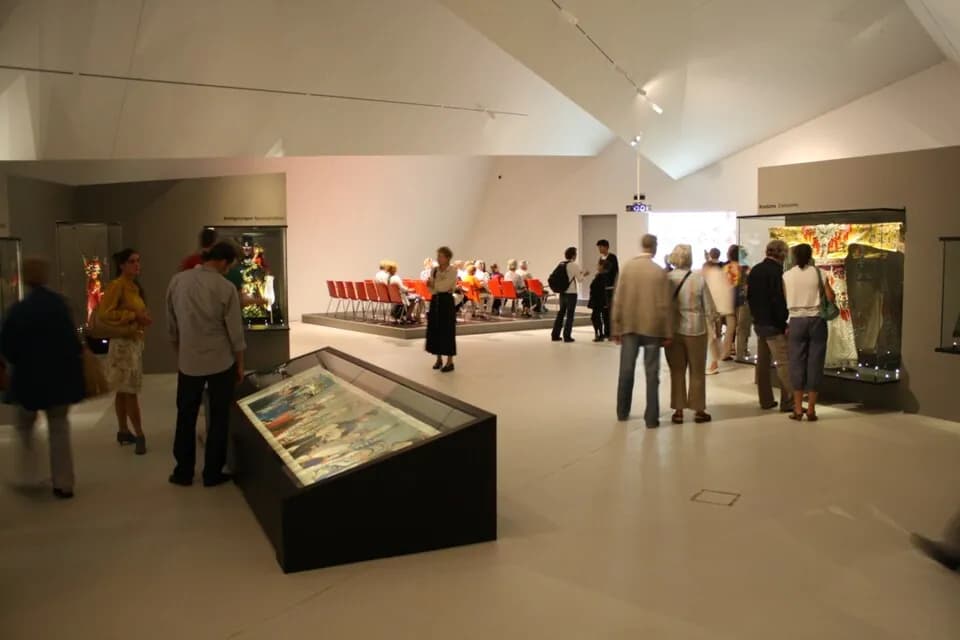
The museum's holdings connect European, Pacific, American and Asian material with questions about how cultures are collected and represented. Its own history, from a combined nineteenth-century natural-history and ethnography museum to a separate cultural institution, adds a Basel perspective to the displays.
What to look for
- Exhibitions drawing on the museum's global collections
- Basel's local cultural traditions within a wider ethnographic remit
- Its setting on Münsterhügel near the Minster
The full story
Museum der Kulturen Basel grew from the city's nineteenth-century Museum of Natural History and Ethnography, which brought together objects gathered by Basel merchants and travellers. Ethnology later became its own department and then a separate institution. Over the twentieth century, the museum's name and focus changed as it increasingly addressed relationships among cultures rather than simply displaying distant objects. Its collections include material from Europe, the South Pacific, Mesoamerica, Tibet and Bali, as well as records of Basel traditions. That breadth gives the museum a different question from its natural-history neighbour: what do objects reveal about the people who made, used and collected them? The current exhibitions determine which parts of that large collection a visitor will actually encounter. The location on Münsterhügel also makes that institutional history part of a walk through Basel’s older civic centre.
Useful to know
- Check the current exhibition themes before choosing this over a general art or history museum.
- Combine it with Basel Minster on Münsterhügel to see two very different uses of the historic hill.
Your next visit
Estimated · Declared scenario and planning estimates; no live opening, weather, queue or booking service.
Outdoor visit · 30–45 min
World planning estimate; admission, opening, visit duration and access need checking.