Chapter 1 / Brisbane
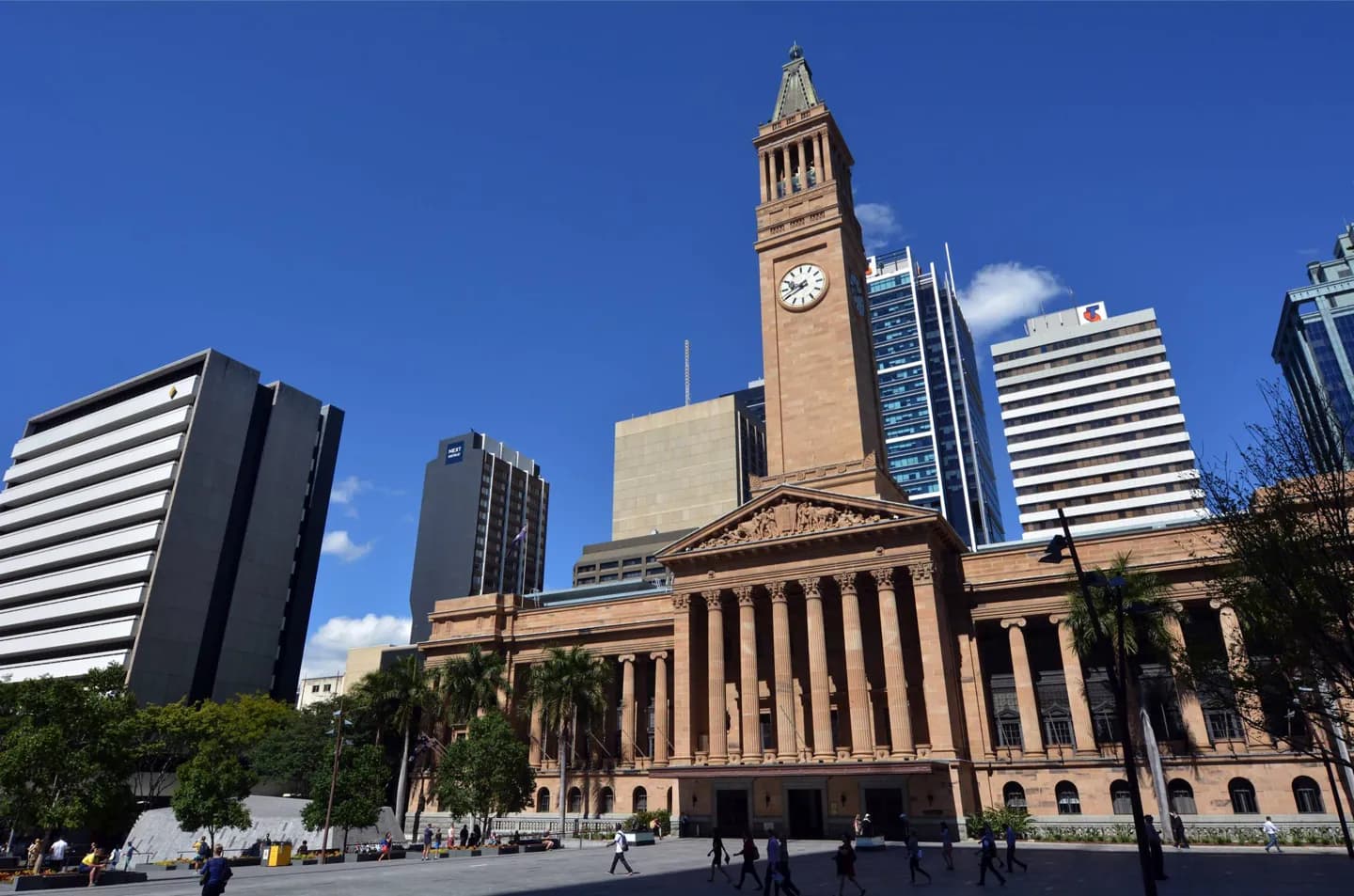
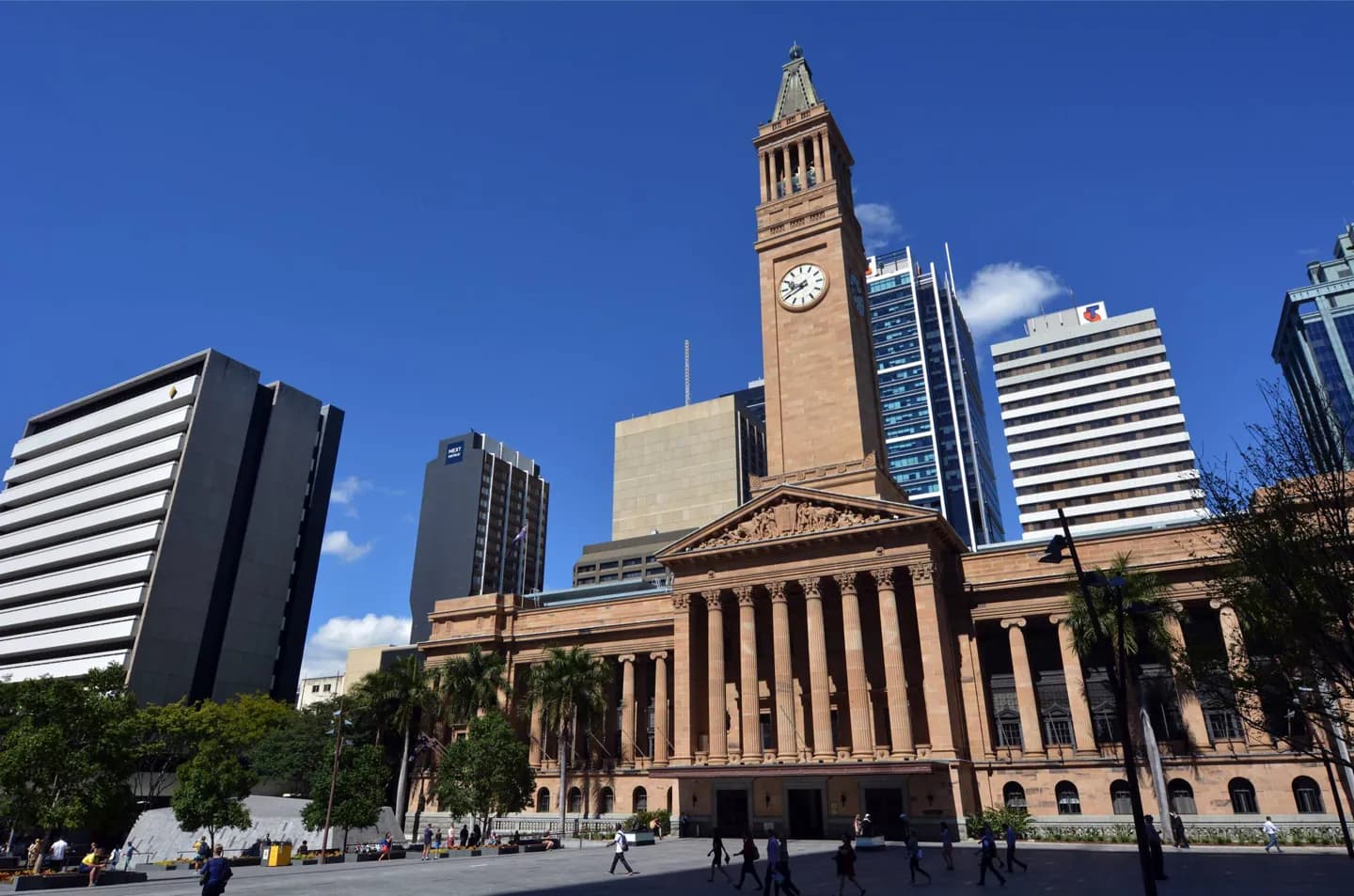
Brisbane City Hall.
Start with Brisbane City Hall. Let a detail decide which thread you follow next.
Pause here. What detail would you keep from this place?
Outdoor walks and façade observations. Interior admission is not included.
The full story
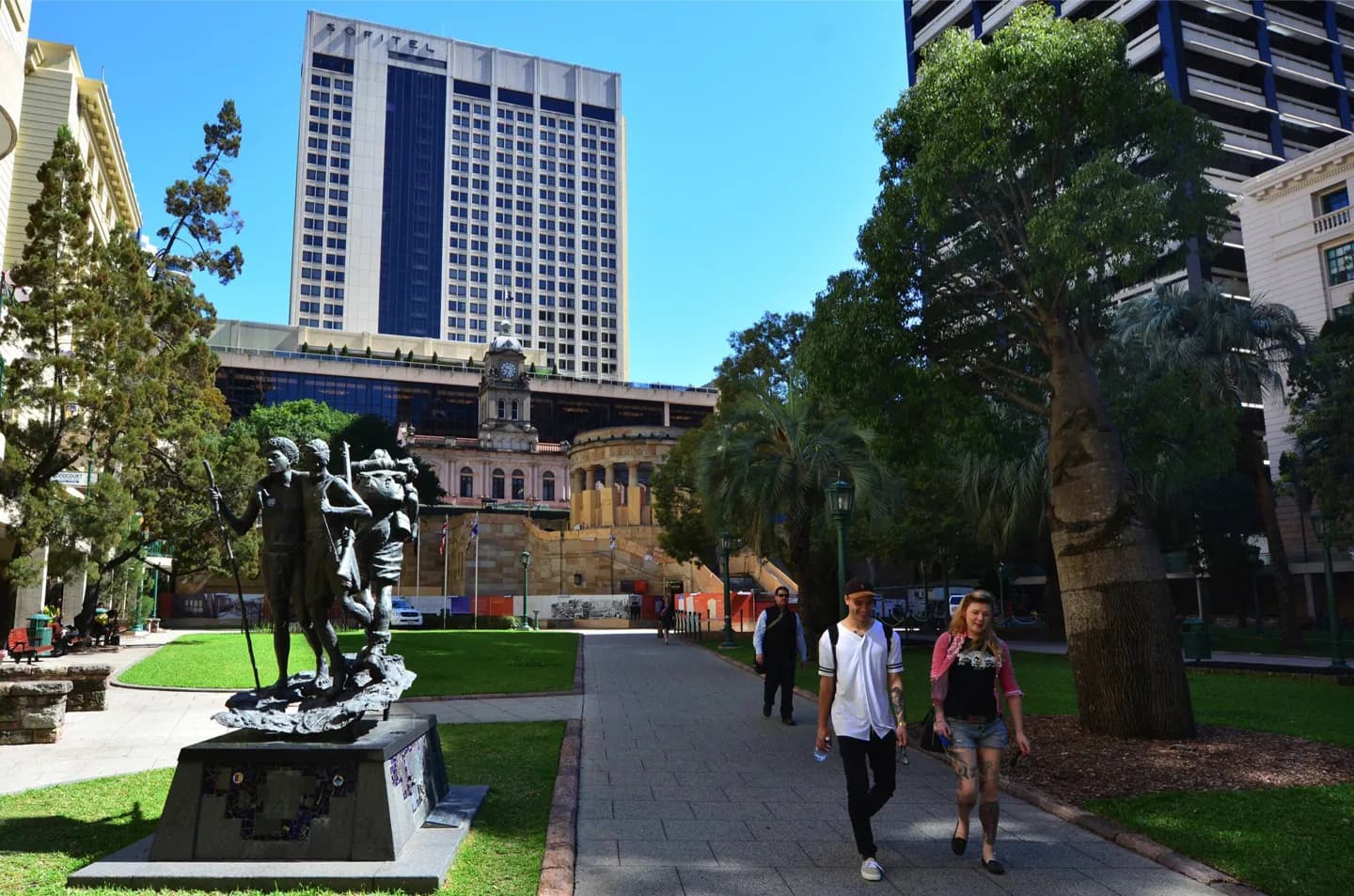
Brisbane City Hall faces King George Square with a formal stone facade and clock tower. Its public rooms make a useful civic stop near the Museum of Brisbane.
This is the place to see how Brisbane presented its civic ambitions in the early twentieth century. Enter from King George Square to compare the restrained exterior with the heritage interiors, then consider the clock tower and the museum upstairs as separate parts of the visit. Check current visitor arrangements for each.
Brisbane City Hall took years to move from civic ambition to finished building. Debate over its location ended with the choice of the square now called King George Square. The first foundation stone was laid in 1917 before plans were ready; another followed in 1920, and construction began in earnest in 1924. The building opened in 1930. Its formal symmetry and Italian Renaissance influence were meant to express civic permanence, while the large clock tower made it a visible city landmark. City Hall hosted public ceremonies, concerts and political gatherings, so its interiors were designed for more than council business. After structural problems were found, a major restoration led to its reopening in 2013. The Museum of Brisbane now gives visitors another reason to go beyond the facade and see the building from within.
- The symmetrical facade facing King George Square.
- The clock tower above the civic building.
- Heritage rooms inside City Hall.
Approach from King George Square to take in the main facade before entering.
Pair the building with the Museum of Brisbane inside City Hall.
Check the official visitor information if the clock tower is a priority.
What is pulling you next?
Another door into this story