
Why go
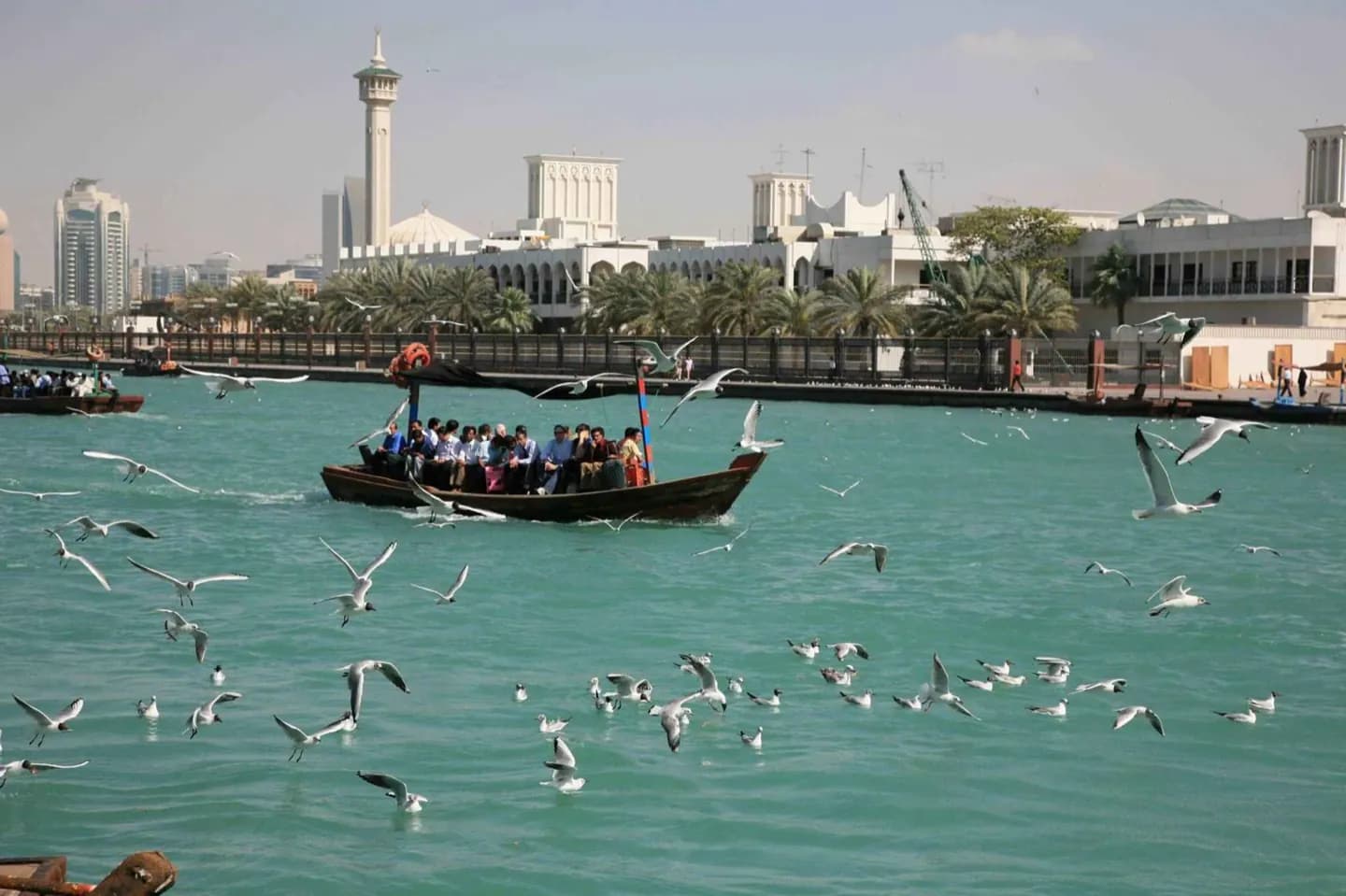
Crossing Dubai Creek by abra turns geography into experience: the old souks of Deira and Bur Dubai come into view as two halves of one commercial center. The short ride also reveals how a modest natural harbor shaped settlement, boatbuilding, pearling and regional trade long before modern Dubai expanded inland.
What to look for
- Traditional abras shuttle between old-souk stations on opposite banks.
- Dhows and small working vessels keep the waterway tied to regional trade.
- Deira's market frontage contrasts with Al Shindagha and Bur Dubai across the water.
The full story
Dubai Creek divided the early town into Deira and Bur Dubai, but it also bound them together through trade. Members of the Bani Yas settled on the Bur Dubai side in the nineteenth century, establishing the Al Maktoum dynasty. Dhows arrived from India and East Africa, while pearling, fishing and boatbuilding supported life along the banks. The shallow channel initially limited larger vessels, so work begun in the 1950s and dredging in 1961 made passage more dependable. Further dredging in the 1960s and 1970s helped coastal shipping and re-export trade expand. Later ports took over much of the heavy traffic, yet abras and smaller commercial craft remained. That history is visible in the present journey: a very short crossing still joins markets, historic quarters and landing places that grew because of the water.
Useful to know
- Use an abra crossing to connect the Deira souks with Bur Dubai instead of retracing your route by road.
- Walk a bank before crossing so the creek reads as a working waterway, not only as transport.
- Check the current marine timetable for the specific station and service you plan to use.
Your next visit
Estimated · Declared scenario and planning estimates; no live opening, weather, queue or booking service.
Outdoor visit · 30–45 min
World planning estimate; admission, opening, visit duration and access need checking.