
Why go
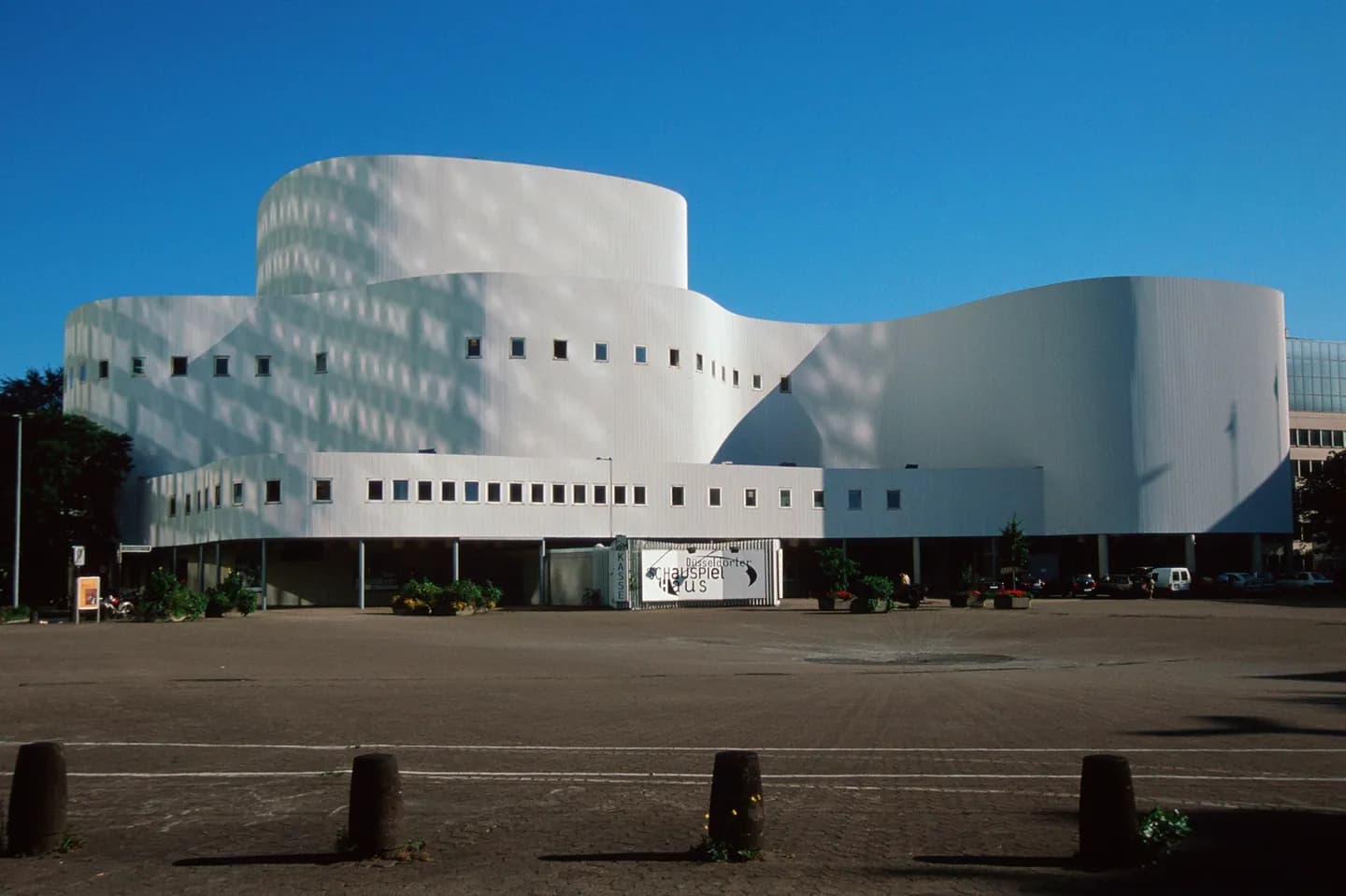
The building gives this central square a theatrical focus before you even enter. For an evening here, select among the Großes Haus, Kleines Haus and Unterhaus programmes; each performance is its own visit, so the play matters more than a generic building tour.
What to look for
- The theatre’s curved, sculptural exterior faces Gustaf-Gründgens-Platz.
- Großes Haus, Kleines Haus and Unterhaus host distinct performances.
The full story
The present Schauspielhaus grew from a practical problem: the postwar Operettenhaus could no longer serve the city’s dramatic programme adequately. Düsseldorf secured the Gustaf-Gründgens-Platz site in the late 1950s, then selected Bernhard Pfau’s design through an international competition. His theatre opened in 1970. Rather than presenting a conventional flat street front, it reads as a sculptural form on the square, particularly against the straight lines of the neighbouring Dreischeibenhaus. The building carries several performance spaces, so the name Schauspielhaus refers both to a civic landmark and to an active theatre company. That distinction helps plan a visit. The square gives you the architecture in daylight; the programme determines whether you will experience the building as a theatre. Look at the exterior first, then choose a production and stage if you want the full indoor experience.
Useful to know
- View the building while crossing Gustaf-Gründgens-Platz.
- Check the official Spielplan for a specific production before planning an interior visit.
Your next visit
Estimated · Declared scenario and planning estimates; no live opening, weather, queue or booking service.
Outdoor visit · 30–45 min
World planning estimate; admission, opening, visit duration and access need checking.