
Why go
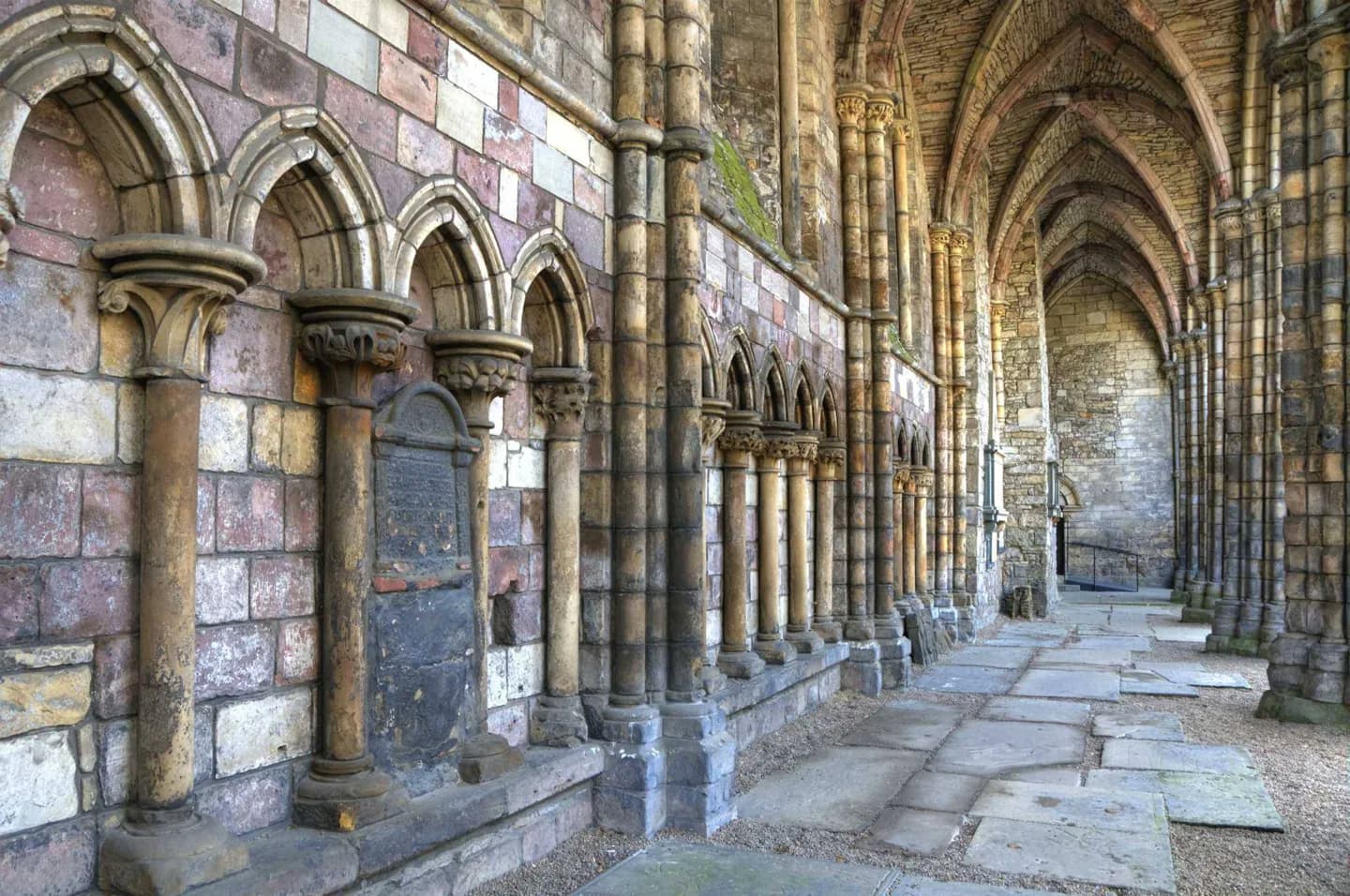
The abbey predates the palace and explains why royal life became established at Holyrood. Founded by David I in 1128, it later hosted coronations and marriages before damage and a collapsed roof left a ruin. Encountering the open church beside the royal residence makes that long change of purpose visible.
What to look for
- The roofless abbey stands beside the Palace of Holyroodhouse.
- Holyrood Abbey’s foundation in 1128 predates the royal palace.
The full story
David I founded Holyrood Abbey in 1128 for an Augustinian community. The abbey came before the palace, and its presence helps explain the royal residence at the eastern end of the Royal Mile. From the fifteenth century, it hosted royal coronations and marriage ceremonies as well as religious life. Its later history was shaped by conflict and changes in worship. English attacks during the Rough Wooing damaged the abbey in the sixteenth century. In 1688 James VII converted it into a Roman Catholic chapel for the Order of the Thistle, moving the Protestant congregation to the new Canongate Kirk. Later that year, during the upheaval of the Glorious Revolution, the church and royal burial vaults were plundered. A rebuilt roof collapsed in 1768, leaving the building roofless. The ruin beside the palace therefore records several different histories: a medieval religious foundation, royal ceremony and the consequences of political and structural change.
Useful to know
- Include the abbey within a Palace of Holyroodhouse visit; it is reached through the palace admission route.
- Check palace visitor arrangements before travelling, as use of the working royal residence can affect access.
Your next visit
Estimated · Declared scenario and planning estimates; no live opening, weather, queue or booking service.
Outdoor visit · 20–35 min
World planning estimate; admission, opening, visit duration and access need checking.