
Why go
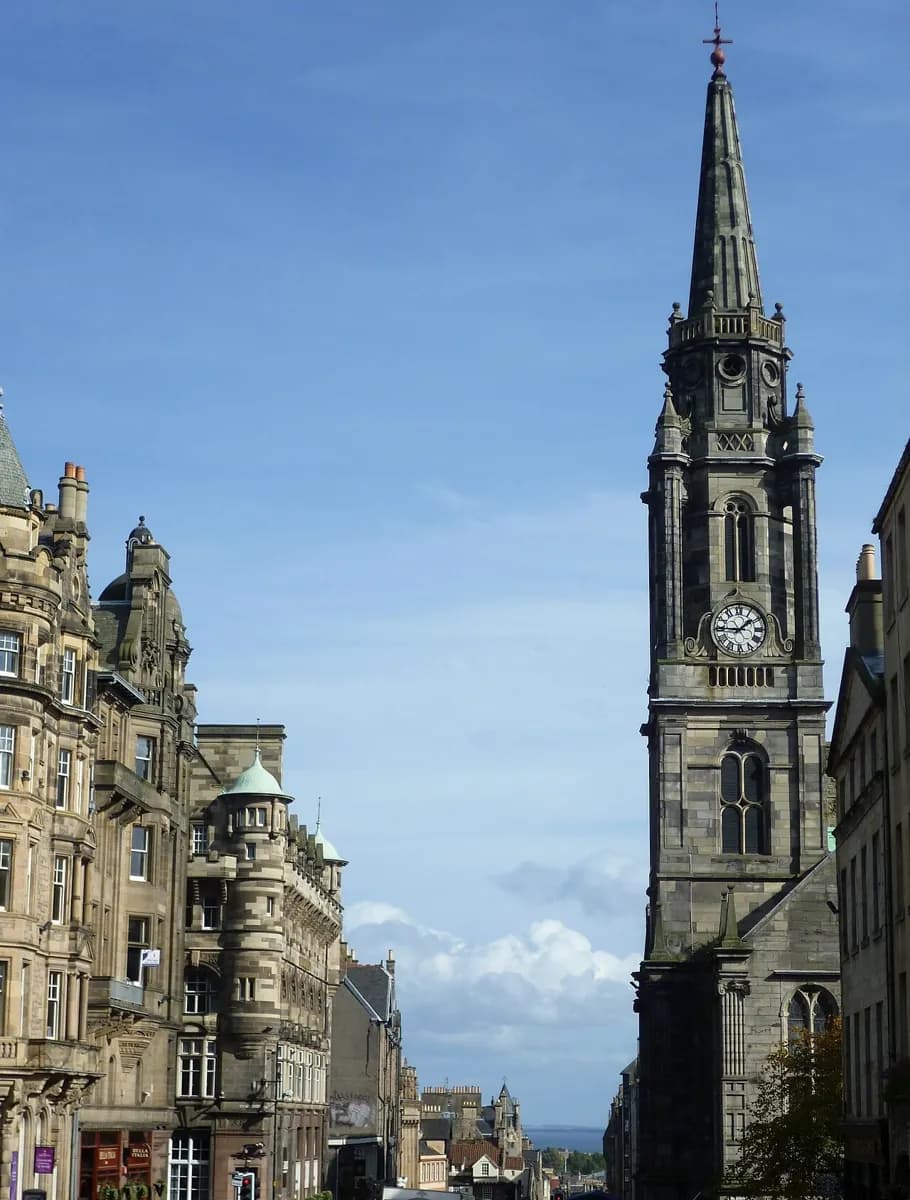
Tron Kirk brings a different architectural character to the High Street, combining Palladian and Gothic elements influenced by Dutch design. Its history also records changes to the surrounding streets: the church was shortened when Hunter Square and South Bridge were built. The exterior is the useful focus when planning a Royal Mile walk.
What to look for
- The design combines Palladian and Gothic elements with Dutch architectural influence.
- The spire dates from 1828, replacing one lost in the Great Fire of 1824.
- Hunter Square and South Bridge changed the size of the original church.
The full story
Charles I ordered the church during the seventeenth century, and it was built between 1636 and 1647 to a design by John Mylne, the royal master mason. The mixture of Palladian and Gothic elements reflects a period when Edinburgh’s buildings drew on more than one architectural tradition. Dutch influence helps explain why the church looks different from a straightforward medieval kirk. The city’s later development changed it substantially. In 1785 the building was shortened to accommodate Hunter Square and South Bridge. The original spire burned in the Great Fire of 1824 and was replaced in 1828. After closure as a church in 1952, the interior was gutted. Archaeological excavations beneath it in 1974 uncovered foundations of sixteenth-century buildings in Marlins Wynd. The church therefore sits above traces of an earlier street pattern, while its altered exterior records the construction of the newer crossing beside it.
Useful to know
- Pair an exterior stop with the Royal Mile’s crossing at South Bridge.
- Check current access before making an interior visit a fixed part of the walk.
Your next visit
Estimated · Declared scenario and planning estimates; no live opening, weather, queue or booking service.
Outdoor visit · 15–20 min
World planning estimate; admission, opening, visit duration and access need checking.