
Why go
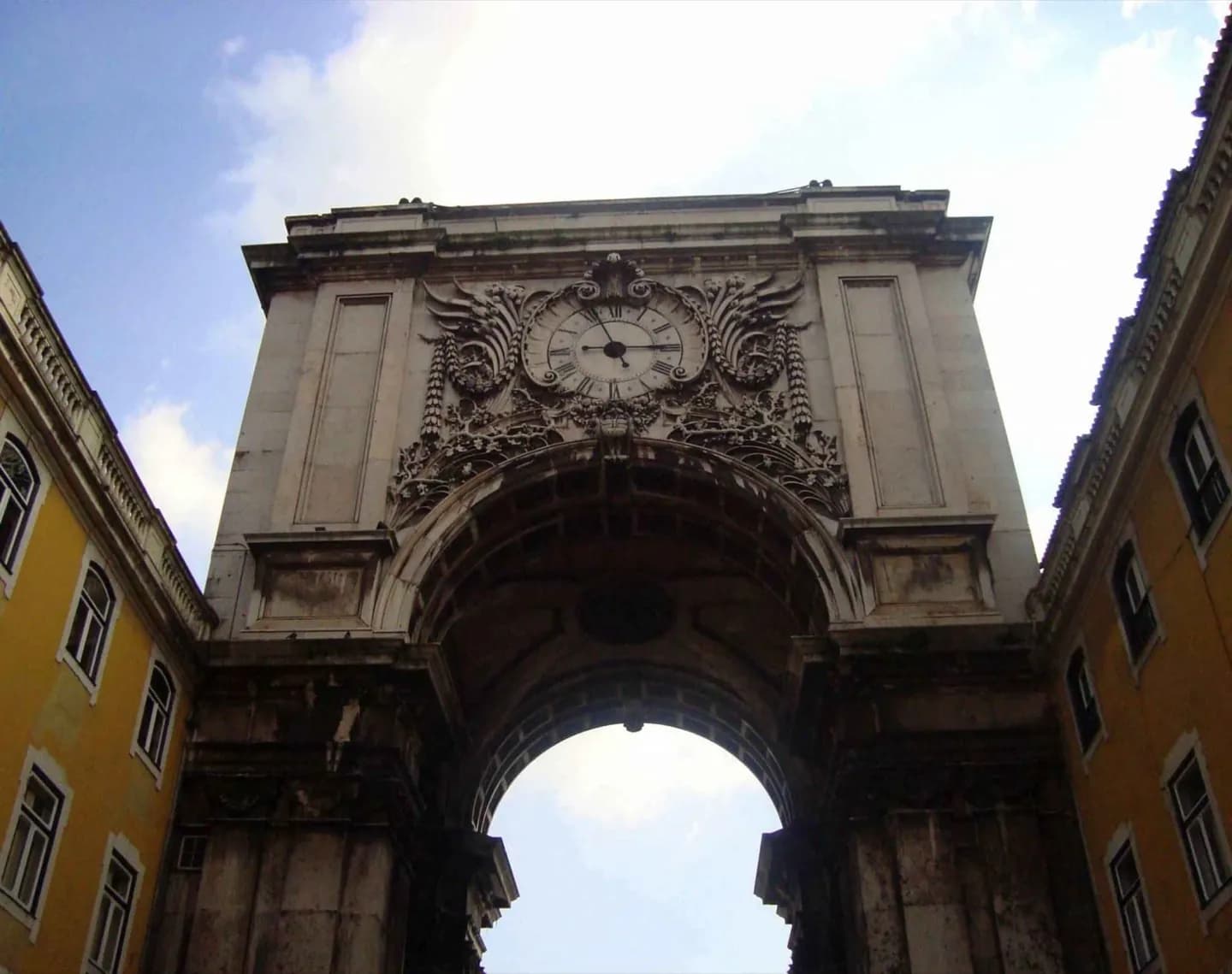
The district turns city planning into something visible. Straight streets connect Praça do Comércio with Rossio and Praça da Figueira, sharply contrasting with older Lisbon's irregular lanes. Behind the orderly elevations, the Pombaline cage used a timber lattice to distribute earthquake forces and raised party walls to slow fire.
What to look for
- The post-1755 street grid replaces the area's earlier organic plan.
- Portuguese pavement makes patterned stonework part of the walking surface.
- Timber Pombaline cages were designed to distribute earthquake forces inside buildings.
Useful to know
- Walk north from Praça do Comércio toward Rossio to read the reconstructed grid in one continuous line.
- Wet Portuguese pavement can be slick; wear shoes with reliable grip.
- Use side streets to compare the regular blocks with the steeper, less ordered edges of Chiado and Alfama.
Your next visit
Estimated · Declared scenario and planning estimates; no live opening, weather, queue or booking service.
Outdoor visit · 10–15 min
Public-space walk and exterior observation only; no interior, garden, tower or ticketed admission included. Durations and walking are estimates. Check temporary restrictions and park or market opening times.
Outdoor visit · 30–45 min
World planning estimate; admission, opening, visit duration and access need checking.