
Why go
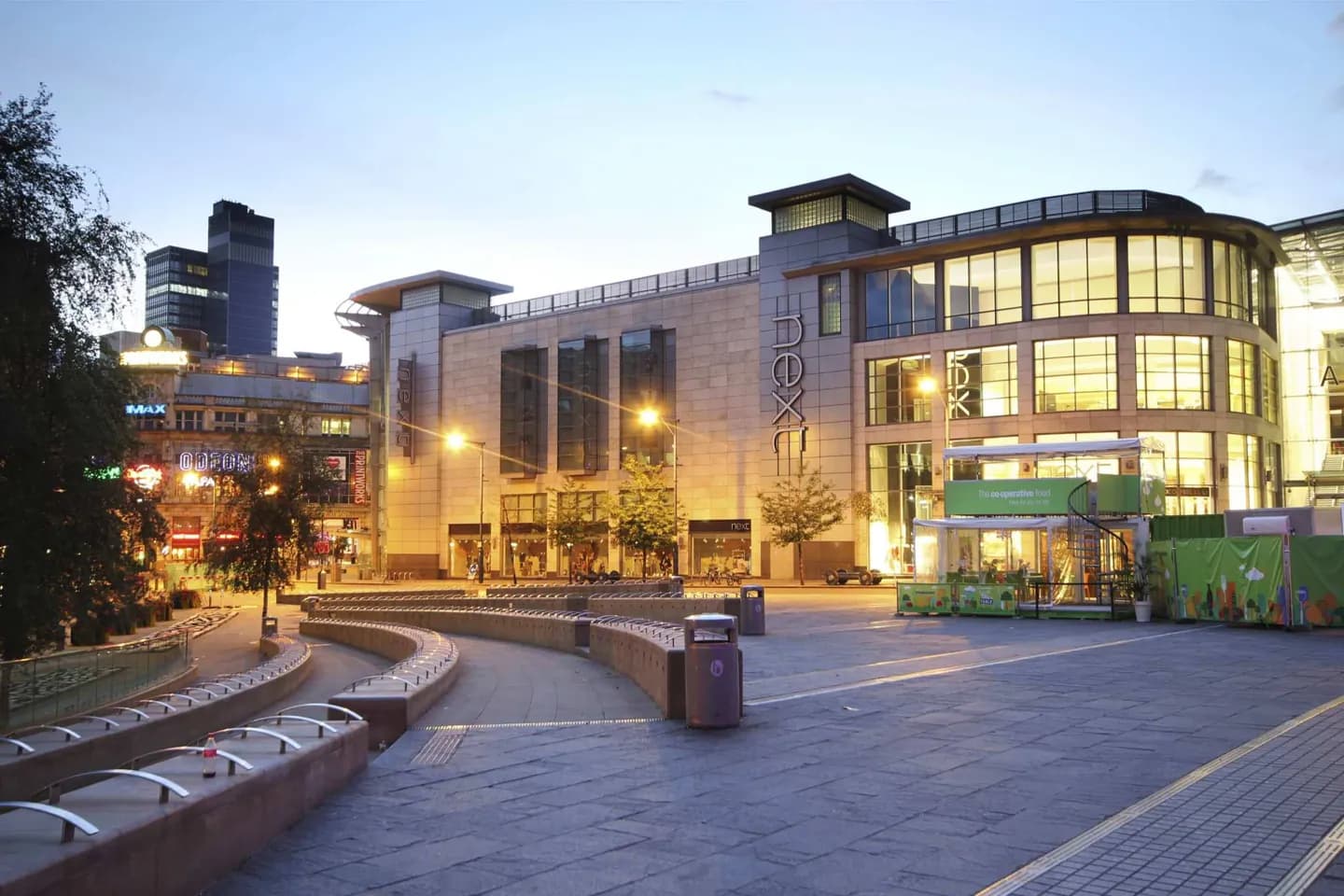
The Arndale gathers a broad range of city-centre shopping under one roof and offers a practical pause between nearby streets. The market gives the visit a more local-feeling focus than a circuit of standard shops, while the building itself reflects Manchester's postwar redevelopment.
What to look for
- Indoor malls connect multiple shopping entrances in the city centre.
- Arndale Market offers a separate cluster of food stalls and traders.
The full story
Manchester Arndale grew out of a major city-centre redevelopment of the 1970s, when large indoor shopping centres were reshaping British retail streets. The centre was later redeveloped after the 1996 bombing in central Manchester. Those two phases help explain why the Arndale feels different from Manchester's older street grid: it is a large interior route through a heavily altered part of the centre. For a visitor, the useful distinction is between the general shopping malls and Arndale Market, where food traders give a more focused reason to pause. The building's history also makes it a visible part of the city's story of rebuilding. You need not make a heritage trip of a shopping centre, but noticing its scale and its relation to the surrounding streets adds context to an otherwise practical stop.
Useful to know
- Use it as a sheltered link between central shopping streets.
- Check individual traders if a particular stall is the reason for visiting.
Your next visit
Estimated · Declared scenario and planning estimates; no live opening, weather, queue or booking service.
Outdoor visit · 30–45 min
World planning estimate; admission, opening, visit duration and access need checking.