
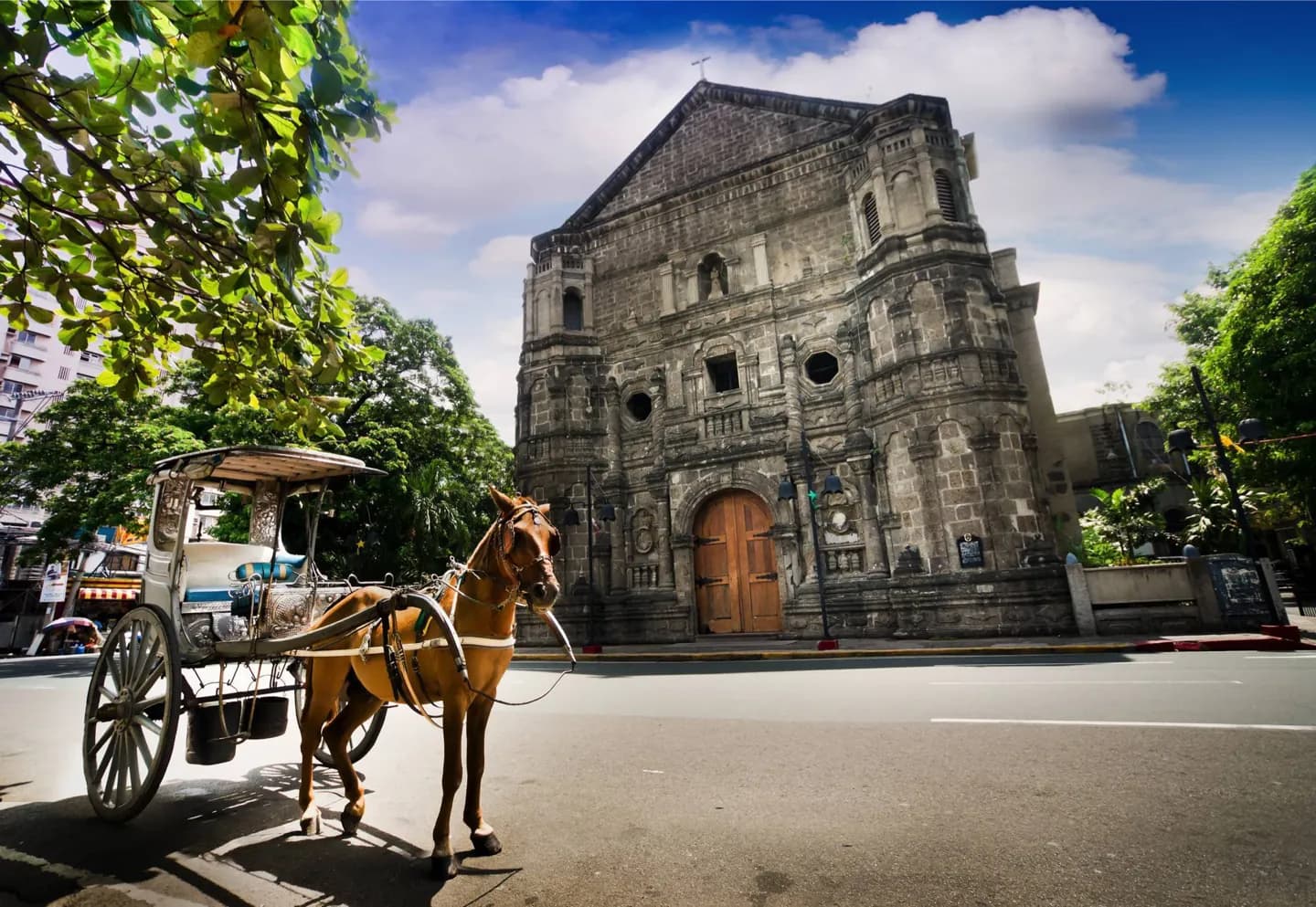
Why go
The district lets a visitor combine different sides of the city in one outing: Roxas Boulevard and Manila Bay to the west, with Manila Zoo farther inland. Its residential past and postwar rebuilding give context to the changing streetscape. Pick specific anchors first, since the broad district label does not define a walk by itself.
What to look for
- The Manila Bay edge along Roxas Boulevard.
- Manila Zoo as a distinct inland destination.
- A district whose residential fabric was reshaped after World War II.
The full story
Malate developed as a residential district outside Manila's old walled core. The Second World War damaged the area, but some houses and other buildings remained, and returning residents rebuilt after the conflict. Later changes brought a more varied district along the bayfront and inland corridors. That history is useful when moving through Malate: the waterfront on Roxas Boulevard tells a different story from the neighborhood streets behind it. A visit works best by choosing one or two anchors, such as the bay edge and Manila Zoo, then treating the intervening area as an urban district rather than expecting a preserved historic quarter. That contrast is the district’s value for a traveler deciding between a seafront stroll and a longer neighborhood outing.
Useful to know
- Choose a specific Malate destination before setting out; the area spans bayfront and inland streets.
- Treat Manila Zoo as a separate visit with its own entry information.
Your next visit
Estimated · Declared scenario and planning estimates; no live opening, weather, queue or booking service.
Outdoor visit · 30–45 min
World planning estimate; admission, opening, visit duration and access need checking.