
Why go
The church is part of the UNESCO-listed Baroque Churches of the Philippines and gives you a rare chance to see an old Intramuros interior still serving its original purpose. Look beyond the stone exterior to the painted ceiling and retablo, then compare it with reconstructed sites nearby.
What to look for
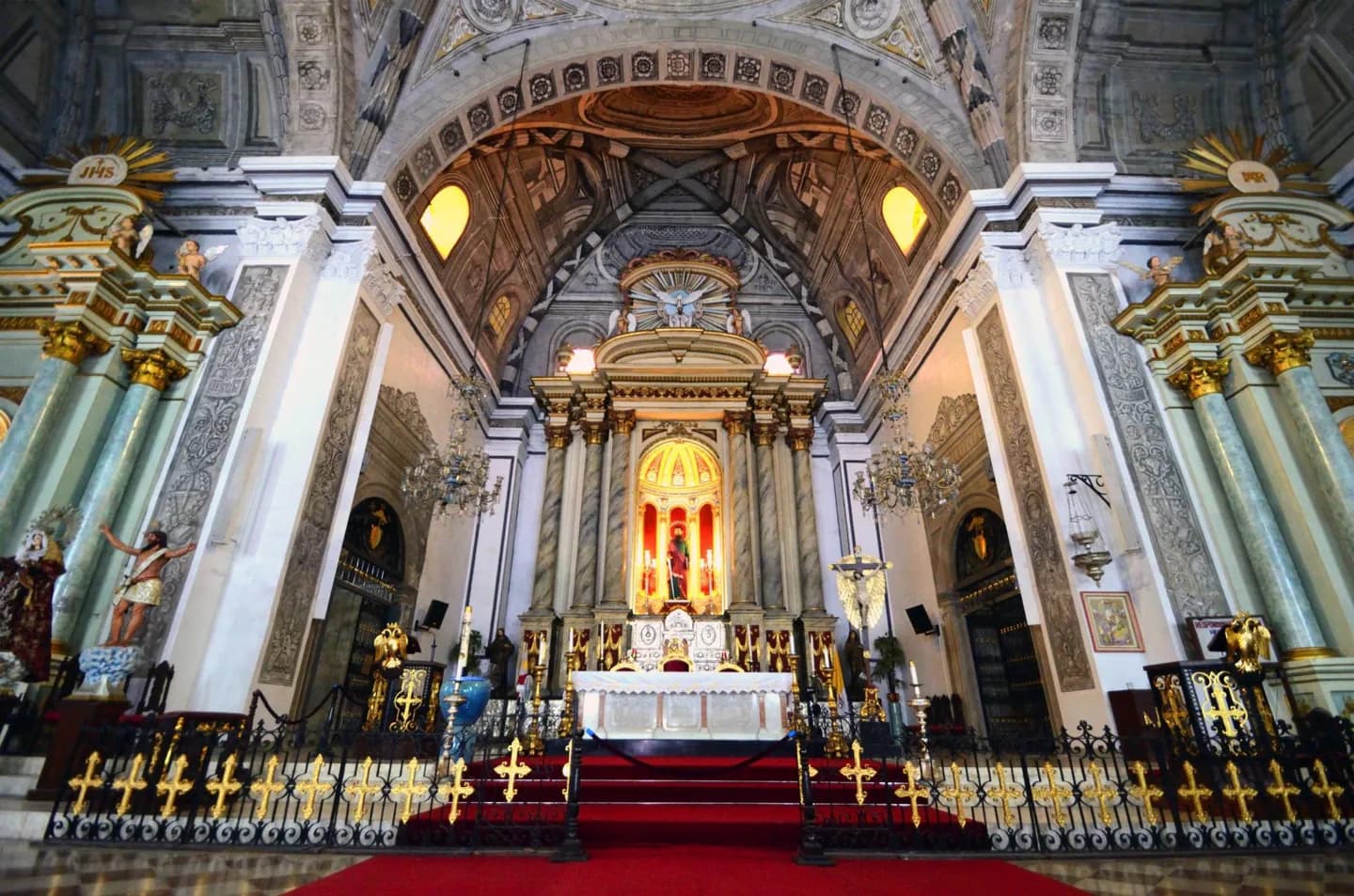
- The trompe-l’oeil ceiling, painted to suggest architectural depth.
- The baroque retablo at the altar.
- The church’s surviving fabric amid the reconstructed streets of Intramuros.
The full story
San Agustin’s present stone church followed earlier buildings on the site that were lost to fire. Its long survival gives it particular force inside Intramuros, where much of the historic streetscape was damaged or destroyed in the Second World War. The church has also weathered Manila’s earthquakes, although the left bell tower was ultimately removed after damage in the nineteenth century. Inside, the painted ceiling plays with the eye, making flat surfaces appear more deeply modeled. The retablo directs attention back to the altar and to the building’s continuing religious use. UNESCO includes San Agustin among the Baroque Churches of the Philippines, but the designation is only part of the reason to come. The more immediate experience is seeing a historic church interior that remains a sacred space, then noticing how different that feels from the city’s reconstructed monuments.
Useful to know
- Check church access separately from San Agustin Museum admission.
- Leave worship space to its congregation when a service is under way.
Your next visit
Estimated · Declared scenario and planning estimates; no live opening, weather, queue or booking service.
Outdoor visit · 30–45 min
World planning estimate; admission, opening, visit duration and access need checking.