
Why go
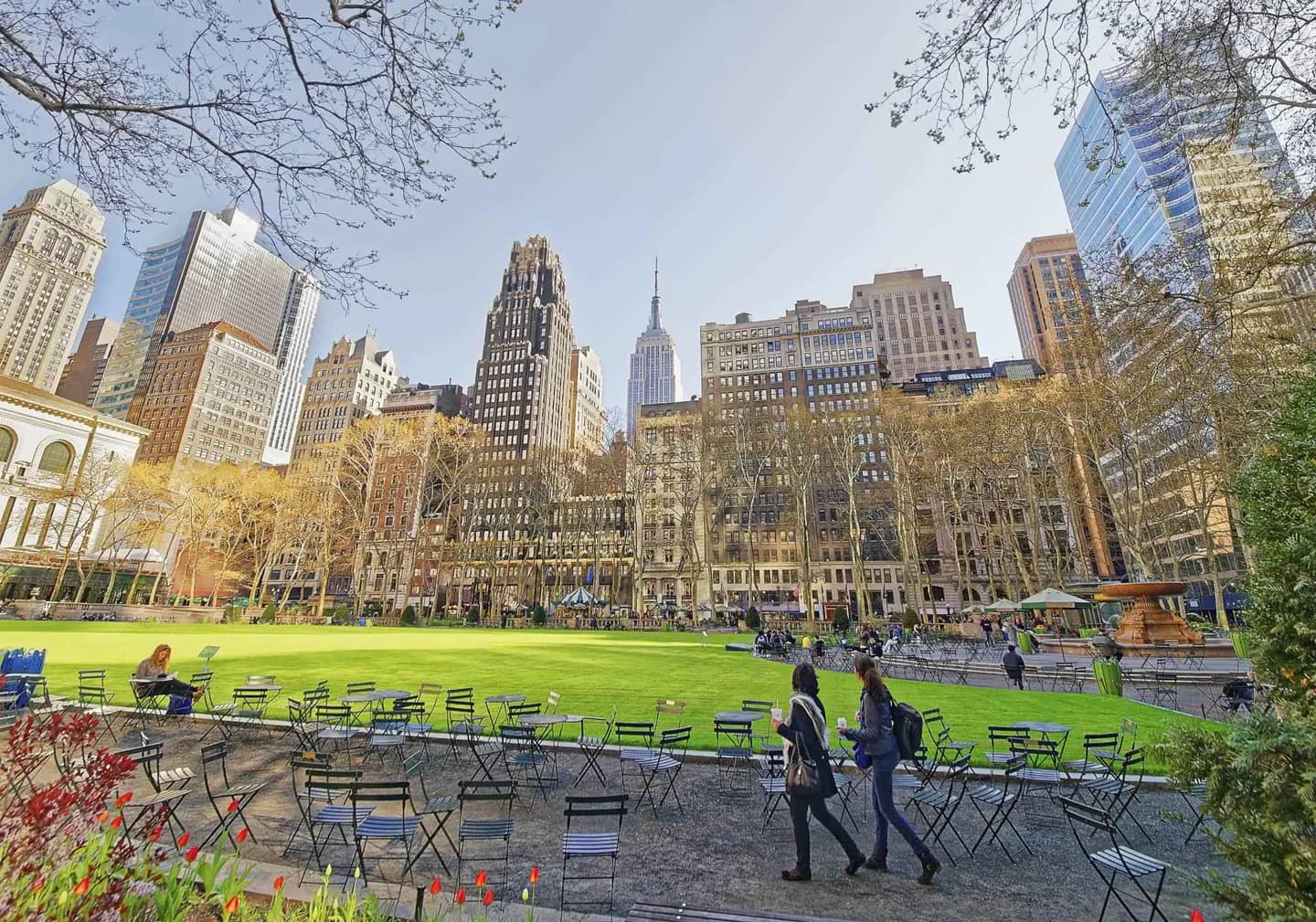
The park offers a place to stop within the dense blocks between Fifth and Sixth Avenues and 40th and 42nd Streets. Its relationship with the library is unusually close: underground book stacks lie beneath the park. Above them, the layout allows people to arrange a pause around the lawn rather than simply pass through.
What to look for
- Movable chairs allow different seating positions and arrangements.
- The northeast comfort station uses Italian tile, flowers and classical music.
The full story
The park’s modern form reflects a deliberate change in how a public space meets the street. During a renovation begun in 1988, entrances became more visible, tall hedges were removed and the park was lowered closer to street level. Sociologist William H. Whyte helped shape that approach, including the decision to use movable chairs so people could choose their own position and orientation. These details are worth noticing because the park’s appeal depends on everyday choices: seeing inside before entering, finding a seat and sharing space comfortably. The same rebuilding period created the library storage structure below ground while restoring the park above it. Earlier versions of the site included a potter’s field and Reservoir Square, named for the neighboring Croton Distributing Reservoir. The current name honors editor and abolitionist William Cullen Bryant.
Useful to know
- Link the park with the library’s flagship building at its eastern edge.
- Use the perimeter seating and paths when the lawn is unavailable.
Your next visit
Estimated · Declared scenario and planning estimates; no live opening, weather, queue or booking service.
Outdoor visit · 30–45 min
World planning estimate; admission, opening, visit duration and access need checking.