
Why go
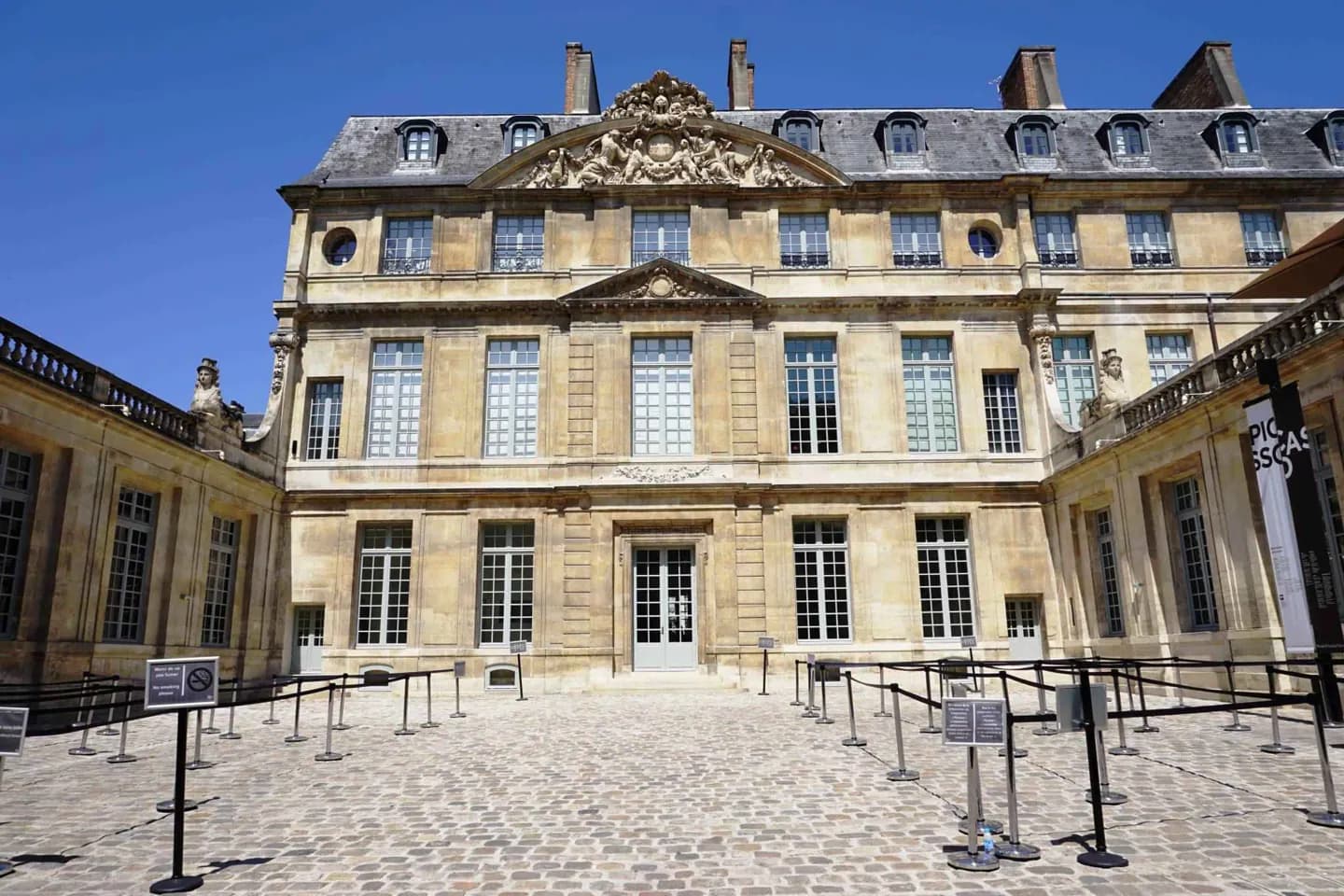
Paintings, works on paper, sculpture and ceramics show Picasso as more than a painter of a few familiar images. The collection grew substantially from works he kept himself. Its setting adds a useful contrast: an artist associated with radical changes in visual form is presented inside an aristocratic Paris house with a history of its own.
What to look for
- The Hôtel Salé is a seventeenth-century mansion on rue de Thorigny.
- Picasso’s holdings span painting, sculpture, ceramics and works on paper.
- The collection includes works Picasso owned by other artists.
The full story
The Hôtel Salé takes its name from the fortune of its first owner, Pierre Aubert, who collected the salt tax. Built between 1656 and 1659, it later served very different occupants, including the Venetian embassy and educational institutions. Its selection as a Picasso museum joined this older Marais history to a new public use. The art collection also has an unusual origin. French law allowed heirs, in exceptional circumstances, to settle inheritance taxes with important works of art. This arrangement, called a dation, brought a major selection of Picasso’s work into the national collection after his death. A further contribution followed the death of Jacqueline Picasso. Because the artist had retained so much of his own work, the museum could represent many periods and techniques. Its breadth reflects that history of keeping, inheriting and transferring art, rather than only later museum purchases.
Useful to know
- Use the current display programme to decide which aspect of Picasso’s work to pursue.
- Make the mansion part of a Marais walk rather than adding another distant museum.
Your next visit
Estimated · Declared scenario and planning estimates; no live opening, weather, queue or booking service.
Indoor visit · 30–45 min
World planning estimate; admission, opening, visit duration and access need checking.