
Why go
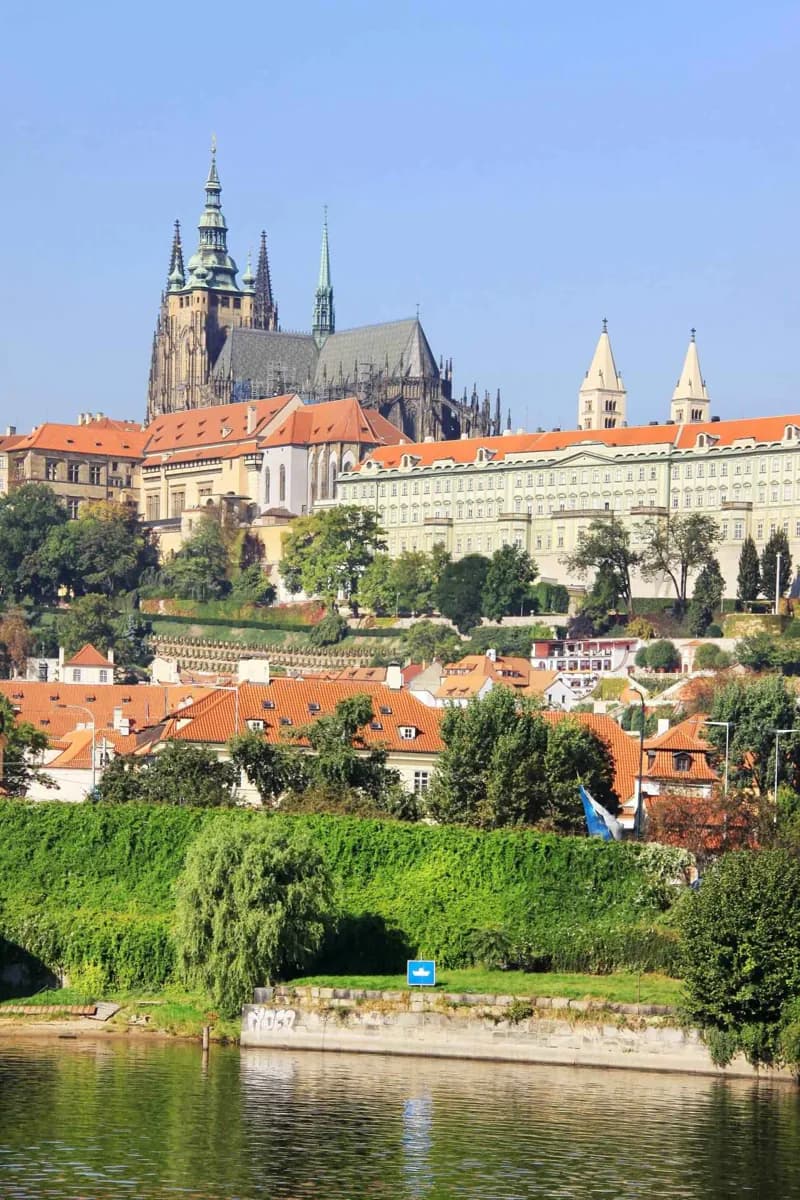
The Castle joins the city's seats of power with some of its most varied architecture. St. Vitus Cathedral, the Old Royal Palace and St. George's Basilica give very different views of that history. Even a grounds walk helps locate Old Town and the river below; entering the buildings asks for a longer visit and a clear selection.
What to look for
- St. Vitus Cathedral dominates the complex's skyline.
- The Old Royal Palace and St. George's Basilica show different historical layers.
- Courtyards connect the buildings across the hilltop site.
The full story
Prague Castle grew from a ninth-century fortified site into the seat of Bohemian rulers and, later, Czech presidents. Its long life is visible because successive buildings stand side by side. St. George's Basilica preserves an early church tradition, the Old Royal Palace recalls royal government, and St. Vitus Cathedral became a monumental Gothic project begun under Charles IV and completed much later. Fires, rebuilding and Habsburg additions changed the complex again. Rudolf II made Prague a centre of his imperial court, adding another chapter to the Castle's role. A walk through the courtyards therefore does not reveal one single architectural period. It shows how rulers repeatedly adapted the same hilltop for authority, ceremony and residence. The position above the Vltava also explains its relationship to the city below: the streets and bridges of central Prague lead toward this elevated seat of power.
Useful to know
- Decide which historic buildings matter before arrival; the grounds and interiors follow different access rules.
- Allow substantial time for the spread-out complex and check current ceremony-related restrictions.
Your next visit
Estimated · Declared scenario and planning estimates; no live opening, weather, queue or booking service.
Outdoor visit · 30–45 min
World planning estimate; admission, opening, visit duration and access need checking.