
Why go
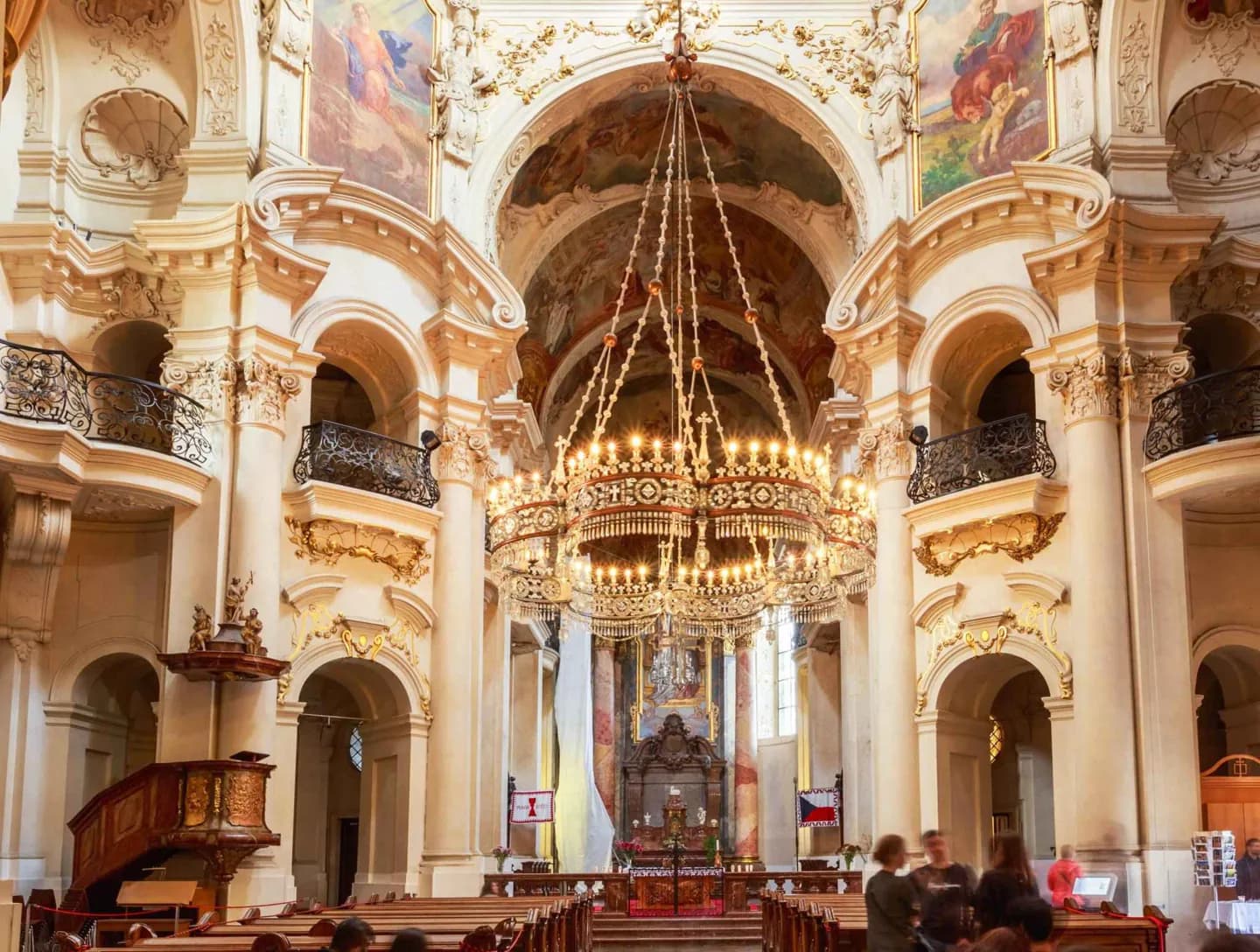
The building gives Malá Strana a dramatic architectural centre. From outside, the dome rises above the palace streets; inside, curved walls and an open nave draw the eye upward. It is an especially useful contrast after the Gothic forms of Old Town and the Castle side of a city walk.
What to look for
- The copper dome rises over Malostranské náměstí.
- Curving Baroque forms shape the nave and side chapels.
- The interior leads the eye toward the central dome.
The full story
The present church replaced a medieval parish church and took shape in the first half of the eighteenth century. Christoph Dientzenhofer planned much of the nave, using curved forms that make the interior feel in motion. His son Kilian Ignaz worked on the later chancel and dome. That family sequence helps explain why the building is both unified and varied: its parts were made over decades by related but distinct hands. The dome is visible from streets across Malá Strana, while inside the play of curves becomes the main experience. The church belongs to the Baroque rebuilding that gave the quarter many of its grand façades. It is best understood from both sides of the door, first as a landmark within the square and then as a carefully staged interior.
Useful to know
- View the dome from the square before entering so the interior has a clear frame of reference.
- Check sightseeing access around worship or events; the church remains an active venue.
Your next visit
Estimated · Declared scenario and planning estimates; no live opening, weather, queue or booking service.
Indoor visit · 30–45 min
World planning estimate; admission, opening, visit duration and access need checking.