
Why go
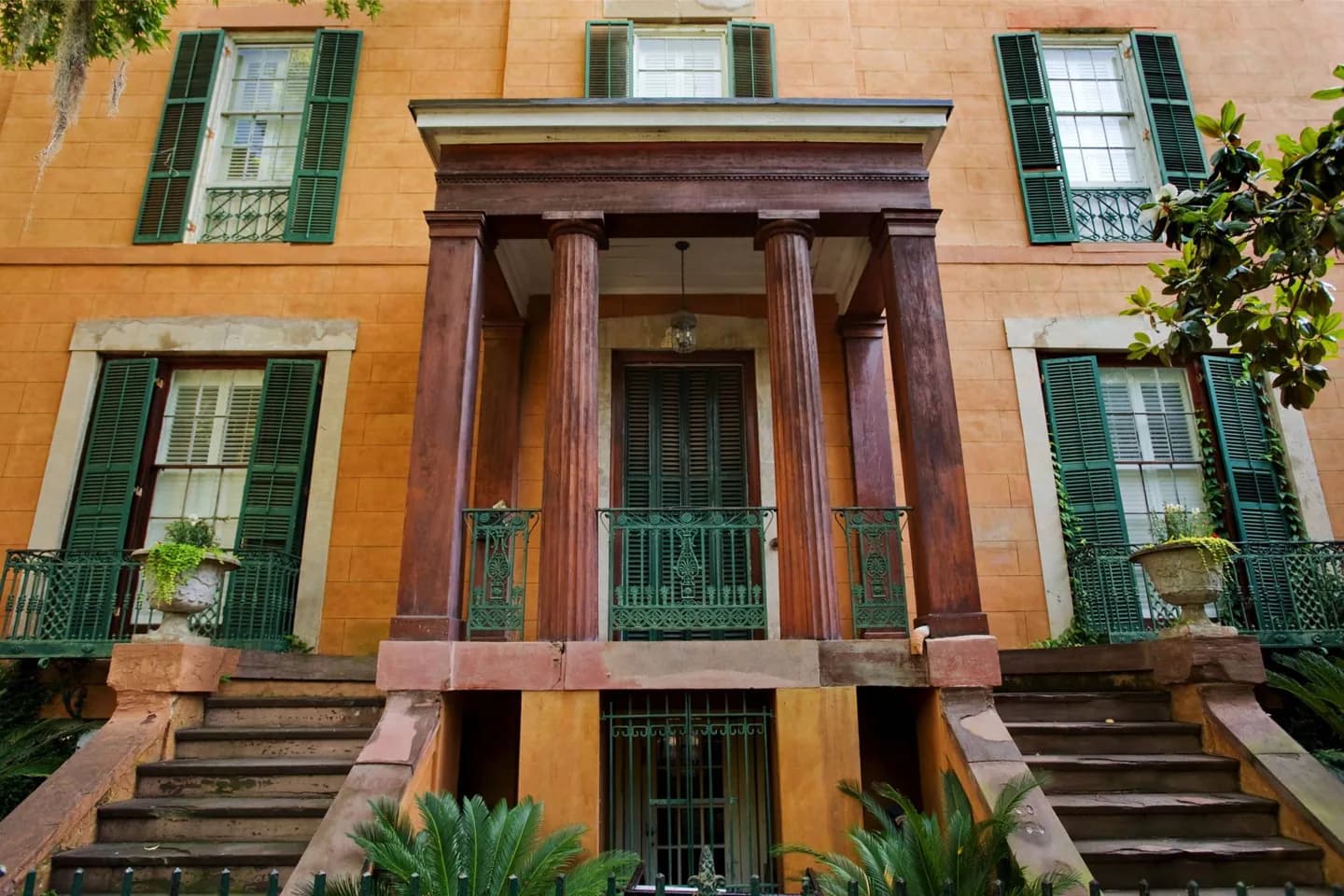
The large house and carriage house show the scale of an elite nineteenth-century Savannah property. Its unusual central stair and later popular ghost reputation give two distinct ways to read the building, depending on the tour chosen. A daytime architectural visit and an evening paranormal event may use the same property but tell different stories.
What to look for
- A central stair splits toward the upper floor from a middle landing.
- The Greek Revival main house stands with a carriage house.
- Madison Square gives a public vantage on the exterior.
The full story
The Sorrel-Weed House was built for the Sorrel family and later became one of Savannah’s prominent historic-house stops. Its Greek Revival exterior and central staircase make the building itself a reason to visit; the stair echoes the earlier Owens-Thomas House arrangement, rising to a landing before branching in two directions. The house also carries difficult Civil War associations through Moxley Sorrel, who served as a Confederate officer, and the Sorrel family’s ties to Robert E. Lee. Those connections belong in the history of the property, not as an endorsement of the Confederacy. In later decades television programs and paranormal tours amplified the house’s haunted reputation. A history tour and a ghost tour therefore answer different questions. Choose the experience that matches what you want to understand, and pay attention to the architecture and household setting beneath the later legend.
Useful to know
- Select a dated tour that matches your interest in history or ghost stories.
- Use the ticketed tour time for interior access rather than assuming drop-in entry.
- Compare the stair design with the earlier Owens-Thomas House if visiting both.
Your next visit
Estimated · Declared scenario and planning estimates; no live opening, weather, queue or booking service.
Outdoor visit · 30–45 min
World planning estimate; admission, opening, visit duration and access need checking.