
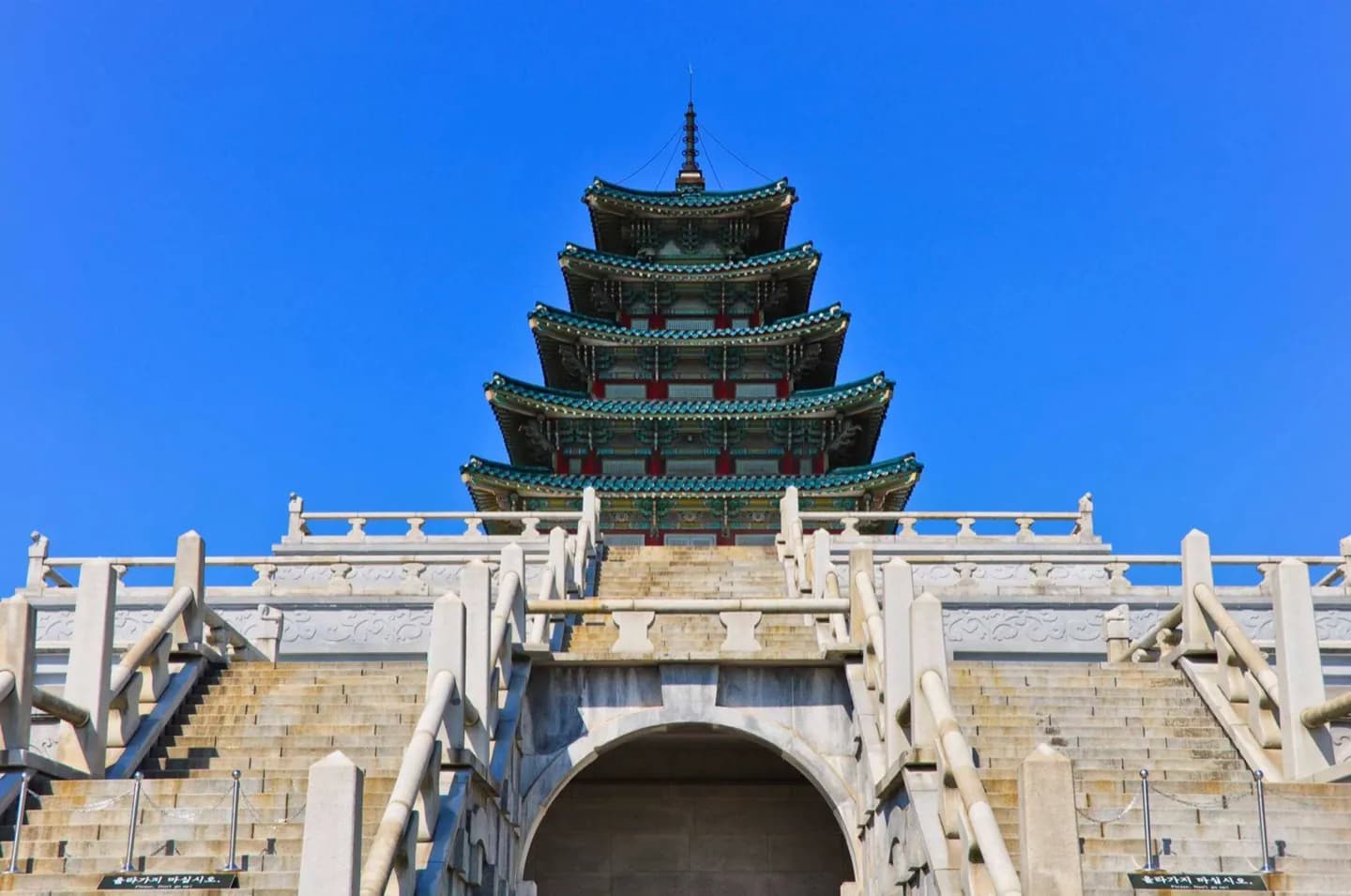
Why go
The museum shifts attention from kings to ordinary social life. Its exhibitions follow Korean history, daily practices, and the passage from birth to death, giving useful context for objects and customs seen elsewhere in Seoul. Because it stands at Gyeongbokgung, visitors can compare household experience with royal ceremony in one outing.
What to look for
- Displays tracing Korean history through the end of the Joseon dynasty
- Exhibitions on daily life and household practices
- Life-cycle displays following customs from birth to death
The full story
The National Folk Museum of Korea presents history through the routines and transitions of life rather than royal power alone. Established in 1945, it sits within Gyeongbokgung, creating a useful contrast with the palace next door. Three main exhibition themes organize the visit. One traces the history of the Korean people from prehistory to the end of the Joseon dynasty in 1910. Another examines how people lived, worked, and organized their material world. A third follows the life cycle from birth to death, using customs and objects to show how family and society marked each stage. The museum also includes a children’s museum and outdoor displays. This structure makes it most useful as a companion to the palace rather than as an isolated survey. After seeing ceremonial halls and royal courtyards, the museum restores domestic tools, social rites, and repeated tasks to the picture. Focus on how an object’s meaning changes when it is placed within a household, occupation, season, or life event.
Useful to know
- Visit alongside Gyeongbokgung to compare court culture with everyday life.
- Allow extra time for the outdoor displays if weather is comfortable.
- Check the museum’s official site for current hours and entry arrangements.
Your next visit
Estimated · Declared scenario and planning estimates; no live opening, weather, queue or booking service.
Outdoor visit · 30–45 min
World planning estimate; admission, opening, visit duration and access need checking.