
Why go
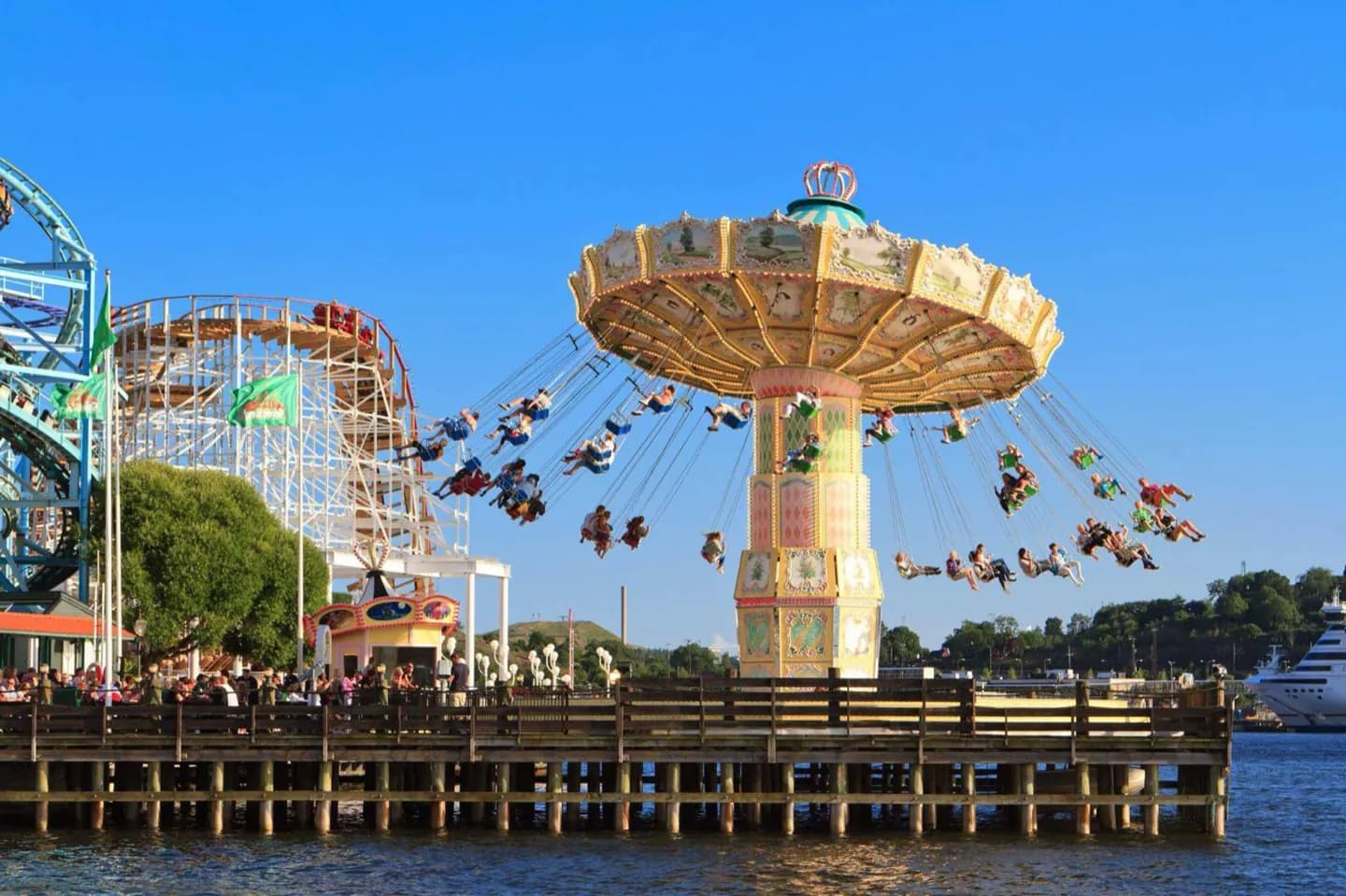
Consider it when rides, live music or family entertainment justify a scheduled visit. Its constrained island footprint creates a dense, vertical park unlike sprawling suburban resorts, and the waterfront setting makes the lights and machinery visible well beyond the gates.
What to look for
- Rides compressed between historic buildings and the Djurgården waterfront.
- A long-running summer concert tradition.
- Views across the water toward Södermalm and central Stockholm.
The full story
Gröna Lund developed on Djurgården’s seaward edge, where limited land prevented the broad layout typical of later amusement parks. Instead, attractions accumulated within a compact site among older buildings, producing the dense skyline of towers, tracks and stages visible from the harbor. The park has long combined mechanical rides with popular entertainment, especially summer concerts. Its identity therefore belongs as much to Stockholm’s performance history as to roller coasters and family attractions. The waterfront makes arrival and departure part of the experience: ferries and paths reveal the park across open water before the gates are reached. Because operations are seasonal and event-led, the atmosphere changes substantially by date and time. Look at how rides thread through the restricted site and how the park’s lights form a temporary nighttime facade for Djurgården.
Useful to know
- Check the official seasonal calendar, event program and ticket conditions before traveling.
- Crowds and ride availability vary sharply; do not treat it as an always-open park.
Your next visit
Estimated · Declared scenario and planning estimates; no live opening, weather, queue or booking service.
Outdoor visit · 30–45 min
World planning estimate; admission, opening, visit duration and access need checking.