
Why go
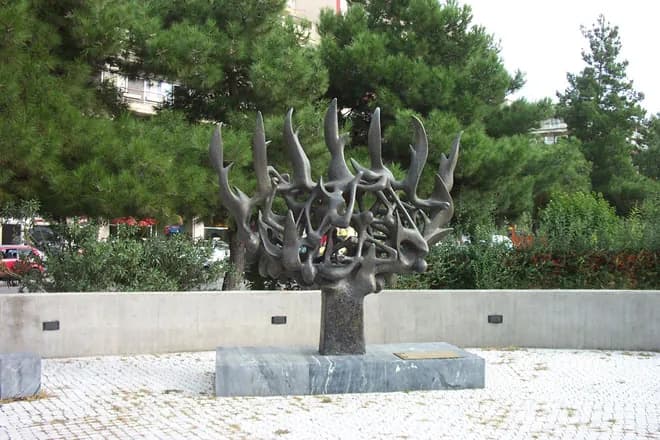
The square matters because Nazi occupiers assembled and abused Jewish men here in July 1942 before forced labour. Its central position makes the event impossible to separate from the everyday city, and the planned Memory Park aims to make that history visible.
What to look for
- The square lies at the city-centre edge of the port.
- Its public setting was the site of the 1942 roundup of Jewish men.
The full story
Eleftherias Square developed where the old seaward wall gave way to access for the modern port. In July 1942, under German occupation, thousands of Jewish men were ordered to assemble here. They were publicly humiliated and registered for forced labour, an early stage in the destruction of Thessaloniki’s Jewish community during the Holocaust. The location is therefore a site of civic memory, not simply an open space in the centre. A municipal Memory Park project began in 2026; its construction changes how the square can be approached, but the historical significance of this precise place remains. This episode is connected to the deportation and murder of the great majority of the city’s Jews. The square’s meaning comes from that history, even when the physical surface changes. Read it together with Thessaloniki’s broader Jewish heritage, rather than as an isolated monument detached from the surrounding streets and former commercial life.
Useful to know
- Check the municipality’s redevelopment update before going; access through the works is uncertain.
- Use the location as a point of reflection rather than assuming the memorial remains in its former position.
Your next visit
Estimated · Declared scenario and planning estimates; no live opening, weather, queue or booking service.
Outdoor visit · 30–45 min
World planning estimate; admission, opening, visit duration and access need checking.